Documentmanagement in 2025

In 2025, efficient document management will become a matter of survival for companies. The flood of digital documents is growing rapidly and brings opportunities but also risks: Those who do not act in time lose track and jeopardize compliance.
Modern document management systems automate processes, secure data, and help noticeably reduce costs. They offer greater productivity, transparency, and control in everyday work.
What can you gain with the right DMS? Better collaboration, higher security, and clear processes—whether in the office or remote.
In this guide, you’ll find everything important about document management: from the basics and benefits to selection, implementation, best practices, and the key trends for 2025. This puts you in the best position to meet future challenges.
What is Document Management? Basics, Definitions & Importance
Modern companies face a real flood of information. Document management is far more than just digitally storing files. It forms the basis for efficient, secure, and traceable work processes. Those who understand the basics can make optimal use of the opportunities of digitalization and actively avoid risks.
Terminology and differentiation
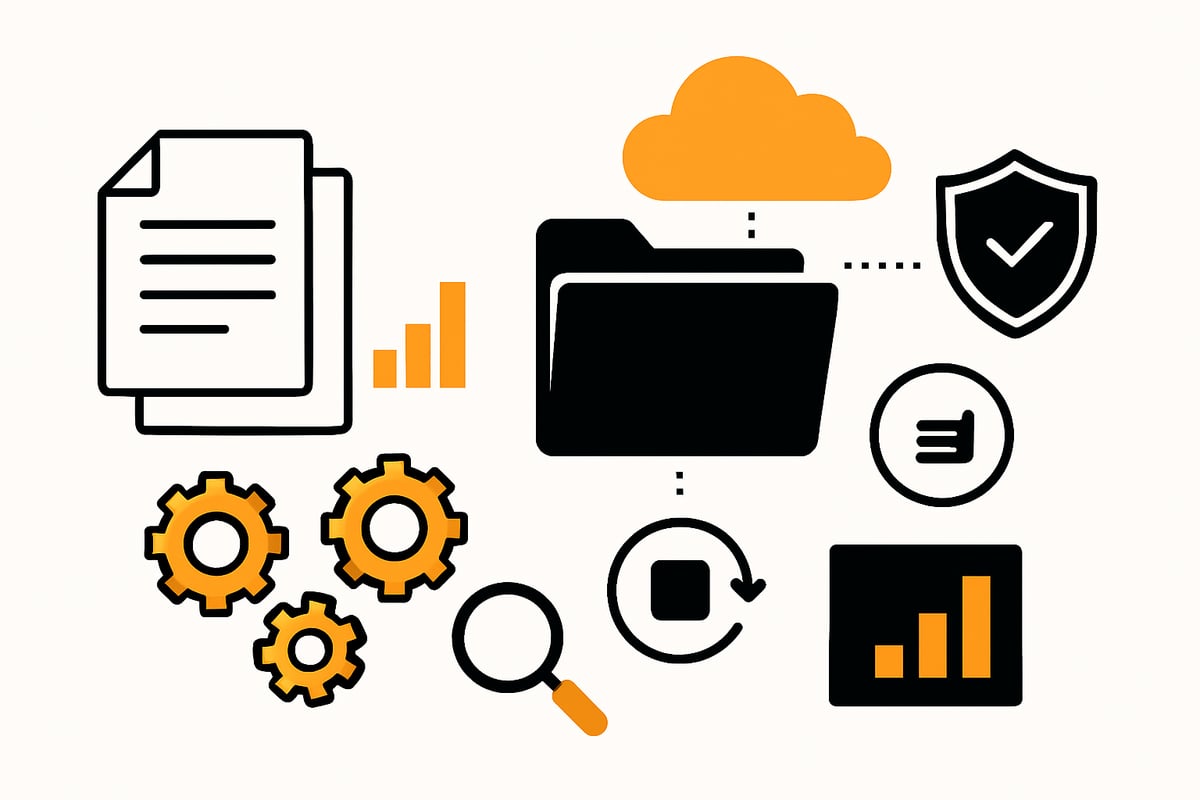
Document management (DMS) refers to the structured management, storage, and organization of documents in companies. The focus is on electronic document management, which replaces paper-based processes and maps them digitally.
The difference between classic paper-based workflows and digital document management solutions is significant: while paper archives are labor-intensive and prone to errors, digital systems enable fast access and better control. Document management must also be distinguished from Enterprise Content Management (ECM), which goes beyond documents and integrates all of a company’s content.
Core elements of a DMS
A powerful document management system consists of several core elements that ensure efficiency and transparency:
| Core element | Function |
|---|---|
| Centralized storage | All documents in one secure place |
| Versioning | Traceable document changes |
| Access control | Control over who can view and edit what |
| Traceability | Logging of all actions |
| Metadata & indexes | Quick retrieval through keywords |
| Search functions | Full-text and filtered search |
| Workflows | Automated approvals and processes |
With these components, document management provides a solid platform for the digital transformation of business processes.
Why document management is indispensable today
The volume of business documents is growing rapidly. At the same time, the requirements for data protection and traceability are increasing, for example due to GoBD or GDPR. Without structured document management, there is a risk of information loss, inefficient processes, or even costly compliance violations.
According to the Digital Office Index 2024 by Bitkom, 67% of German companies already use DMS solutions. The figures show: Document management is now a basic prerequisite for competitiveness and legal certainty.
Benefits and challenges
Document management offers numerous benefits: it increases efficiency, lowers error rates, and reduces costs. Particularly attractive is location-independent access to important documents, which supports flexible working.
There are still challenges. User adoption must be actively promoted. Integrating document management into existing systems and protecting sensitive data also require careful planning and implementation.
Practical use cases
What does document management look like in everyday life? Here are some typical scenarios:
- Digital invoice approval in small and medium-sized enterprises
- Contract management in the legal department
- Personnel file management in HR
According to an AIIM study, good document management can reduce the time spent searching for documents by up to 50%. This increase in efficiency is a direct added value for every organization.
The most important features of modern document management systems in 2025
Modern document management systems are the backbone of efficient, secure, and flexible business processes. In 2025, they will no longer be used merely as a storage location, but as smart platforms that optimally combine collaboration, automation, and compliance. Which features make the difference?

Centralized document repository & access control
The centralized document repository is the heart of every modern document management system. Today, companies choose between cloud-based and on-premises solutions, depending on security needs and flexibility.
Important features include role-based permissions, allowing you to precisely control who can view or edit what. Audit trails and logging functions ensure transparency and traceability of all activities. This makes every change to the document audit-proof.
| Solution type | Advantages | Challenges |
|---|---|---|
| Cloud | Flexible, scalable, mobile | Data protection, control |
| On-premises | Full control, own IT | Maintenance, costs |
Automation & workflow management
Automation takes document management to a new level. OCR technologies and email import enable the automatic capture of documents, eliminating manual entries.
With visual workflow designers, approval, review, or escalation processes can be individually designed. Typical use cases: automated invoice verification or contract renewals that run without delay.
Those who want to dive deeper will find practical insights in the article on automation of business processes, showing how workflows are implemented efficiently in modern DMS.
Integration with other business applications
A modern document management system impresses with seamless integration with ERP, CRM, email, and collaboration tools. Interfaces ensure that data flows are not disrupted by media breaks.
By directly connecting to existing applications, processes become faster, sources of error are reduced, and collaboration is improved. Documents can be stored, edited, or shared directly from other tools.
- Examples of integrations:
- SAP, Microsoft 365, Salesforce
- Outlook, Teams, Slack
Mobile use & remote access
Mobile work is standard today. A good document management system therefore offers apps or web access for smartphones and tablets.
You can access, review, or approve documents from anywhere. Security features such as two-factor authentication and encrypted connections protect sensitive information outside the office as well.
For many companies, location-independent access is a real productivity booster—especially in the home office or during field appointments.
Compliance & data protection (incl. GDPR)
Compliance is mandatory for every document management system. Features such as automatic adherence to retention periods, audit-proof archiving, and deletion concepts ensure compliance with legal requirements such as GDPR or GoBD.
Access control, encryption, and regular audits provide protection against data loss and misuse. Companies benefit from clear processes that minimize liability risks and build trust.
Tip: Regular training on data protection further increases security.
Intelligent search & artificial intelligence
Search in document management must do more than classic keyword search in 2025. Thanks to AI, documents are automatically tagged, classified, and searched semantically.
Full-text search, filtering, and learning algorithms help you find relevant information in a flash. This reduces search times, increases transparency, and makes knowledge in the company optimally usable.
AI-powered document recognition identifies content, structures data, and thus supports the automation of routine tasks.
Step by step: Successfully implementing a document management system
Implementing a modern document management system is a strategic move that needs careful planning. Many companies underestimate the effort required for a sustainable project. With a clear step-by-step guide, implementation is efficient, compliant, and future-proof.
Needs analysis & goal definition
At the start of every successful document management rollout is a thorough needs analysis. Analyze existing processes and identify weaknesses that a DMS should improve. Conduct interviews with stakeholders to capture requirements from different departments.
Create process mapping to document the current state. Set concrete goals: Do you want to shorten search times, ensure compliance, or reduce costs? Define measurable KPIs for project success. Careful goal definition ensures that the document management system later solves the right problems.
Selecting the right system
The selection of a suitable system for document management determines later success. Check the scope of functions: Do you need workflows, versioning, mobile use, or integration with ERP and CRM? Pay attention to scalability, user-friendliness, and transparent cost structures.
Compare different providers and consider test deployments. Involve IT and business departments early. Clarify whether a cloud or on-premises solution is a better fit. Also consider open source vs. proprietary solutions and check how flexibly the document management can be adapted to your processes.
Planning & preparation
Structured preparation is essential for every document management project. Assemble a project team and define clear responsibilities. Plan data migration carefully: Which legacy data must be transferred, and how will it be structured and cleaned?
Determine user training needs and plan qualification measures. Develop a detailed schedule with milestones. Clarify which resources are needed internally and externally. The better the planning, the smoother the later rollout of the document management system.
Implementation & integration
The actual implementation phase of document management usually starts with a pilot. Test the system in a limited area, collect feedback, and optimize processes. Roll out the system across the company step by step.
Integrate the DMS seamlessly into the existing IT landscape. Set up interfaces to ERP, CRM, and email systems. Ensure a smooth migration of existing documents. Practical examples from the finance sector can be found at Digitizing finance processes with DMS, to see the benefits in real-world use.
Training & change management
High user adoption is the key to success in document management. Plan targeted training for all employees, tailored to their tasks and prior knowledge. Communicate the goals and benefits of the new system transparently.
Rely on regular communication to address uncertainties and create motivation. Actively address resistance and involve managers as multipliers. Thoughtful change management ensures that document management is used sustainably.
Success measurement & optimization
After go-live, the phase of success measurement in document management begins. Measure goal achievement based on the defined KPIs, such as time savings or error reduction. Collect regular feedback from users and hold review meetings.
Use insights from practice for continuous improvements. Adapt processes and workflows flexibly to new requirements. Plan regular updates and train new features. This keeps your document management system up to date at all times.
filehub: The no-code automation platform for document management
filehub is an example of modern document management solutions from Germany. The platform offers no-code workflows so that processes can be automated without programming knowledge. SMEs and companies with high data protection requirements in particular benefit from flexible cloud and on-premises options.
Core features include integration with common business tools such as Outlook, Teams, or Docuware, as well as GDPR compliance. filehub scores with fast implementation and a free trial. This makes document management simple and efficiently accessible for companies of all sizes.
Best practices & pitfalls in document management
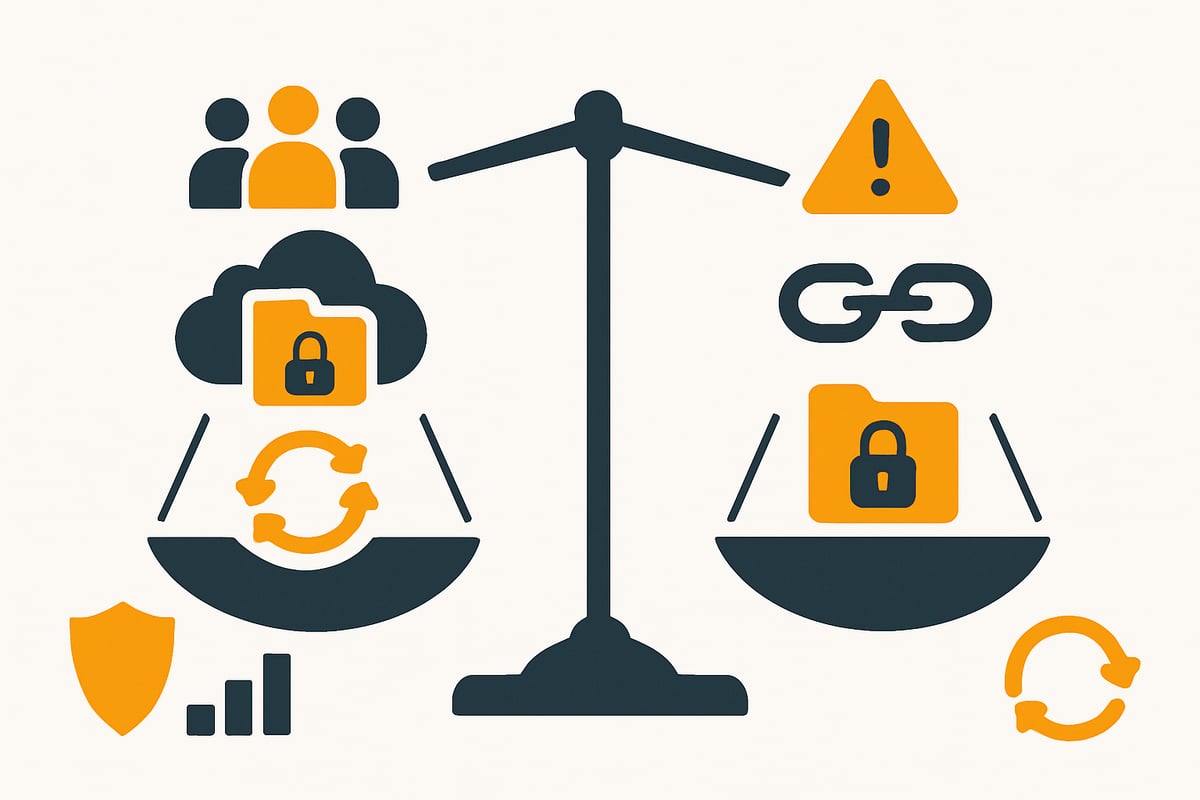
Efficient document management determines long-term business success. Those who follow best practices and know common mistakes secure competitive advantages, minimize risks, and ensure sustainable process optimization.
Success factors for a sustainable DMS
Sustainable document management needs clear structures and responsibilities. Define from the outset who is responsible for which types of documents. Document all processes in detail and keep the documentation up to date.
- Regular training ensures that all employees use the system efficiently.
- Involve every department in design and ongoing development.
- Use feedback to continuously improve processes.
Transparent change management promotes acceptance and increases productivity in document management.
Common mistakes and how to avoid them
Mistakes in document management often arise from unclear goals or a lack of user acceptance. Integration with existing systems is often underestimated, leading to media breaks.
- Avoid starting without a clear strategy.
- Communicate benefits and goals to the team at an early stage.
- Plan sufficient time for technical integration.
Without targeted change management, projects often fail due to resistance or lack of motivation. Document management benefits from an open error culture and regular reviews.
Data protection and security in practice
Data protection and security are central pillars in document management. Implement access rights, secure data with modern encryption, and rely on audit-proof archiving.
Regular audits and training help identify and close security gaps. Compliance with legal requirements is particularly important. You can also find detailed information at Legally compliant archiving and compliance, where practical requirements for document management solutions are explained.
This is how you effectively protect sensitive company data and meet all regulatory requirements.
Optimally control the document lifecycle
The entire lifecycle in document management—from creation, editing, and versioning to archiving—should be well thought out. Automate workflows for resubmissions and deadline monitoring to avoid errors.
- Set clear deletion concepts and comply with statutory retention periods.
- Use versioning to make changes traceable.
- Plan regular reviews of the processes.
This keeps your document management efficient and compliant.
Tips for choosing the right partner
Choosing the right partner is crucial for successful document management. Pay attention to references and the long-term development of the software. Good support is essential.
- Check service level agreements and data protection agreements.
- Ensure that the provider offers regular updates.
- Ask about integration options with existing tools.
Rely on providers who can demonstrate experience in document management and understand your requirements.
Practical examples of successful DMS projects
Many companies report significant efficiency gains through modern document management. Short profiles show how targeted digitization has reduced processing times by up to 30 percent. According to Bitkom study: Digital Office Index 2024, more and more companies are relying on digital solutions and benefiting from better transparency, compliance, and cost reduction.
Such practical examples make it clear how well-thought-out document management provides real competitive advantages.
Future trends in document management: What will matter in 2025
The world of document management is evolving rapidly. In 2025, companies face the challenge of designing digital processes not only efficiently but also future-proof. New technologies, regulatory requirements, and the focus on sustainability set the agenda.
AI and automation
Artificial intelligence is revolutionizing document management by automating routine tasks and making processes smarter. Machine learning automatically recognizes document content, classifies it, and controls workflows in a self-learning manner. Invoices, contracts, or emails are processed without manual intervention.
Typical use cases include automatic tagging and semantic search. Companies benefit from shorter processing times and fewer errors. According to experts, AI-driven solutions create new possibilities for efficiently controlling complex operations. Those who want to learn more will find further analyses on trends around document management. AI will remain a key factor in modern document management in 2025.
Cloud solutions and hybrid models
Cloud technologies have become indispensable in document management. More and more companies are opting for flexible cloud solutions to manage documents across locations. Advantages such as scalability, lower IT costs, and fast updates are convincing.
However, sensitive data often requires hybrid approaches. In these, particularly sensitive information is stored locally while standard documents move to the cloud. These models offer the necessary flexibility and meet the highest data protection requirements. The choice between cloud and hybrid depends on compliance, costs, and company size. In 2025, balancing security and agility will be crucial for document management.
Integration of collaboration tools
Modern companies are increasingly networked. Document management systems now integrate seamlessly with collaboration tools such as Microsoft Teams, Slack, or Zoom. The goal: Information and documents can be exchanged directly in the flow of work.
This integration avoids media breaks and noticeably increases productivity. For example, teams can work on contracts together, grant approvals, or give feedback without leaving the system. In the digital workplace of 2025, a networked document management system is the basis for efficient collaboration.
Data protection, compliance & new regulation
Strict data protection laws such as the GDPR and new EU requirements impose high demands on document management. Systems must offer functions to control retention periods, deletion concepts, and access rights. Audit-proof archiving and encryption are mandatory.
Technological solutions help companies implement regulatory changes flexibly. Automated checks and transparent audit trails ensure traceability. In 2025, protecting sensitive data will remain one of the greatest challenges and opportunities in document management.
Sustainability & green IT
Sustainability is becoming increasingly important in document management as well. Digital processes massively reduce paper consumption and thus CO₂ emissions. Companies are increasingly relying on environmentally friendly data centers and efficient archiving solutions.
A current study on trends in document management 2023 shows that green IT and sustainable technologies are gaining in importance. Those who switch to digital workflows save resources, cut costs, and protect the environment. Sustainability is a decisive competitive factor for document management in 2025.
Conclusion on the most important trends
The trends in document management for 2025 are clear: AI, cloud, integration, compliance, and sustainability are shaping the industry. Companies that adopt these developments early secure decisive advantages.
The recommendation: Regularly check whether your system meets current requirements. Harness the opportunities of digitalization to make processes leaner, more secure, and more sustainable. This way, your document management remains a real competitive advantage in the future.
You have now seen how modern document management not only creates order, but also saves time, reduces errors, and noticeably increases productivity—especially when automation and data protection are in focus. If you want to know what this can look like for you in practice and how easily workflows can be automated without programming knowledge, then simply try filehub yourself. The platform is specially developed for German companies, combines security with user-friendliness, and helps you manage document processes efficiently.
Try all features now with no obligation — try filehub.one for free now.


