Guide to Process Automation 2025

2025 ushers in a new era for businesses: those who embrace process automation now will gain a real head start.
Rising data volumes, time pressure, and a shortage of skilled workers make efficient operations more important than ever. Automated processes help minimize errors and relieve teams of monotonous tasks.
With modern tools, even non-developers can quickly and safely automate workflows today. In this guide, you’ll learn how to successfully automate processes in 2025, which technologies and strategies are decisive, and how to avoid common mistakes.
Look forward to practical insights, step-by-step instructions, and the most important trends in process automation.
What does process automation mean in 2025?
Process automation is more than just a technological trend—it’s a key success factor for companies across a wide range of industries. But what exactly is behind it? And why is the difference from mere digitization so crucial?
Definition and distinction
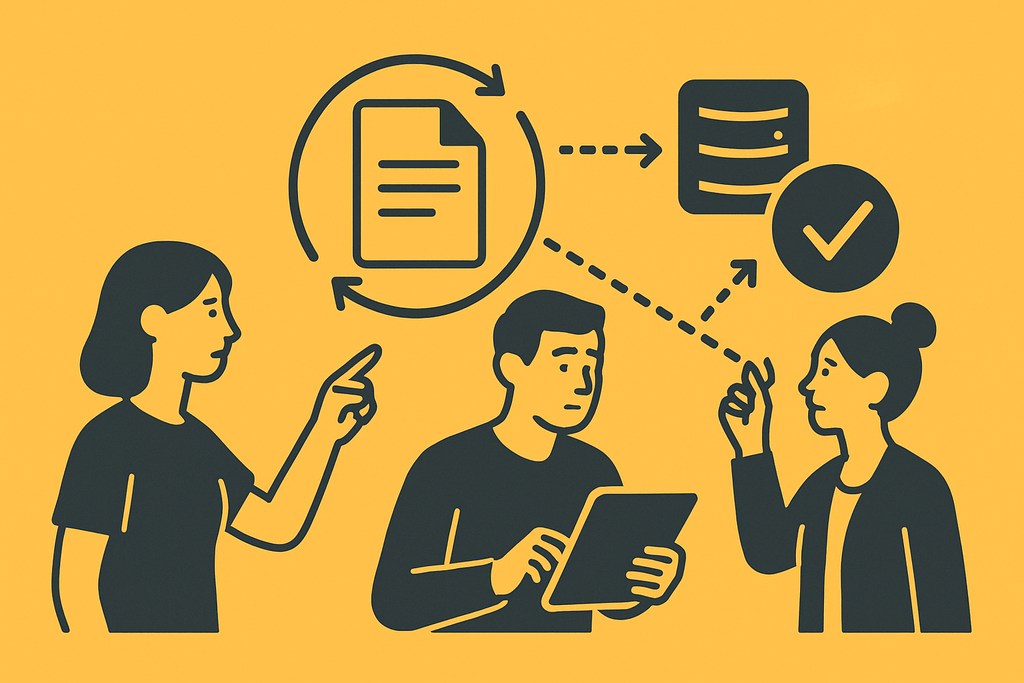
Process automation means that recurring, manual activities are taken over by digital systems. While digitization converts analog workflows into digital formats, process automation goes one step further: it ensures that these digitized workflows run autonomously.
Unlike classic Business Process Management (BPM), which focuses on designing, analyzing, and controlling business processes, process automation emphasizes the technical implementation of task transfer. Robotic Process Automation (RPA) is a special form that automates primarily rule-based, structured tasks.
Its relevance spans from small businesses to large enterprises. Typical examples include:
-
Automated invoice processing
-
Email-based workflows
-
Data synchronization between different systems
Process automation thus lays the foundation for efficient, low-error, and scalable operations.
Status quo and developments up to 2025
Studies show that companies lose immense sums every year due to inefficient, manual processes. In Germany, according to Springer Professional, it’s around 30 billion euros per year. Process automation is therefore becoming increasingly important beyond industry, for example in administration and services.
Technological drivers such as artificial intelligence, cloud services, and no-code/low-code platforms simplify implementation. Today, companies expect more transparency, faster workflows, and better service quality. At the same time, challenges are increasing: more complex requirements, acceptance issues among employees, and high data-protection standards are common stumbling blocks.
Exciting insights and current figures on benefits, challenges, and trends are provided in the article Process Automation: 5 Statistics Your Company Needs to Know. It makes clear how strongly process automation can influence business success.
Benefits and goals of process automation
Process automation offers numerous benefits that go far beyond mere time savings:
-
Fewer errors: Digital systems work reliably and minimize human mistakes.
-
Cost savings: Automated workflows sustainably reduce process costs.
-
Scalability: Processes can be flexibly adapted to new requirements.
-
Better compliance: Requirements such as the GDPR are easier to meet.
-
Resource relief: Teams gain time for value-adding activities.
-
Satisfaction: Employees are relieved; customers benefit from faster services.
The goal of process automation is to make companies more agile, efficient, and future-proof. Sustainable automation means optimally bringing technology and people together and continuously growing with new challenges.
Which processes can be automated?
In today’s business world, process automation is becoming increasingly important for boosting efficiency and competitiveness. But which processes are suitable for automation? Those who know the right criteria and understand typical use cases can identify and leverage potential in a targeted way.

Criteria for automation feasibility
Not every process is equally suitable for process automation. Tasks that follow clear rules and are frequently repeated are particularly promising.
-
Rule-based workflows: Processes with fixed decision rules and standardized steps.
-
High repetition rate: Activities that run identically on a daily or weekly basis.
-
Clear input/output structure: Unambiguous data sources and results.
-
High volume: Frequently performed processes offer especially high savings potential.
Importantly, process automation makes the most sense where manual processing frequently causes errors or where resources can be used more efficiently.
Typical application areas
Process automation takes place in almost every area of a company. Workflows that consume a lot of time and are easy to standardize are particularly popular. Classic application fields include:
|
Area |
Examples |
|---|---|
|
IT |
Account creation, password reset |
|
Finance & Accounting |
Invoice posting, dunning |
|
HR |
Onboarding, contract management |
|
Customer Service |
Ticket handling, self-service |
|
Value creation |
Order management, status queries |
Especially in workflow automation, there are specialized tools that business units can use without programming skills. An overview of options and benefits is provided here: Automate workflows with filehub.
Practical examples from companies
Many companies are already using process automation successfully. Typical real-world examples include:
-
Customer inquiries: Automated handling via web portal, including AI-supported categorization.
-
Invoice processing: OCR solutions read incoming invoices and post them automatically.
-
Contract management: Employment contracts are automatically generated and sent digitally.
-
Hybrid solutions: Critical process steps, such as approvals, remain with humans.
These practical examples show how process automation not only saves time but also reduces errors and additional effort.
Limits of automation
Despite all the benefits, process automation has its limits. Processes with high complexity or creativity are difficult to automate.
-
High variability: Unclear workflows or many exceptions complicate automation.
-
Human oversight: For sensitive data or critical decisions, people remain indispensable.
-
Data quality: Poor or incomplete data prevents efficient automation.
-
System integration: Missing interfaces between IT systems can be an obstacle.
It’s important to find a balance between technology and human expertise to use process automation optimally.
Statistics & trends
The importance of process automation continues to grow. According to current surveys, over 70% of companies plan to automate at least a third of their administrative workflows by 2025.
The return on investment is often quickly tangible: many companies report payback periods within a few months. Studies also show that process automation not only reduces costs but also relieves employees and increases customer satisfaction.
New trends such as AI-driven automation, no-code/low-code platforms, and self-service solutions ensure that more and more processes can be mapped. Process automation thus remains a central success factor for the modern enterprise.
Step-by-step guide: Successfully automating processes
Process automation isn’t a set-and-forget exercise but a structured journey that requires planning, analysis, and continuous optimization. A methodical approach not only increases efficiency but also lays the foundation for sustainable business success. Below is a practical step-by-step guide on how to implement process automation in 2025 purposefully and successfully.

1. Process identification and analysis
The first step toward successful process automation is to capture all relevant business workflows in detail. Create a clear process map and document every single step.
Identify weaknesses, bottlenecks, and potential sources of error. Ask yourself: Where do unnecessary delays occur? Which tasks are repeated regularly and are rule-based?
List all processes and prioritize them by effort, benefit, and suitability for automation. Highly repetitive and high-volume activities are particularly well-suited for process automation.
2. Process optimization before automation
Before you start automating, critically analyze existing workflows. Are there superfluous steps? Can processes be streamlined or standardized?
Optimize workflows by reducing unnecessary complexity and simplifying interfaces. Digitizing manual steps is the basis for fully leveraging later automation potential.
Avoid silo solutions: think holistically and align process automation with your company’s overall strategy. This lays the foundation for sustainable success.
3. Selecting the right automation technology
Choosing the right technology is a key factor in process automation. Evaluate whether RPA software, workflow-management tools, AI-based solutions, or no-code/low-code platforms best fit your requirements.
Pay attention to integration with existing IT systems, data security, scalability, and user-friendliness. Careful selection is particularly important for sensitive data and compliance requirements.
Create a table with your key criteria to efficiently identify the right solution for process automation.
|
Criterion |
Rating (1–5) |
Note |
|---|---|---|
|
Integration |
|
|
|
Data security |
|
|
|
Scalability |
|
|
|
User-friendliness |
|
|
4. Implementation and testing phase
Start process automation with pilot projects. Choose a manageable but impactful process and define clear goals and measurable KPIs.
Involve business units and end users from the outset. Test automated workflows under real conditions and actively gather feedback.
Adjust processes step by step to minimize sources of error and better align process automation with practical requirements. An iterative approach increases acceptance and reduces risks.
5. Rollout and continuous improvement
After successful tests comes the rollout: scale process automation to additional areas of the company. Accompany this step with transparent monitoring and regular reporting.
Monitor the performance of automated processes using defined metrics. Conduct regular reviews to identify improvements.
Change management and targeted training are crucial so that teams experience process automation as an opportunity rather than a threat.
6. Common pitfalls and success factors
One of the biggest challenges in process automation is a lack of transparency. Document every step precisely and ensure that all stakeholders understand the process.
Avoid mistakes such as insufficient data quality or missing system integration. Promote acceptance through open communication and employee involvement.
Further tips and inspiration on best practices can be found in the blog category Best Practices for Process Automation, which highlights current trends, success formulas, and real-world case studies.
Tools & platforms for process automation 2025
In 2025, process automation is hardly conceivable without modern tools and platforms. Companies face the challenge of evaluating and deploying a wide variety of technologies. Which solutions truly add value? A closer look at the most important categories helps with making the right choice.

Overview of key technologies
Process automation is based on several types of technology that cover different requirements:
-
RPA software such as UiPath or Blue Prism is ideal for structured, repetitive tasks.
-
Workflow-management tools (e.g., Asana, monday.com) support the orchestration of complex workflows and team collaboration.
-
No-code/low-code platforms enable the rapid implementation of new workflows, even without programming knowledge.
-
AI-powered solutions automate intelligent tasks such as text recognition or decision-making.
These technologies can often be combined to make process automation even more effective. The choice depends heavily on the specific use case.
Selection criteria for companies
Process automation requires careful selection of suitable tools. Companies should consider various criteria:
-
Compatibility: How well do new tools integrate into existing systems?
-
Data protection & compliance: Are GDPR requirements and hosting standards met?
-
Scalability: Is the platform flexible enough to grow with the company?
-
User-friendliness: Can business units automate processes without IT support?
-
Self-service features: Does the tool allow users to make independent adjustments?
A structured selection process ensures that process automation remains successful and secure in the long term.
filehub: The specialized platform for file and document automation
filehub is an innovative no-code platform tailored specifically to process automation around files and documents. It was developed in Germany and places particular emphasis on data protection and integration:
-
Connecting web portals, software, and on-prem systems for seamless workflows
-
Automated data entry, file management, and approvals without programming
-
GDPR-compliant, hosting in German C5-certified data centers, strong encryption
-
Ideal for SMEs, finance, and HR teams with high compliance requirements
-
Flexible pricing models and a free way to get started
A typical example: process automation such as automatically processing and filing incoming invoices from email attachments into the DMS.
Market overview and comparison
The market for tools for process automation is diverse. Comparing the leading solutions helps with orientation:
|
Tool type |
Strengths |
Suitable for |
|---|---|---|
|
RPA |
Routine, high volumes |
Accounting, IT |
|
Workflow management |
Teamwork, process control |
Project management |
|
No-code/low-code |
Rapid implementation, flexibility |
Citizen developers |
|
AI-powered |
Intelligent automation |
Document processing |
Integration capability is crucial to ensure that process automation works without media breaks. According to The State of Process Orchestration and Automation 2025, more and more companies are relying on self-service models and template libraries to empower business units and speed up implementation.
Success factors and best practices for sustainable automation
Sustainable process automation only succeeds when companies build on a solid foundation. Clearly defined success factors and proven best practices are key to embedding automation in the long term and achieving continuous improvements.
Transparency and process understanding as a foundation
Successful process automation begins with full transparency. Companies must document and visualize all relevant workflows. This reveals weaknesses, bottlenecks, and optimization potential.
Involving business units is essential. Only then does a comprehensive understanding of processes emerge that minimizes sources of error. Process-modeling tools and regular workshops promote clarity. Transparency is the basis for automating processes in a targeted and sustainable way.
Change management and employee involvement
Process automation requires more than technology—it thrives on acceptance and engagement from employees. Early communication about goals and benefits helps to reduce reservations.
Training and workshops strengthen confidence in new workflows. An open feedback culture ensures that improvement suggestions are incorporated. Employees who actively shape the change make a significant contribution to success.
Governance, security, and compliance
Governance is the framework that secures every process automation initiative. Responsibilities and roles must be clearly defined. Only then can control over automated workflows be maintained.
Data protection and compliance—especially regarding the GDPR—are indispensable. Companies should ensure auditability and regularly review processes. A secure technical implementation is crucial, particularly for sensitive data.
Scaling and further development
Sustainable process automation is not a one-off project but an ongoing journey. Companies often start with pilot projects and gradually expand successful automations.
The use of templates and best practices accelerates rollout in additional areas. Iterative adjustments and continuous consideration of new requirements ensure long-term success.
Success measurement and ROI analysis
Process automation should always be measurable. Clear KPIs such as throughput times, error rates, or cost savings help to evaluate success objectively.
Dashboards and reports provide a quick overview of performance. Many companies experience payback within just a few months. Continuous analysis and adaptation are crucial for sustainable results.
Case studies and lessons learned
Companies that focus on transparency and participation report higher employee satisfaction and fewer errors. The finance sector in particular shows how process automation leads to measurable advantages—for example through process automation in finance.
Common mistakes arise when poorly documented processes are automated. Those who instead rely on clear structures and best practices can, according to the article Process Automation Without Chaos – Best Practices from Industry, avoid pitfalls and achieve sustainable results.
Trends and outlook: The future of process automation
The future of process automation is shaped by tremendous innovation, new business models, and an even stronger interplay between people and technology. Companies that adopt these developments early secure decisive advantages in an increasingly data-driven and dynamic market environment.
Technological innovations in 2025
In 2025, several technological trends are significantly driving process automation. Artificial intelligence and machine learning make it possible to automatically process unstructured data and accelerate decision-making. No-code and low-code platforms lower the barriers to entry, enabling business units to build workflows themselves.
Cloud services and APIs ensure seamless integration between applications and create flexible, scalable process landscapes. Process automation also benefits from advanced analytics tools that reveal efficiency potentials. Companies are increasingly adopting modular software architectures to respond quickly to market changes.
Another trend: self-service solutions that empower employees to optimize processes independently. This makes process automation a fixed component of corporate culture.
Automation in new business areas
By 2025, process automation is no longer limited to classic back-office tasks. More and more companies are deliberately using automation in areas such as compliance, sustainability, and customer experience.
End-to-end processes that are automated across company boundaries are gaining importance—e.g., in supply chains or partner networks. In finance, for instance, automated accounting processes create new efficiency potential that also positively impacts transparency and compliance.
Automation of service and support processes will also continue to expand. Companies benefit from higher service quality and shorter response times.
Human–machine collaboration
Process automation does not mean that human work becomes obsolete. Instead, a trend toward hybrid workflows is emerging, in which automation and human oversight go hand in hand. Digital systems take over routine tasks, while people focus on creative and complex activities.
Employee empowerment is key: teams are enabled to actively shape and control automation. Current research, as described in the paper Towards a Theory on Process Automation Effects, emphasizes the importance of a balanced human-technology interaction for sustainable success.
This creates a new work culture in which technology is perceived as a partner.
Challenges and risks
As process automation increases, so do the requirements for data security and compliance. Companies must increasingly address regulatory requirements and ensure that all automated workflows remain transparent and auditable.
Another risk lies in dealing with legacy systems and heterogeneous IT landscapes. Integrating new technologies can become complex if existing systems aren’t compatible. Flexibility and adaptability are required to respond to changing business needs.
Last but not least, the human factor remains central—change management and an open communication culture are essential to reduce fears and resistance.
Forecasts and market development
Experts expect that by 2025 more than 50% of administrative processes in German companies will be automated. Process automation is becoming a key factor for competitiveness, innovation, and resilience.
Companies that invest early in automation achieve measurable advantages: higher efficiency, lower error rates, and stronger employee retention. Across industries, new business models are emerging that are based on digital, automated workflows.
A look ahead shows: process automation will continue to accelerate and increasingly flow into strategic corporate decisions.
Recommendations for decision-makers
To ensure that process automation leads to sustainable success, companies should develop a holistic strategy early on. Investments in modern platforms, continuous training, and active change management are crucial.
Regularly reviewing and adapting automation initiatives to new market and technology developments ensures that companies remain flexible and future-ready. Clear responsibilities and KPIs help make progress measurable.
The most important tip: automation is not a one-time project but a continuous improvement process that involves the entire organization.
You’ve now learned how important efficient, automated processes are for companies in 2025—and how straightforward it can be to get started thanks to modern no-code solutions. Want to experience for yourself how to digitize document workflows with minimal effort, eliminate manual tasks, and ensure the highest level of data security at the same time? Then try filehub—the platform developed specifically for the German market that helps you automate your processes smartly and in a GDPR-compliant way. Start with no obligation and discover the benefits for yourself: Try filehub.one for free now


