Natif AI – Fundamentals, Application Areas, and Perspectives

In 2026, businesses will once again be defined by digital transformation. The pressure to make processes more efficient is increasing rapidly. Smart tools like Natif are revolutionizing document processing.
This guide provides a compact overview of natif, explains the benefits, shows integration paths, and highlights what makes the software unique.
You will learn how the AI tool works, what efficiency gains are possible, how to automate workflows, and why IDP is a must for modern companies.
Now is the ideal time to get started with the guide and discover the full potential of AI-powered document processing.
What is Natif.ai? Basics and functionality
natif.ai is a powerful software solution based on artificial intelligence, developed specifically for intelligent document processing. The company was founded with the vision of advancing digital transformation in document management. Since its inception, the company has aimed to help organizations of all sizes make their document processes more efficient, faster, and more reliable.
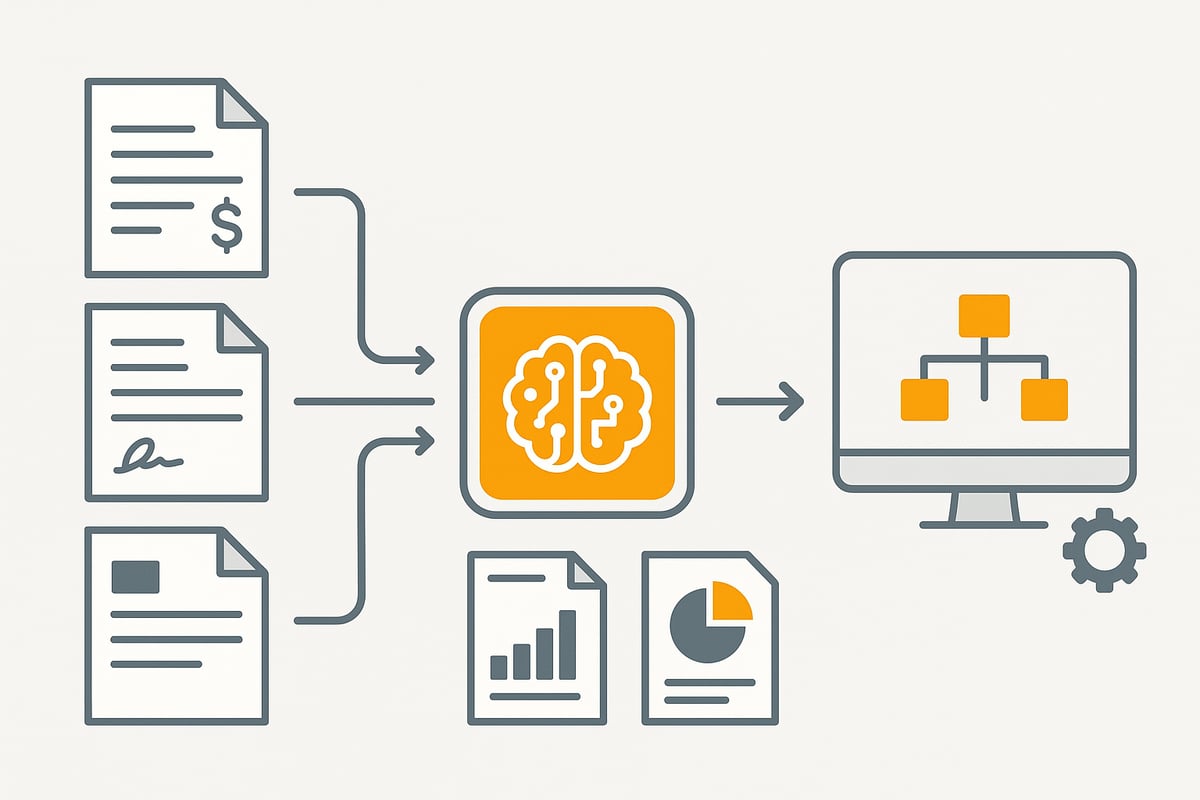
At the core of natif.ai are modern technologies such as machine learning and natural language processing. These enable the software to accurately recognize content from a wide range of document types, classify it, and automatically extract relevant information. Key features include:
-
Text recognition (OCR) with high accuracy
-
Automatic document classification
-
Intelligent data extraction from structured and unstructured documents
-
Validation and plausibility checks of content
natif.ai is used across numerous business areas. Typical use cases include automated invoice processing, contract management, digitization of incoming mail, or handling HR documents. Companies with high document volumes—such as insurers, banks, or public authorities—benefit especially from the solution. A concrete example is the automated processing of incoming invoices: the software identifies relevant fields such as amounts, recipients, and payment terms without manual intervention.
Compared to classic OCR solutions, natif.ai offers significant advantages. While conventional OCR usually provides only basic text recognition, this tool combines it with self-learning algorithms and advanced AI. As a result, even complex document layouts and multilingual content are processed reliably.
Integration into existing business workflows is flexible and practical. Through open interfaces such as REST APIs and webhooks, the software can be seamlessly connected to ERP, DMS, or accounting systems. Integration is particularly easy via automation platforms like filehub, which enable a fast, secure, and scalable connection to natif.ai.
An essential factor is the integration of Intelligent Document Processing (IDP). IDP elevates document processing to a new level by enabling AI not only to recognize text but also to understand context and automate processes. A clear real-world example of how AI and IDP together create value in companies can be found in the Case study: HDI Insurance and IDP.
The software thus represents modern, AI-based document processing that helps companies work more efficiently, avoid errors, and future-proof their processes.
🚀 You've got better things to do.
filehub automatically syncs your Natif.ai documents - in and out — without you lifting a finger, every time.
Benefits of natif.ai for businesses
Adopting the solution brings numerous advantages for companies. Whether small businesses, mid-sized firms, or enterprises—intelligent document processing transforms everyday processes and delivers measurable improvements. Below you will find the most important areas in which Natif provides real value.

Efficiency gains and automation potential
With the software, you automate time-consuming routine tasks such as capturing, checking, and classifying documents. The AI recognizes content, structures data, and passes it directly to downstream systems. Processes like invoice approval or contract review run significantly faster as a result.
You benefit from a noticeable reduction in manual steps. Sources of error are minimized, as the software independently checks and extracts relevant information. This leads to enormous time savings, especially in accounting.
Scalability enables efficient processing of both small and large document volumes. Want to learn more about the concrete efficiency gains? Then read the Benefits of AI in document processing blog post.
Cost savings and ROI
Using Natif reduces ongoing operating costs because less staff is needed for manual document processing. Companies report a fast return on investment because processes become more efficient immediately.
For comparison: Without natif, several employees are occupied with checking and forwarding documents. With the tool, these tasks are handled automatically, freeing up resources for value-added activities.
Real-world examples show that the investment in Natif often pays off within the first year. Significant savings can be achieved particularly in financial accounting and bookkeeping.
Improved data quality and compliance
Natif provides automatic validation and plausibility checks for all incoming documents. This reduces errors and ensures consistent data needed for audits or reporting.
Compliance with the GDPR and other requirements is easily achievable. Documents are archived in an audit-proof manner and all processing steps are recorded end to end.
Did you know that the error rate in manual processes often exceeds 10 percent according to studies? With natif, this number drops significantly, increasing security and transparency within the company.
Flexibility and adaptability
Natif can be tailored to your business processes. Whether you want to process invoices, contracts, HR documents, or emails, the software supports a wide variety of document types and formats.
Integration into existing IT landscapes is straightforward via APIs. Thanks to multi-channel input, the software can process data from emails, scans, or uploads and feed it directly into workflows.
Whether you prefer a cloud solution or on-premises integration, the software adapts flexibly to your requirements and grows with your company.
Integrating natif.ai into business workflows
Integrating the software into business workflows creates the foundation for highly automated, efficient document processing. Companies benefit from flexible interfaces, practical tools, and the advantages of intelligent document processing (IDP). The following explains how the software seamlessly fits into existing processes and what sets it apart from traditional approaches.
Technical integrability and API connectivity
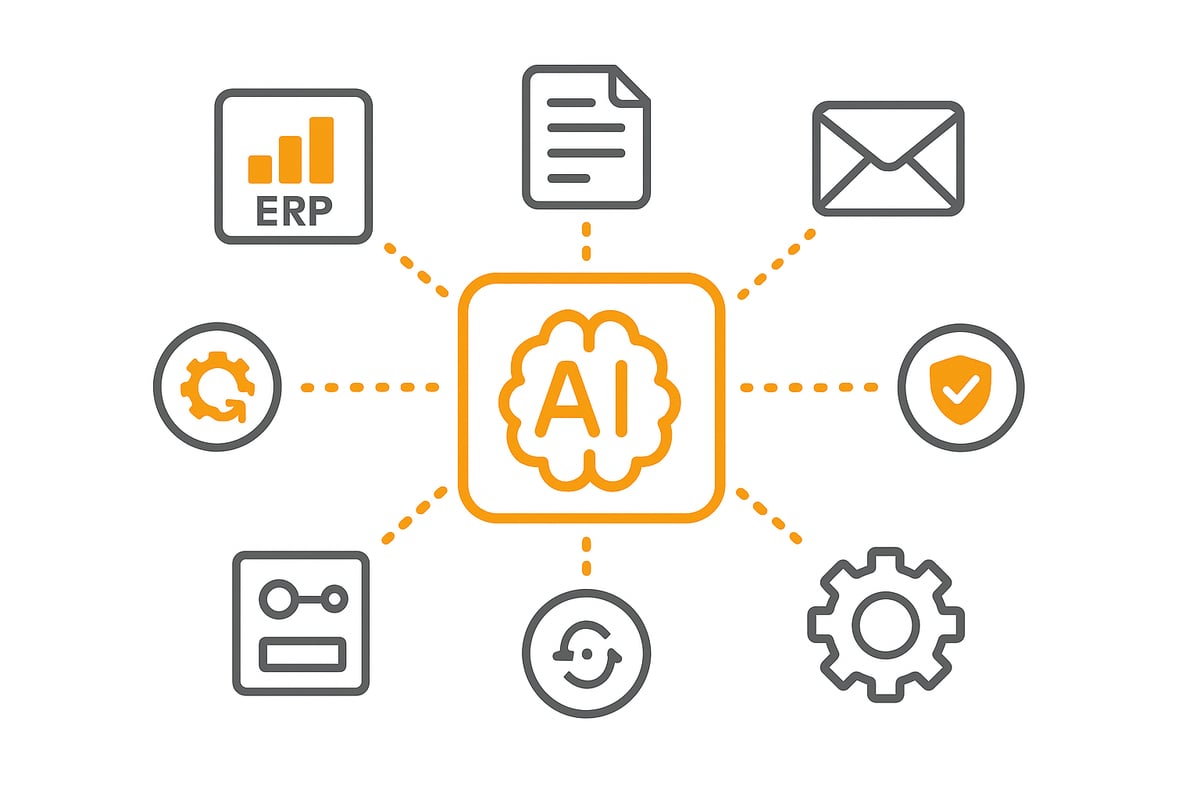
Natif impresses with its open architecture and supports common interfaces such as REST APIs and webhooks. This technical flexibility allows for easy connection to ERP systems, document management solutions, or accounting software.
Developers have access to extensive documentation and can automate entire workflow chains. The API significantly simplifies the connection to existing systems. Integration is relevant not only for large companies but also for mid-sized businesses and start-ups with individual requirements.
A detailed overview of the integration of natif.ai into workflows explains how companies can embed the software efficiently.
Practical example: Integration via filehub
A clear example of seamless integration is provided by filehub. As an automation platform, filehub connects Natif to other tools like financial accounting or DMS/ECM without any programming effort. Companies can automatically pass documents from different sources to Natif via filehub, and the results are fed directly back into the workflow.
Advantages of this solution include:
-
Fast, no-code integration
-
High data security through German cloud infrastructure
-
Easy connection to various channels (email, scan, upload)
For companies that value data protection and efficiency, the combination of filehub and Natif is a real advantage.
⏱️ Every hour of manual work is one hour too many.
filehub automatically syncs your Natif.ai documents - in and out — set it up once, never touch it again.
Onboarding and change management – simple, fast, and without hurdles
Thanks to the integration of Natif.ai via filehub, the introduction is particularly straightforward and requires no long lead time. Neither deep technical expertise nor complex implementation projects are required. The connection is ready to use immediately and can be integrated directly into existing document and process landscapes.
Onboarding usually starts directly in production or with a lean pilot setup to test use cases in practice. Employees can work with the solution without complex training because filehub fully abstracts the technical complexity.
Another advantage:
filehub offers Natif.ai functionality entirely as a whitelabel integration.
This means that no separate contractual or customer relationship with Natif.ai is necessary to test or use AI-based document processing productively. All functions are available centrally via filehub.
Key advantages at a glance
-
No long implementation phase – usable immediately
-
No technical expertise required
-
Whitelabel integration of Natif.ai via filehub
-
No direct contract with Natif.ai required
-
Flexible use even for small document volumes
-
Monthly adjustment of processing volumes according to actual needs
Through filehub, companies can start with small document volumes and scale usage flexibly. The monthly volume can be adjusted at any time to real demand—ideal for pilot projects, individual departments, or seasonal fluctuations.
Integration without typical hurdles
Classic challenges such as data migration, complex interfaces, or system discontinuities are largely eliminated because filehub acts as a central integration and orchestration layer. Existing systems—DMS, ERP, or accounting solutions—are seamlessly connected without the need for custom development.
Through continuous monitoring and simple expandability via filehub, the solution can be rolled out step by step to additional processes, departments, or locations—controlled, efficient, and without friction.
⏱️ Every hour of manual work is one hour too many.
End the data chaos — filehub keeps Natif.ai fully in sync, all the time — set it up once, never touch it again.
What sets natif.ai apart from other AI models
The software stands out through innovative technologies and a consistent focus on intelligent document processing. It combines powerful AI models with practical features to make companies more efficient and secure. Especially when it comes to workflow integration and usage with platforms like filehub, natif.ai shows its strength. The possibilities of IDP are fully leveraged, offering real added value over traditional solutions.
Technological unique selling points
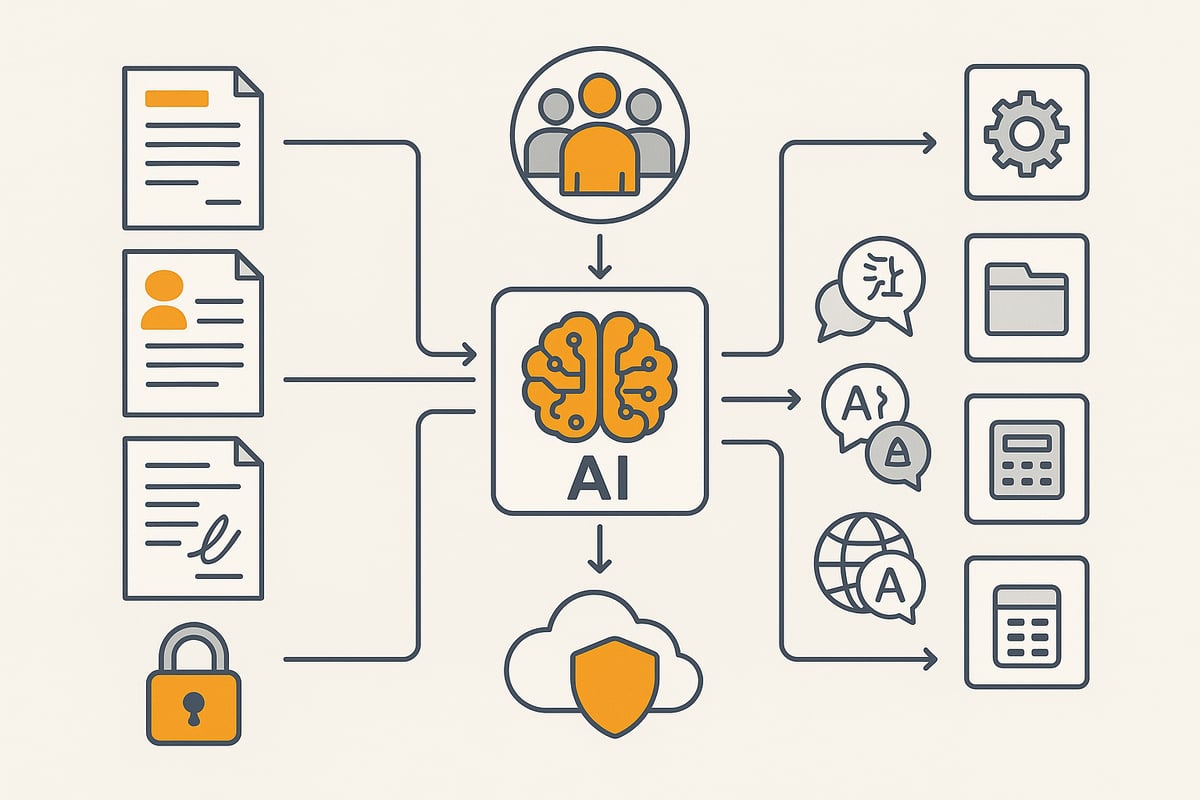
The company relies on proprietary AI models developed specifically for document processing. These algorithms are self-learning and are continuously improved with new data. This enables the software to reliably recognize even complex document layouts and various languages.
Core technologies include machine learning and natural language processing, which enable intelligent classification and extraction. The high recognition rate and adaptability make Natif particularly attractive for companies that value efficiency and scalability.
Practical example: In automated invoice processing, Natif recognizes even unusual layouts and precisely extracts relevant data. Integration into existing workflows—for example via filehub—is straightforward and noticeably accelerates processes.
Comparison with classical and competing solutions
Compared to standard OCR tools or generic AI services, Natif offers significantly higher accuracy and speed. While classical solutions often reach their limits with complex or multilingual documents, the software remains flexible and powerful.
Adaptability to individual business processes is also a decisive advantage. Independent benchmarks show that Natif regularly achieves better results in document recognition and extraction than many competitors. A scientific approach, as described in the Hybrid OCR-LLM framework for document extraction, underscores the efficiency of modern AI solutions pursued by natif.
Full workflow integration—such as via platforms like filehub—enables seamless automation from document capture to data handoff to ERP systems. This gives companies end-to-end processes and a measurable increase in productivity.
Security and data protection at the highest level
The AI software places great emphasis on data protection and compliance. The software is hosted exclusively in European, preferably German, data centers. All data is encrypted at rest and in transit; access controls and detailed logging are standard.
This is a decisive argument, especially in regulated industries such as finance or healthcare. Companies can rely on the company meeting the requirements of the GDPR and other industry-specific regulations.
Integration via filehub provides additional security, as data processing takes place in a protected cloud environment. This ensures that control over sensitive information is maintained at all times.
Community, support, and ongoing development
The software benefits from an active developer community and a dedicated support team. Regular updates and new features ensure that the solution remains state of the art.
Through comprehensive documentation and forums, companies receive quick help with questions about integration or customization. Onboarding is facilitated by best-practice guides and technical support.
The roadmap foresees continuous expansion of intelligent document processing capabilities. This allows companies to benefit long-term from innovation and sustainable optimization of their business processes.
Outlook and trends around natif.ai and IDP
Digital transformation is accelerating rapidly in 2026. Companies are under pressure to automate processes and deploy new technologies. The company offers innovative solutions for intelligent document processing that go far beyond traditional approaches. Which trends and developments will shape the future of AI and IDP? What should companies know now to be prepared?
New developments and AI trends 2026
AI is evolving rapidly. For the AI software, this means deep learning models are becoming even more precise and faster. The combination of language and image processing opens up new possibilities, for example in the automatic detection of complex document structures.
Companies benefit from self-service portals where end customers can upload and process documents directly. Intelligent workflows make automated decisions and increase efficiency. Forecasts show that the market for IDP solutions will continue to grow strongly. Those who want to learn more about current market developments and forecasts will find solid analyses in the Intelligent Document Processing market report 2025.
Industry-specific use cases
Natif is not limited to a single industry but unfolds its potential in many areas:
-
Finance: Automated invoice verification, payment reconciliation, and compliance.
-
Healthcare: Processing patient records, data protection, and rapid document classification.
-
Logistics: Capture and reconciliation of delivery notes, freight documents, and customs papers.
-
Public administration: Digitization of applications and secure archiving of sensitive data.
There are tremendous efficiency gains, especially in finance. If you are looking for details on these use cases, take a closer look at the solutions for financial processes.
Sustainability and environmental aspects
Digitization with Natif helps companies work more sustainably. Paper consumption drops drastically because documents are processed and archived digitally. Energy-efficient cloud infrastructures help reduce the environmental footprint.
Green IT is also gaining importance. By using AI, not only are resources conserved, but legal sustainability requirements are also better met. This positions companies as pioneers in environmentally conscious operations.
Challenges and opportunities in AI adoption
AI solutions bring new opportunities but also challenges. Ethical questions around transparency and the traceability of algorithms are moving into focus. Data quality remains a key success factor—faulty or incomplete documents can impair processes.
Nevertheless, both SMEs and large enterprises benefit from automation. The opportunities lie in more efficient workflows, better compliance, and new business models. Experts expect the market for AI solutions to continue growing in the coming years.
Further resources and best practices
When getting started with AI-powered document processing with natif, it is essential to be well informed and know best practices. Here you will find relevant resources, practical implementation tips, and answers to frequently asked questions about natif, IDP, and their integration into modern business processes.
Important blog posts and articles
If you want to dive deeper into the world of intelligent document processing, make use of current articles and blog posts. It is especially worth looking at the possibilities of IDP in combination with natif.ai, as this provides practical insights. For the public sector, the study on automated document processing for public authorities offers valuable impulses on how AI optimizes processes in administrations. Other recommended posts deal with AI-supported automation, workflow integration, and compliance in digital document processing.
Best practices for introducing natif.ai
Introducing Natif works best in clearly defined steps. Start with a pilot project to gain initial experience with the solution and identify the most important processes. Involve your team early, train employees specifically on the new workflows, and rely on continuous monitoring. Particularly helpful: Use the capabilities of filehub to integrate Natif into existing systems with ease. Regular optimizations will make your document processes sustainably more efficient with natif.
Tips for selecting and evaluating IDP solutions
When choosing a suitable IDP solution, you should focus on key criteria: scalability, integrability, security, and support. Use a checklist to objectively compare different providers. Check how flexibly Natif can adapt to your existing workflows and whether all required document types are supported. Experience from other companies helps you make the right decision for Natif and your organization.
Answers to frequently asked questions (FAQ)
How long does it take to implement natif? In most cases, the first workflows are productive within minutes. Numerous document types such as invoices, contracts, or HR documents are supported. Integration into existing systems usually takes place via APIs or platforms like filehub. Extensive resources, documentation, and a helpdesk are available for support. Data protection is guaranteed at Natif through hosting in Germany and comprehensive security measures.
You have now seen how AI and intelligent document processing can help you automate processes, avoid errors, and save time—and how filehub supports you seamlessly as a platform. If you are curious about how these solutions work in your company and how easy it is to get started, just try it yourself. This way, you can experience directly how much more efficient and stress-free your document workflows can become. The best way to start is with a trial phase and discover the benefits for yourself:
Try filehub.one for free now


