Here is the translation of your text from German into English: **Legal form Sole proprietorship Abbreviation: All abbreviations 2026**
If you are founding or already running a sole proprietorship, sooner or later you will encounter the question of the correct designation and the related abbreviations. The sole proprietorship legal form abbreviation is not just a formal matter, but a legally relevant detail that must be used correctly in business correspondence, on invoices and in official documents. Especially in document management and the automation of business processes, the correct use of these abbreviations plays an important role for smooth processing and legally compliant archiving.
The most important abbreviations for sole proprietorships at a glance
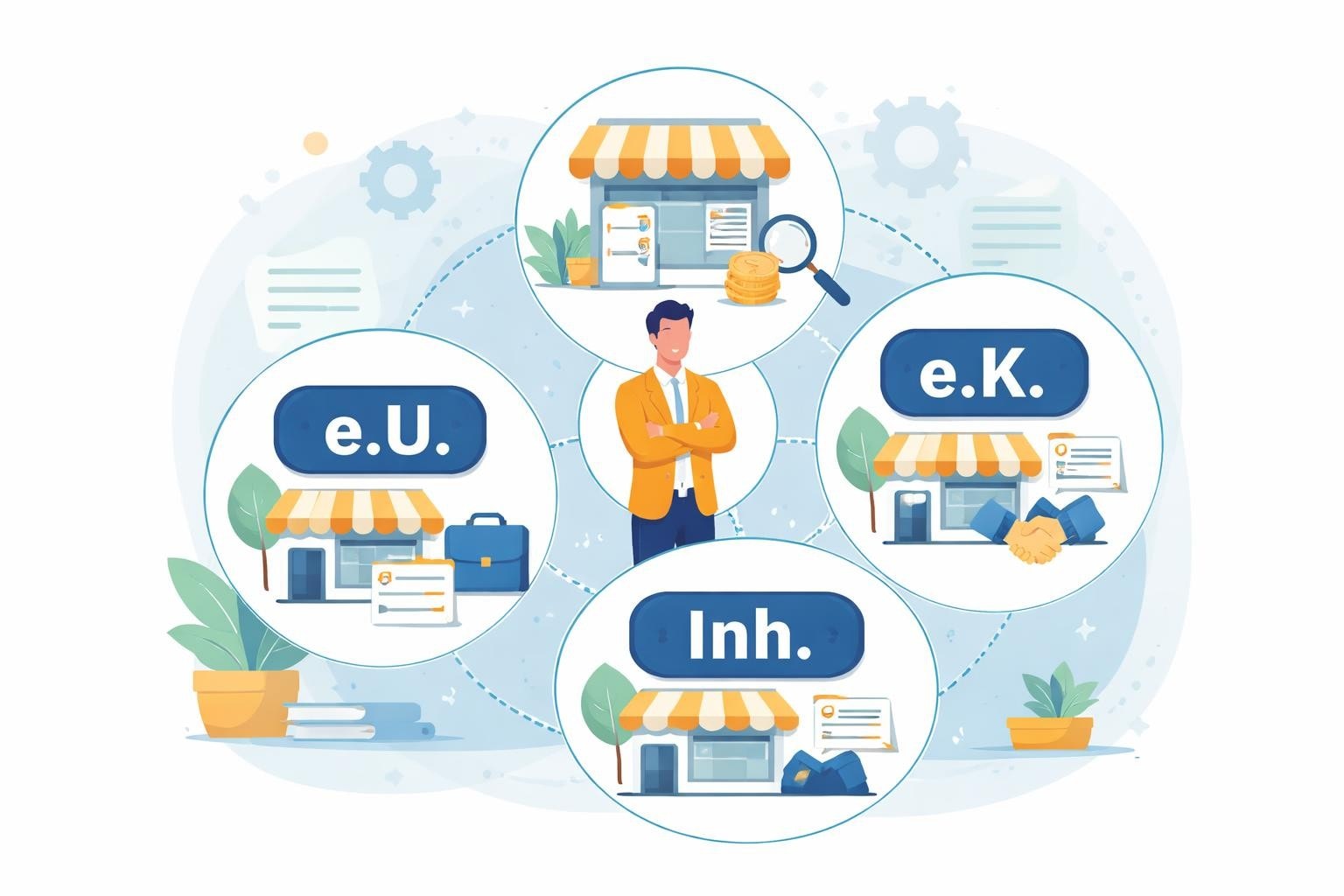
The sole proprietorship legal form abbreviation varies depending on the type of business and whether it is registered in the commercial register. There are various abbreviations that have different legal meanings.
e.K. – Registered merchant (male)/registered merchant (female)
The abbreviation e.K. stands for "registered merchant" (male) or "registered merchant" (female) and is the most commonly used form for sole proprietorships in the commercial register. This designation is used when the sole proprietorship is registered under commercial law and operated in a commercial manner.
When is e.K. used?
- For merchants who are entered in the commercial register
- When annual revenue exceeds 600,000 euros or annual profit exceeds 60,000 euros
- For businesses that require a commercially organized business operation
- For all full merchants under § 1 HGB
The use of e.K. is not optional, but a legal obligation for registered merchants. The suffix must appear on all business papers, invoices, and official documents.

e.U. – Registered business (Austria)
The abbreviation e.U. is used primarily in Austria and stands for "registered business." In Germany, this designation is less common, although it is occasionally used as an alternative to e.K. The Austrian Federal Economic Chamber uses this designation as the standard for sole proprietorships.
| Characteristic | e.K. (Germany) | e.U. (Austria) |
|---|---|---|
| Legal basis | § 19 HGB | UGB (Commercial Code) |
| Registration required | Yes, commercial register | Yes, companies register |
| Liability | Unlimited personal | Unlimited personal |
| Minimum capital | Not required | Not required |
Inh. – Owner
The abbreviation Inh. for "Inhaber" (owner) is often used by small traders who are not entered in the commercial register. This form is typical for:
- Freelancers
- Small traders
- Craft businesses without entry in the commercial register
- Service providers in the non-commercial sector
Unlike e.K., the use of "Inh." is not a legal obligation, but a voluntary designation to clarify ownership.
Legal requirements for company naming
The correct use of the sole proprietorship legal form abbreviation is subject to strict legal requirements. The German Commercial Code (HGB) regulates how sole proprietorships design their company name and which suffixes must be used.
Forming the company name in sole proprietorships
According to § 18 and § 19 HGB there are various options for forming the name:
Personal name
- Must contain the family name of the owner
- May add first names, fanciful designations, or activity descriptions
- Example: "Müller Trading Company e.K."
Descriptive name
- Does not contain a personal designation
- Describes the type of business activity or uses a fanciful name
- Less common in sole proprietorships
- Example: "Digital Solutions e.K."
Fanciful name
- Uses a freely chosen name without reference to person or activity
- Must still include the legal form designation
- Example: "BlueSky Trading e.K."
Mandatory information on business documents
In document automation it is essential that all legally required information is processed correctly:
- Full company name with legal form suffix
- Name of the owner
- Address of the business premises
- Commercial register number (if registered)
- VAT identification number
Practical use of the sole proprietorship legal form abbreviation in everyday business
The correct use of the sole proprietorship legal form abbreviation has a direct impact on your daily business processes and document management.
On invoices and quotes
Invoices must contain certain mandatory information pursuant to § 14 UStG. The legal form designation is part of the full company name and is therefore mandatory.
Example of correct invoice addressing:
Max Mustermann Trading Company e.K.
Owner: Max Mustermann
Sample Street 123
12345 Sample City
HRA 12345
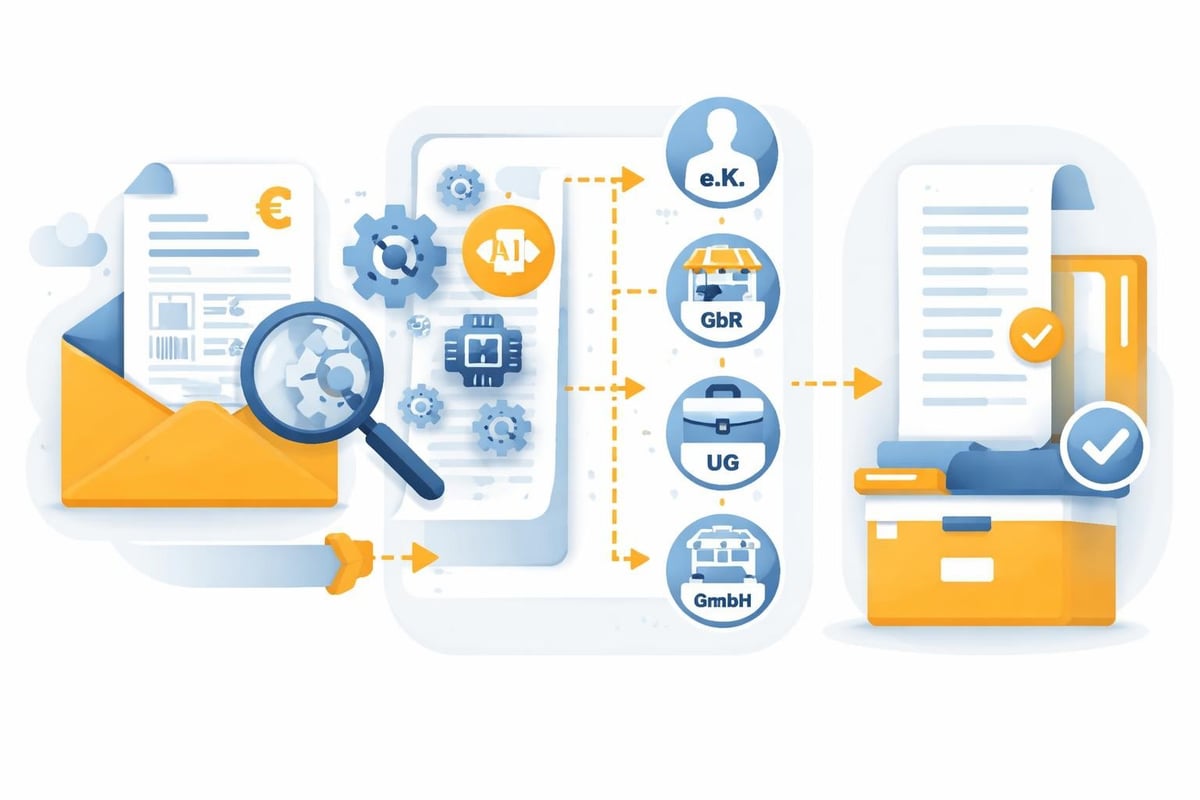
In automated invoice processing it is important that systems can recognize these different formats and assign them correctly.
In the email signature
Your email signature should contain the full company name with the correct legal form abbreviation:
- Registered merchant: "Company GmbH e.K."
- Small trader: "Company, Inh. Max Mustermann"
- Freelancer: Often without legal form suffix, only name and job title
When concluding contracts
In business contracts, the correct designation of the contracting parties is legally relevant. An incorrect or missing legal form designation can lead to uncertainty about liability relationships.
Differences between small business and registered merchant
Not every sole proprietorship requires the abbreviation e.K. The distinction between small business and merchant is crucial.
Small traders
Small traders are sole proprietors who:
- Do not require a commercially organized business operation
- Remain below the thresholds for revenue and profit
- Are not entered in the commercial register
- Use the abbreviation "Inh." or no legal form designation at all
Advantages of a small business:
- No costs for commercial register entry
- Simpler accounting (EÜR instead of balance sheet)
- Lower administrative effort
- More flexible name design
Registered merchants
Registered merchants must or may have themselves entered in the commercial register and:
- Are required to use the abbreviation e.K.
- Are subject to the obligation of double-entry bookkeeping
- Must prepare annual financial statements
- Have expanded options in company naming
| Criterion | Small business | e.K. |
|---|---|---|
| Commercial register entry | No | Yes |
| Accounting obligation | EÜR possible | Double-entry bookkeeping |
| Abbreviation | Inh. or none | e.K. (mandatory) |
| Company name | Personal name with suffix | More freedom of design |
| Formation costs | Low | Higher (approx. €200–300) |
Automation of document management for sole proprietorships
For sole proprietors, efficient document management is especially important because they often work without a larger team. The automation of workflows can save considerable time.
Challenges with different legal forms
When automatically processing business documents, different formats of the sole proprietorship legal form abbreviation must be recognized:
- Invoices from suppliers with different legal forms
- Automatic assignment to contacts in the system
- Correct archiving according to legal requirements
- Automatic invoice retrieval from portals
Solution approaches with file automation
Modern automation platforms can handle these challenges:
Intelligent document recognition
- Automatic extraction of company names and legal forms
- Assignment to existing business partners
- Validation of mandatory information on invoices
Workflow automation
- Automatic download of invoices from web portals
- Forwarding to accounting software
- Structured filing by business partner and legal form
Integration of different systems
- Connection of accounting software such as sevDesk or DATEV Unternehmen Online
- Synchronization with cloud storage
- Automatic data exchange between platforms
International perspective: Switzerland and Austria
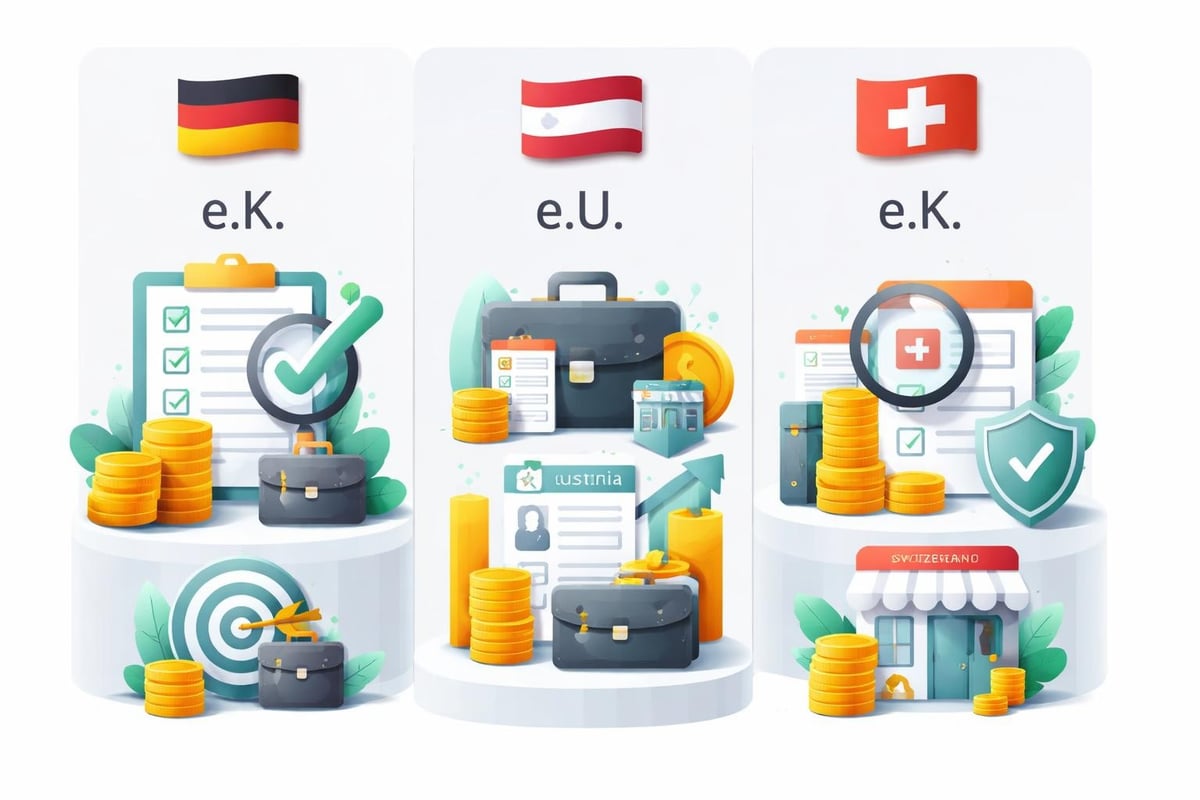
The sole proprietorship legal form abbreviation is handled differently in German-speaking countries.
Switzerland
In Switzerland there are specific regulations for sole proprietorships. According to the Swiss Federal Office for Economic Affairs, the following special features apply:
- No specific legal form abbreviation required
- Company name must include the owner's family name
- Entry in the commercial register from CHF 100,000 annual revenue
- Use of "owner" (male) or "owner" (female) is common
Austria
In Austria, the system of sole proprietorships is structured differently:
- Standard abbreviation: e.U. (registered business)
- Entry in the companies register from certain revenue thresholds
- Clear rules on company naming in the UGB
- Alternative: use of "owner" for small businesses
Common mistakes when using legal form abbreviations
In practical use of the sole proprietorship legal form abbreviation, typical errors occur again and again:
Inconsistent use
Problem: The legal form designation is written differently on various documents.
Solution:
- Define a uniform spelling for all business papers
- Use templates for invoices, quotes, and emails
- Implement automated systems for consistent output
Missing or incorrect abbreviation
Problem: The legal form abbreviation is omitted or used incorrectly.
Consequences:
- Legal uncertainty when concluding contracts
- Problems with commercial register information
- Difficulties in automated processing
Confusing different legal forms
The following are particularly often confused:
- e.K. (registered merchant) with GmbH (limited liability company)
- Inh. (owner) with e.K.
- e.U. (Austrian) with e.K. (German)
Change and modification of the legal form
The sole proprietorship legal form abbreviation can change in the course of business activity.
From small business to e.K.
If your business grows, registration in the commercial register can be sensible or necessary:
Reasons for the change:
- Revenue thresholds exceeded - From 600,000 euros annual revenue or 60,000 euros profit, registration becomes mandatory
- Business expansion - For larger contracts or business relationships, e.K. appears more professional
- Free company naming - More options in choosing a name
Process of the change:
- Registration with the competent commercial register
- Notarization required
- Update all business papers and documents
- Inform all business partners
- Adjust document templates and workflows
Document management when the legal form changes
A change in legal form also means adjustments in document management:
- Archiving old documents with the previous designation
- Updating templates and signatures
- Adjusting automated processes
- Updating all connected systems and integrations
Tax and legal consequences
The choice and correct use of the sole proprietorship legal form abbreviation has tax and legal implications.
Liability
The following applies to all forms of sole proprietorship:
- Unlimited personal liability with all private assets
- No separation between business and private assets
- Full responsibility for all business liabilities
This applies regardless of whether you act as a small trader (Inh.) or as a registered merchant (e.K.).
Accounting obligations
The type of bookkeeping depends on registration:
Small traders (Inh.):
- Income-surplus statement (EÜR) is sufficient
- Simpler documentation
- Less effort for the tax return
Registered merchants (e.K.):
- Obligation to use double-entry bookkeeping
- Preparation of annual financial statements and balance sheet
- Higher administrative effort
- Integration with professional financial software recommended
Social insurance
Sole proprietors are not automatically subject to compulsory statutory pension insurance, regardless of the abbreviation used. However, exceptions apply for certain professional groups.
Digitization and modern business processes
In 2026, digitization is essential for sole proprietorships as well. The correct handling of the sole proprietorship legal form abbreviation plays an important role in this.
Automated invoice processing
Modern automation solutions can:
- Automatically retrieve invoices from portals
- Recognize legal forms and company names
- Automatically transfer data to accounting
- Archive documents in a legally compliant manner
Advantages for sole proprietors:
- Time savings on routine tasks
- Reduction of input errors
- Better overview of finances
- GDPR-compliant processing
Cloud-based document management
Managing business documents in the cloud offers:
- Access from anywhere at any time
- Automatic backups and versioning
- Easy collaboration with tax advisor or employees
- Integration of various platforms and tools
Compliance and data protection
Especially in Germany, compliance with the GDPR in document processing is central:
- Encrypted storage of business data
- Logging of access
- Legally compliant retention periods
- Secure deletion of data no longer needed
Industry-specific particularities
Depending on the industry, there are particularities in the use of the sole proprietorship legal form abbreviation.
Freelancers
Freelancers such as physicians, lawyers, tax advisors or architects:
- Usually do not need entry in the commercial register
- Typically do not use a legal form abbreviation
- Use only their name with job title
- Example: "Dr. med. Maria Schmidt, specialist in internal medicine"
Craftspeople
Craftspeople can operate as small traders or registered merchants:
- Entry in the register of crafts required
- Often e.K. for larger businesses
- For smaller businesses "Inh." or no suffix
- Example: "Müller Electrical Engineering, Inh. Hans Müller"
Online retail
In e-commerce, the correct indication of the legal form is particularly important:
- Imprint requirement with full company name
- Indication in the online shop and on marketplaces
- Correct invoicing for international transactions
- Integration with various shop systems and order management
The correct use of the sole proprietorship legal form abbreviation is more than just a formal requirement – it forms the legal basis for all your business activities and influences how business partners perceive you. Whether you operate as a small trader with "Inh.", as a registered merchant with "e.K.", or in another form, consistent and correct application across all documents and processes is crucial. If you want to automate your document management and business processes, filehub can help you automatically retrieve invoices, process documents in a legally compliant manner, and gain valuable time for your core business – all GDPR-compliant and hosted in Germany.


