Odoo ERP Guide 2026: Efficient Business Management
How future-proof is your company? The digital transformation is posing enormous challenges for companies through 2026. Processes have to become more efficient, more flexible, and more scalable.
Many are looking for a solution that covers all areas of the business. This is exactly where odoo erp comes in. With this platform, you optimize workflows, reduce costs, and gain sustainable competitive advantages.
Odoo erp is the control center for modern business management—whether startup or SME. In this guide, you'll learn how features, benefits, real-world examples, and current trends prepare you for the future.
What is Odoo ERP? Basics and system overview
Odoo is an open-source ERP platform that is modular and suitable for companies of any size. The solution was developed in 2005 as TinyERP and has evolved rapidly. Today, over 5 million users worldwide rely on odoo erp to manage their business processes efficiently. Thanks to its open architecture and modular approach, odoo erp can be flexibly adapted to individual requirements. Companies benefit from a central platform that integrates all core processes and provides digital solutions for business processes.
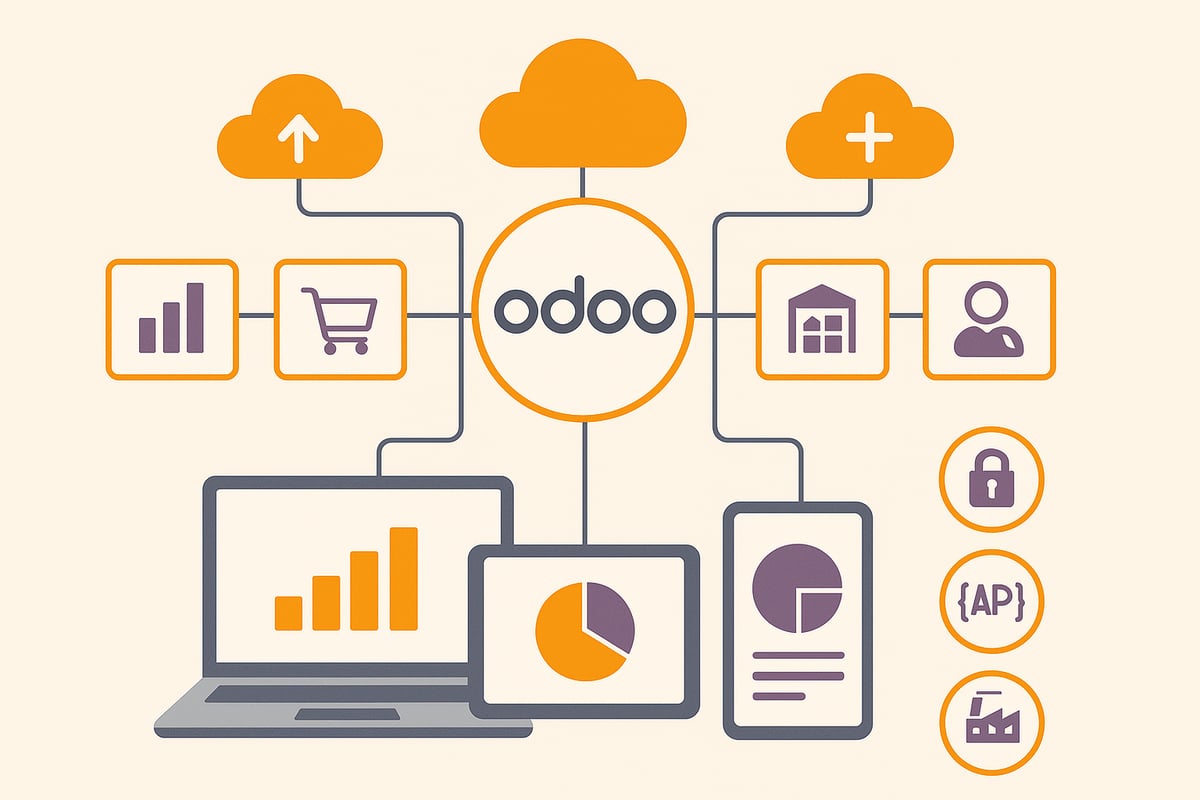
The architecture of odoo erp supports different deployment models: cloud, on-premises, or hybrid. Companies can choose the option that best suits their needs. The platform includes key modules such as:
-
Accounting and finance
-
Sales and e-commerce
-
Warehouse and logistics
-
Manufacturing and production
-
HR and human resources management
-
Marketing and website
-
Business intelligence
The interface is intuitively designed and supports mobile use on Android, iOS, and Windows Phone. Through API interfaces and numerous third-party apps, the system can be seamlessly integrated into existing IT landscapes.
Odoo ERP can be used across industries: manufacturing, retail, services, education, healthcare, or construction all benefit from flexible customization options. Companies can map specific processes and thus drive their digitalization forward. GDPR compliance, hosting in Germany or the EU, and regular updates ensure the highest levels of data and legal security. This makes odoo a future-proof basis for sustainable business growth.
🤖 Copy, paste, forget.
Connect once, stay synced: filehub matches your odoo documents automatically — reliably and without errors.
Advantages of Odoo ERP for business management
Companies face the challenge of making their processes efficient, flexible, and future-proof. This is where odoo comes in: The platform is designed to grow with you and quickly adapt to new requirements. Whether startup or large enterprise, with odoo erp any organization can manage and scale its processes individually.
Cost efficiency and scalability
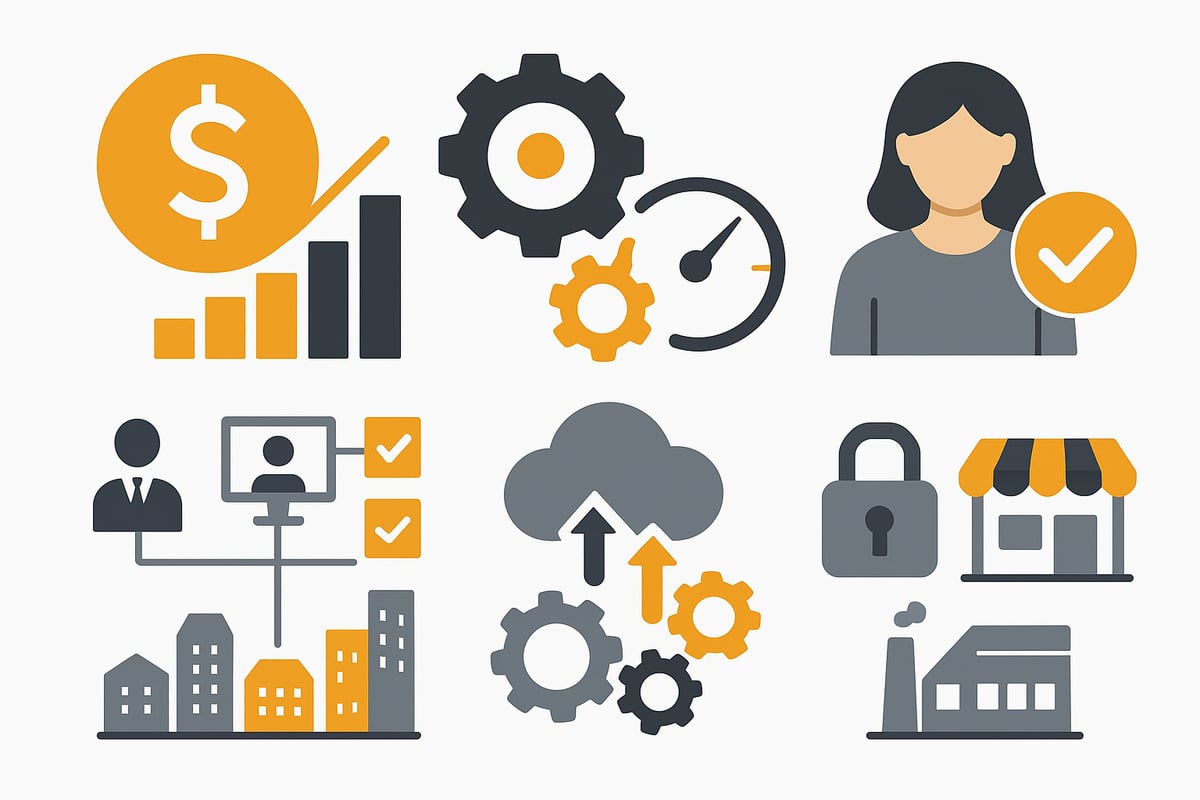
A major advantage of odoo erp is cost efficiency. Thanks to its open-source core and modular pricing structure, entry costs remain low. Companies pay only for the modules they actually need. This enables a manageable start and flexible expansion. Scalability is especially crucial for growing companies: New features can be added at any time without having to rebuild the entire system landscape.
User-friendliness and community
The intuitive interface enables quick onboarding and high acceptance among employees. Dashboards can be configured individually so that each user sees exactly the information that is relevant to them. This is supported by an active community and a worldwide partner network that regularly provides innovations and updates.
Flexibility, automation, and integration
With odoo erp, companies benefit from tremendous flexibility. Industry- and company-specific customizations are possible through tailoring and a wide range of apps. A key feature is automation: workflows, accounting processes, and reports run largely automatically. As automation in accounting shows, core processes can be efficiently digitized and error rates reduced. Seamless integration with existing IT systems, cloud services, and third-party apps ensures that all areas of the business are optimally connected.
Data security, compliance, and real-world examples
Odoo erp meets the highest standards for data protection and compliance. GDPR compliance, audit trails, and role-based access rights are a given. Many companies report noticeable efficiency gains and lower error rates after implementation. Typical results: faster processing times, automated processes, and better control across all business areas.
|
Advantage |
Description |
Example benefit |
|---|---|---|
|
Cost efficiency |
Open source, modular licensing costs |
Starting at €1 per user/month |
|
Scalability |
Modules can be added flexibly |
Growth without system disruption |
|
User-friendliness |
Intuitive dashboards, mobile usage |
High adoption, fast onboarding |
|
Automation |
Workflows, accounting, reports |
Fewer errors, more efficiency |
|
Integration |
Interfaces to IT and cloud |
Connected business areas |
|
Data security |
GDPR, audit trails, access rights |
Legal certainty, trust |
With odoo erp, companies get a central control solution that reduces costs, automates processes, and secures competitive advantages.
Challenges and potential drawbacks when introducing Odoo
Implementing odoo erp offers many opportunities, but it also presents companies with specific challenges. Especially in larger organizations with complex structures, implementation can quickly become demanding. Careful planning is essential to avoid common pitfalls and fully realize long-term benefits.
A central issue is the complexity of adapting to individual business processes. Experienced Odoo partners or consultants are often required to develop tailored solutions and integrations with existing systems. Costs can rise, particularly if special modules or custom developments are desired. Integration with legacy systems can also cause unexpected issues, such as during data migration or when interacting with existing applications. If you want to prepare optimally, the article Best practices for Odoo implementation provides proven strategies and tips to minimize these risks.
Another hurdle is the learning curve for employees. Especially with customizations or advanced features, teams must be trained intensively. The effort for support and maintenance also increases if odoo erp is operated in-house (on-premises). A real-world example shows: A mid-sized company had to allocate additional resources for employee training and customization to ensure the full performance of odoo erp. Those who recognize these challenges early and address them in a targeted manner lay the foundation for successful and sustainable digitalization.

🎯 Ready to never do this manually again?
filehub keeps your odoo documents up to date — automatically, both directions — set it up once, automated forever.
Step-by-step guide: Implement Odoo ERP successfully
Introducing odoo erp is a strategic project that requires clear planning and structure. With a well-thought-out step-by-step guide, you can avoid common pitfalls and ensure the success of your ERP implementation.
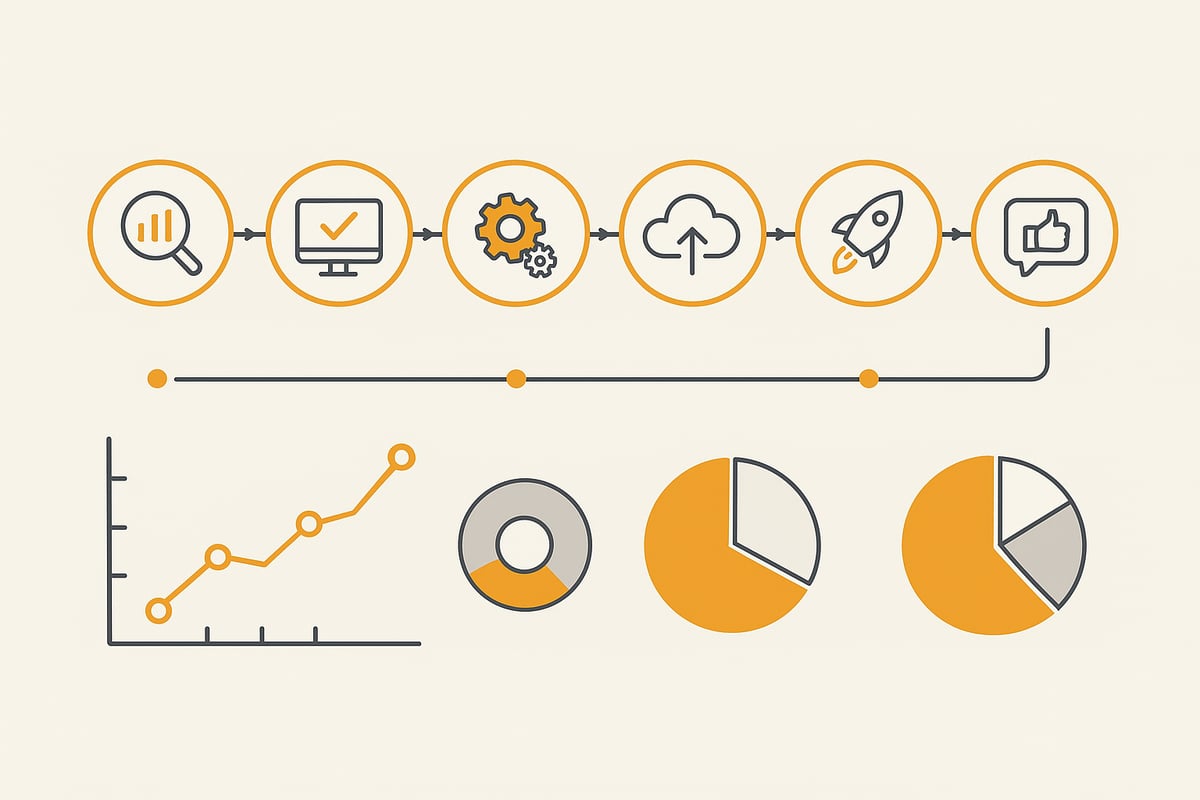
Steps 1–2: Needs analysis and module selection
Start with a precise needs analysis. Create a list of all business processes you want to map with odoo erp. Define clear goals, the desired scope of functions, and the available budget.
Then choose the right edition (Community or Enterprise) and decide whether cloud or on-premises is best for you. At the beginning, focus on the core modules—such as accounting, sales, or inventory—that offer the greatest added value.
Steps 3–5: Selecting a partner, system design, and data migration
For a successful rollout, choosing an experienced implementation partner or assembling a qualified in-house team is essential. Clear communication paths and project roles help save time and avoid errors.
In system design, processes are modeled, customizations planned, and interfaces to other systems defined. It is advisable to plan the integration with Microsoft Outlook M365 early to ensure smooth operations.
Data migration is a critical step. Test the transfer of legacy data and workflows in a safe environment before going live. This minimizes risks and ensures data quality.
Steps 6–8: Training, go-live, and maintenance
Targeted training increases employee acceptance. Conduct role-based training and provide documentation.
Start with a pilot and collect feedback to fix issues quickly. After go-live, ongoing maintenance is important: plan regular updates, evaluate new modules, and continuously optimize processes.
Best practices, tips, and statistics
Use agile methods and schedule regular status reviews. Involve departments early and keep communication transparent. Start with the most important modules and expand odoo erp step by step.
According to ERP.de, large ERP projects often take several months. Cloud solutions can reduce start-up costs and speed up rollout. Pay attention to high data quality and promote user adoption with targeted change management so that odoo erp can reach its full potential.
Industry solutions and real-world examples with Odoo
In today’s economy, flexible ERP systems are in demand—solutions that can be easily adapted to different industries. This is exactly where odoo erp shines. Whether manufacturing, retail, or services—the platform convinces with its modular structure and diverse use cases.
Industries and typical Odoo modules at a glance
|
Industry |
Typical Odoo modules |
Benefits |
|---|---|---|
|
Manufacturing |
Manufacturing, Inventory, Quality |
Automated planning and control |
|
Retail |
POS, Inventory, E-commerce |
Omnichannel sales, stock reconciliation |
|
Services |
Projects, time tracking, HR |
Efficient resource and workforce planning |
|
Construction/Real estate |
Projects, Documents, Budget |
Transparent project management |
|
Financial services |
Finance, compliance, reporting |
Automated accounting |
|
Healthcare |
Patient management, appointments |
Secure data management, compliance |
|
Education |
Course management, resources |
Digital course and participant management |
Manufacturing and retail: Efficiency through integration
In the manufacturing sector, odoo erp enables seamless linking of production planning, quality management, and inventory control. Companies improve their processes by controlling material flows in real time and minimizing sources of error.
Retailers also benefit: By integrating POS, online shop, and inventory, stock levels are synchronized in real time and sales are managed across channels. This ensures greater transparency and a better customer experience.
A case study shows that a mid-sized retailer was able to reduce the warehouse error rate by 50% after introducing odoo erp. At the same time, processing speed increased by a third.
Services, construction, financial services, healthcare, and education
Service companies use odoo for project management, time tracking, and automating billing. The solution offers particular advantages in HR for recruiting, leave management, and payroll. You can find more details about these features under HR solutions.
In the construction and real estate sector, odoo erp ensures transparent resource planning and efficient budget control. Financial service providers benefit from automated reporting and adherence to regulatory requirements. In healthcare and educational institutions, the system enables secure management of sensitive data and flexible resource management.
Companies regularly report efficiency gains of between 20% and 40% after switching to odoo erp. One customer sums it up well: "With Odoo we were able to digitize our processes and reduce the error rate in the warehouse by 50%."
🎯 Ready to never do this manually again?
Connect once, stay synced: filehub matches your odoo documents automatically — set it up once, automated forever.
Odoo ERP 2026: Trends, innovations, and outlook
The future of Odoo will be largely shaped by artificial intelligence and automation. Intelligent workflows, automated forecasts, and ever-deeper AI integration give companies a real competitive advantage. Cloud usage is becoming even more important, as it offers flexible scaling, fast updates, and mobile access. If you want to know which innovations are specifically coming to companies, you’ll find exciting insights in the article Odoo ERP 2026: Trends and innovations.
In addition to AI and automation, low-code and no-code platforms are advancing individual process design. Companies will be able to customize odoo erp even more flexibly in the future without in-depth programming knowledge. Mobile ERP solutions and IoT integrations provide real-time data and location-independent work. Improved dashboards and personalized analytics offer executives maximum transparency. Another trend is regular updates and increased compliance requirements, which Odoo continues to prioritize. How odoo erp will shape smart business processes in 2026 is explained in the article ERP trends 2026: Odoo for smart companies.
You’ve now seen how Odoo ERP 2026 is preparing companies for the digital future—from automated workflows to smart integration and measurable efficiency gains. This is exactly where filehub comes in: With our platform, you connect your data and processes, automate recurring tasks, and ensure everything runs securely and in compliance with GDPR—without any coding. If you want to experience for yourself how simple modern file automation can be, just give filehub.one a try—the start is straightforward and risk-free.


