Amazon Business – Use it successfully

In 2025, Amazon Business is a real game changer for companies in Germany and Europe. More and more firms are discovering the advantages Amazon offers for professional procurement processes. Time savings, lower costs, and efficient handling are among the key benefits.
Do you want to know how to tap the full potential of Amazon Business? Then you’re in the right place. In this guide, we show step by step how companies can use Amazon Business optimally and which tools and strategies are especially important in 2025.
Look forward to practical tips on account setup, the most important features, cost models, best practices, automation options, and current trends. Get started now and take your purchasing to the next level.
Understanding Amazon Business: Basics & Development
Amazon Business has established itself as a professional procurement platform for companies. Unlike private Amazon accounts, the business version is aimed specifically at self-employed professionals, small and medium-sized enterprises, and large corporations. The focus here is on B2B procurement, specific business requirements, and tailored features.
Typical user groups include startups, agencies, trades, industrial companies, and public institutions. Amazon Business has become particularly relevant for German companies, as current statistics show that more and more firms are switching to digital procurement to modernize their processes.

What is Amazon Business?
Amazon Business is the professional variant of the well-known marketplace. Unlike a standard Amazon account, this version offers features such as net prices, purchasing groups, and invoice purchasing. Target groups include self-employed professionals, SMEs, and enterprises that value efficient B2B procurement.
Users benefit from a clear separation between private and business purchases. Typical industries include IT, construction, education, and healthcare. In the German market in particular, Amazon Business is growing strongly as companies increasingly switch to digital purchasing processes.
Historical development & status in 2025
Amazon Business was launched in the US in 2015 and has been active in Germany since 2016. The platform quickly became the leading B2B marketplace. Key milestones included expansion across Europe, the introduction of purchasing groups, and automated workflows.
By 2025, user growth had risen rapidly and revenue reached new record levels. According to Amazon Business revenue worldwide up to 2025, more and more companies are using this platform to optimize their procurement. New features such as AI-driven purchasing optimization further strengthen its market position.
Benefits and challenges for companies
Amazon Business offers numerous advantages for companies:
-
Separation of private and business purchases
-
Simplified accounting and tax deductibility
-
Access to exclusive B2B offers and net prices
At the same time, there are challenges, for example regarding data protection or return policies for business customers. In practice, users report that automating invoicing and integrating with accounting systems is particularly valuable. Nevertheless, clear policies are needed to use the platform optimally.
Amazon Business 2025: What’s new?
In 2025, Amazon Business scores with new features such as Spend Visibility and Guided Buying. Companies can better analyze expenses and strategically steer preferred products or sellers. Integration into existing business processes has been improved, for example through new interfaces for ERP systems.
Automation and AI play an increasingly important role, for example in purchasing optimization. Legal requirements and compliance are also supported by new tools. Experts expect even stronger networking and further innovations in B2B purchasing in the future.
🤖 Copy, paste, forget.
filehub pulls your Amazon Business invoices the moment they appear — no login, no clicks — reliably and without errors.
Set up an Amazon Business account: step-by-step guide
Getting started with Amazon Business is straightforward, but careful setup lays the foundation for efficient processes in your company. Below you’ll find a clear step-by-step guide to set up your Amazon account optimally in 2025. This ensures your business can fully leverage all the platform’s advantages.

Registration & requirements
To create an Amazon Business account, you’ll need proof of business and up-to-date company data. A VAT ID is often required, especially for larger firms. Registration takes place directly at amazon.de/business.
Follow the steps in the online form, upload proof where necessary, and provide all relevant information. Verification is usually automated and often completed within three working days. Existing Amazon accounts can either be converted, or you can open a separate Amazon account for your company. This preserves the separation between private and business purchases.
Settings and user management
After registration, Amazon Business offers flexible options for managing your purchasing structure. You can set up purchasing groups and assign individual user roles. Typical roles include buyers, approvers, and administrators.
Each user receives tailored permissions: Who may order, who may approve or manage orders? Departments and projects can be mapped as groups for teams. This provides a clear overview and ensures security and transparency throughout your Amazon account’s entire purchasing process. This minimizes sources of error and clearly defines responsibilities.
Company data and payment options
Next, add all important company data such as billing addresses and order or document numbers. Amazon Business offers various payment methods: purchase on account with up to 30 days’ payment terms, credit card, or direct debit. For larger companies, managing cost centers and budgets is particularly important.
Efficient payment processes and transparency save time and reduce errors. You can find a detailed guide to managing invoices and documents in the article Amazon account and invoice overview. This way, you always have control over your financial documents in your Amazon Business account.
Integration into existing systems
To seamlessly integrate your Amazon purchasing into existing business processes, you can use interfaces to inventory management, accounting, or ERP systems. Catalog management allows you to define preferred sellers and products. APIs and other integration solutions ensure an automated data flow.
A practical example: Automatically importing invoices into accounting saves time and prevents errors. This makes Amazon Business a central building block of your digital purchasing strategy that fits flexibly into your IT landscape and optimizes processes.
Features & tools at a glance: efficient purchasing for companies
With the right features and tools, your business account becomes the control center for efficient corporate purchasing. Whether you work in a small team or a large enterprise, the platform offers numerous tools to streamline processes and cut costs. Here you’ll learn which features matter most in 2025.

Order and procurement management
The core of Amazon Business is its powerful order management. With advanced search and filtering, companies can find products specifically by gross or net prices. Especially practical: bulk discounts and exclusive business customer offers make large purchases easier.
With the quick order function, shopping carts can be managed efficiently and recurring items reordered quickly. A typical use case: all office supplies for a quarter are put together in just a few clicks. Amazon thus ensures smooth operations, no matter how many products are needed.
Individual shopping lists also help keep standard products at your fingertips at all times.
Invoice and document management
A major advantage of Amazon Business is the automatic provision of legally compliant invoices with VAT shown. All documents are centrally archived and can be downloaded at any time. That’s a real win for accounting.
Additional features such as assigning document numbers or linking to cost centers make allocation even easier. If you want to learn more about automating and managing invoices, you’ll find valuable tips in the article Amazon invoices and documents.
This makes digital accounting a breeze and saves valuable time in day-to-day operations.
Purchasing groups & approval workflows
In the Amazon account, you can create purchasing groups with individual roles and permissions. This lets you determine who can order, approve, or manage. It ensures clear structures within the team.
Approval workflows provide additional security: orders can be submitted for review and only placed after approval. Guided Buying is especially useful, allowing you to steer preferred products or sellers in a targeted way.
An example from the mid-market: the purchasing department sets budgets, while team leads review and approve orders.
Spend Visibility & spend analysis
With Spend Visibility, Amazon Business provides detailed evaluations and dashboards around company expenses. You can see at a glance where savings potential lies or unusual spending occurs.
Integration with controlling or finance departments is facilitated by clear statistics and filtering options. Companies with more than ten users particularly benefit from the transparency and can implement targeted measures to optimize costs.
Regular analyses ensure better control of purchasing.
Automation and integration
Recurring orders can be automated. Templates and order history speed up processes and reduce sources of error.
By connecting to external tools, accounting, or ERP systems, the entire workflow is seamlessly integrated. A practical example: warehouse orders are triggered automatically as soon as defined minimum stock levels are undershot.
This gives companies time for strategic tasks and makes their purchasing future-proof.
Mobile use & security
With the Amazon Business app, you have all purchasing functions under control on the go as well. Orders, approvals, and analyses are always possible on mobile.
Security is ensured by two-factor authentication and detailed user management.
Mobile use makes spontaneous orders easier and increases flexibility in everyday work.
🎯 Ready to never do this manually again?
filehub clears your Amazon Business inbox before you even open it — set it up once, automated forever.
Costs, plans & Prime for business customers
More and more companies are using Amazon Business in 2025 to make their procurement more efficient. But what costs are involved, what plans are available, and how can you make the most of the benefits? Here’s a clear overview to help you find the right model for your company.
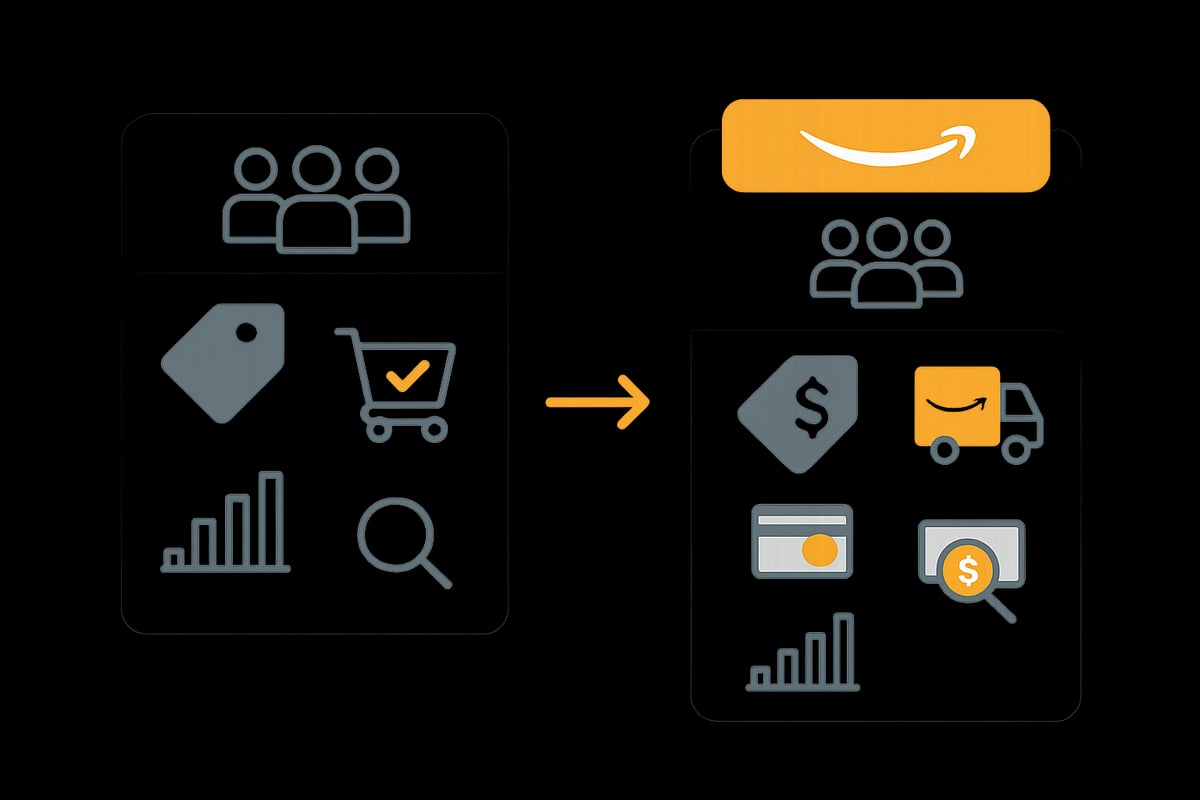
Overview of Amazon Business plans 2025
For business use, Amazon offers various plans tailored to company size and requirements. Options include Duo, Basic, Small, Medium, and Unlimited. The free business account is suitable for individuals or small teams, while paid plans such as Basic (up to 5 users, €85 per year excl. VAT) and above offer more features.
A brief comparison:
|
Plan |
Number of users |
Annual cost (excl. VAT) |
Key features |
|---|---|---|---|
|
Duo |
1–2 |
free |
Basic features |
|
Basic |
up to 5 |
€85 |
Groups, roles, Prime option |
|
Small |
up to 10 |
€250 |
Advanced workflows |
|
Medium |
up to 100 |
€2000 |
Analytics, Spend Visibility |
|
Unlimited |
>100 |
custom |
All features, full integration |
The choice depends on how many users actively use Amazon Business and which additional features are needed. According to Amazon statistics 2025, user numbers and the use of paid plans are continuously increasing.
Amazon Business Prime: benefits & terms
With Amazon Business Prime, companies benefit from faster delivery times, free premium shipping (1-day or same-day, depending on region), and scheduled delivery. Particularly attractive are the 2% Amazon Rewards or, alternatively, an extended payment term of 90 days if you pay with an Amex card (please check terms).
Exclusive Prime deals are available to business customers. This not only helps save costs but also speeds up purchasing processes. For many companies, Prime is a decisive factor in making their procurement flexible and predictable.
There are also special services such as scheduled deliveries or priority handling of bulky goods. This makes Amazon the ideal platform for professional procurement.
Additional features & upgrades
Starting with the Small plan, Amazon Business provides extended features such as Spend Visibility, Guided Buying, and complex approval workflows. These features help you control spending and steer purchasing processes.
With the larger plans, you also gain access to deeper evaluations and analyses. Practically speaking, many companies start with Basic and upgrade to Medium or Unlimited as demand grows. The 30-day trial lets you test the paid plans risk-free.
The upgrade is especially worthwhile as your team grows and you value transparency and efficient purchasing control. This keeps the account flexible and scalable.
Cost optimization & tax aspects
With Amazon Business, costs can be optimized in a targeted manner. Consolidated orders instead of individual purchases reduce shipping costs and effort. Proper invoicing with VAT shown makes tax deductibility easier.
Practical tips for cutting costs:
-
Use bulk discounts and exclusive B2B offers
-
Regularly evaluate expenses with Spend Visibility
-
Optimize payment terms and budgets
Statistics show that companies using Amazon’s business variant reduce their purchasing costs by an average of 10–15%. The combination of efficiency, transparency, and tax benefits makes Amazon Business the first choice for modern procurement.
Best practices & strategies for a successful start in 2025
A successful start with Amazon Business requires a clear plan, consistent implementation, and a willingness to continuously optimize processes. Those who want to be ahead in 2025 should rely on these proven strategies. Here you’ll find compact best practices that have an immediate impact.
Standardize and automate purchasing processes
A structured purchasing process is the backbone of working efficiently with Amazon Business. Define clear purchasing policies that apply to all teams and departments. This ensures everyone knows how and where to order.
Automate recurring tasks, for example by using order templates or automated approval workflows. Budget control can be implemented easily through predefined limits and approval processes.
-
Create policies for all teams
-
Set up automated workflows
-
Define budget limits for different roles
With these steps, processes become not only faster but also less error-prone. This way, you can tap the full potential.
Purchasing analytics and spend optimization
Transparency is crucial for reducing costs and making optimal use of budgets with Amazon Business. Use the Spend Visibility feature to regularly analyze expenses and identify cost drivers.
Dashboards provide a quick overview of all orders, departments, and cost centers. Through targeted analyses, you’ll find savings potential and can adjust purchasing strategies.
A practical example: a mid-sized company analyzes the top 10 suppliers monthly and negotiates better terms with them based on account evaluations.
Employee training and access management
The success of Amazon Business stands and falls with well-trained employees. Start with onboarding for new users so all features can be used efficiently.
Regular updates on new features keep the team up to date. Secure access management with clearly assigned roles and permissions protects sensitive company data.
Tips for effective collaboration:
-
Onboarding process for new users
-
Clear role definitions and access rights
-
Regular training and Q&A sessions
With targeted training, you’ll get the most out of it.
Use exclusive offers and supplier relationships
Amazon Business provides access to special B2B offers and attractive bulk discounts. Regularly compare the terms of different sellers to secure the best deals.
Long-term relationships with preferred suppliers pay off, as they enable individual price negotiations. Use requests for quotes for large orders and rely on sellers with reliable service.
Examples of savings potential:
-
Bundled orders for better prices
-
Use exclusive B2B offers
-
Select sellers strategically and maintain relationships
This turns the Amazon account into a real competitive advantage.
Integrating external tools for workflow optimization
Integrating accounting or ERP systems with Amazon Business saves time and prevents errors. Automation platforms ensure smooth document workflows and relieve the team.
Many companies connect Amazon Business with external tools to transfer data automatically and standardize processes. Learn more about the automation of procurement processes to increase scalability and efficiency in purchasing.
Typical use cases:
-
Automated invoice transfer
-
Synchronization of orders with ERP
-
Workflow automation for approvals
With these integrations, Amazon Business remains flexible and grows with your company.
Document and workflow automation with filehub
With filehub, you can fully automate document and invoice workflows around Amazon Business. Invoices and orders are automatically retrieved, processed, and archived—without any coding.
Integration with accounting software and ERP systems runs smoothly. Benefits include time savings, fewer errors, and GDPR-compliant data processing.
Practical example: a company uses filehub to automate monthly document transfers from Amazon Business directly into accounting. This leaves more time for strategic tasks and increases productivity.
🎯 Ready to never do this manually again?
Forgot a Amazon Business invoice? Impossible — filehub handles every one — set it up once, automated forever.
Trends & outlook: Amazon Business in transition
The world of B2B purchasing is changing rapidly. Naturally, Amazon is at the center of this development and offers companies ever-new ways to future-proof themselves. In the following sections, we take a look at the most important trends that are crucial for Amazon Business in 2025.
Digitalization and automation in B2B procurement
In 2025, Amazon Business is all-in on digitalization and automation. Digital procurement solutions are becoming the standard as companies make their purchasing processes more efficient through AI and automation. Automated order suggestions, smart spending analyses, and integration with ERP systems are more in demand than ever.
Companies increasingly use dashboards to monitor their expenses in real time and tap savings potential in a targeted way. The Amazon marketplaces in 2025 and beyond: 10 trends and statistics you need to know show how strongly digital technologies influence Amazon Business. Those who embrace automation gain a clear competitive advantage.
Sustainability and compliance
Amazon Business is also continuously evolving in terms of sustainability. In 2025, companies are placing increased value on green supply chains and sustainable products. Amazon supports this trend through special product labels and initiatives to reduce CO2.
Compliance requirements are becoming stricter: Amazon helps companies meet legal requirements, for example through transparent documentation and the selection of sustainable suppliers. Sustainable business thus becomes a firm component of modern purchasing strategies.
Internationalization and global procurement
With Amazon Business, international purchasing becomes much easier for companies. More and more firms are using the platform to procure goods across borders and open up new markets. Users benefit from multilingual interfaces and flexible currency options.
According to Record sales for German SMEs on Amazon: €5.7 billion achieved in international trade, the share of international B2B purchases is growing rapidly. Amazon naturally provides the necessary tools to make global procurement efficient and secure.
Future-proof procurement strategies
Investments in training and process optimization pay off in the long term. Companies should regularly review new features and integrate external tools to get the most out of their Amazon business account.
The future belongs to those who continuously adapt their procurement strategy and are willing to test innovative solutions. This keeps companies competitive even in a dynamic market environment.
Do you really want to kick off with Amazon Business in 2025? Then you shouldn’t miss the opportunities of automation. Especially in document management and integration into your existing processes, filehub makes the difference: you automate time-consuming tasks, improve efficiency, and keep your data GDPR-compliant at all times. This lets you focus on what matters and sustainably optimize your purchasing.
Try for yourself how simple and effective automating your workflows can be — try filehub.one for free now.


