Costs of Property Management – Everything You Need to Know 2026

Rising property management costs are a central issue for many owners in 2026. What influences prices and how can you keep expenses under control? Those who know the most important factors quickly spot quality differences and save real money. In this guide, you’ll learn how the costs are composed, what to look for when choosing a manager, and how to save strategically. You can expect practical insights into types of management, price factors, regional differences, special services, and clever savings tips.
Overview: What does property management include and what types of costs are there?
Every property needs professional management, but what does that actually involve? If you understand property management costs, you’ll quickly see that tasks and prices can vary greatly. Whether it’s a condominium owners’ association (WEG), a rental property, or special property management for individual units, expectations of the management company are diverse. Clarity about services and types of costs is the first step to controlling expenses.

Definition and areas of responsibility of property management
Property management costs depend largely on the type of management. In WEG management, the focus is on the care of common property. Typical tasks include organizing owners’ meetings, maintenance, financial management, and communication with all parties.
Rental management additionally handles rent collection, preparation of utility/service charge statements, and tenant communication. Special property management focuses on individual apartments or units, often on behalf of individual owners. It’s important to distinguish between basic services included in the base fee and special services that are billed separately.
Types of costs at a glance
Property management costs consist of several elements. There is usually a monthly base fee per unit that covers standard services. Additional fees apply for special services such as coordinating refurbishments or judicial dunning proceedings.
Billing is either flat-rate or percentage-based, for example measured against rental income. Minimum flat fees and different contract models are also common. You can find an up-to-date overview of the price overview and cost models online to better compare different offers.
Examples and data
According to a current study, the average property management costs for a WEG unit in 2025 are around 30.50 euros per month. The price range varies depending on the type of management:
| Type of management | Cost per unit (month) |
|---|---|
| WEG management | 24.84–28.69 € |
| Rental management | 24.47–35.21 € |
| Special property management | 40–50 € |
A practical example: For a WEG with 50 units, the total costs add up to around 1,525 euros per month, with special services such as major refurbishments billed separately.
Key Insights
Basic services don’t cover all property management costs. Additional tasks such as extraordinary meetings or claims handling incur extra charges. Particularly cheap offers carry risks: service quality often suffers, or follow-up costs arise due to missing services.
A transparent cost structure in the management contract protects against unpleasant surprises. Always check exactly which services are included and how special services are billed.
Cost comparison: WEG, rental, and special property management in detail
Property management costs differ significantly depending on the type of management. Choosing the right form of management helps you save money and compare services more effectively. Below you’ll find a detailed comparison of the models, typical price ranges, and important influencing factors.

WEG management: price structure and influencing factors
WEG management handles the organization and control of common property. This includes bookkeeping, owners’ meetings, and implementing resolutions. Property management costs here in 2025 are usually between 24.84 and 28.69 euros per unit per month.
As the number of units increases, the price per unit decreases because administrative processes can be bundled. Larger properties thus benefit from economies of scale. However, new legal obligations and inflation since 2023 have led to noticeable price increases that you should factor into your calculations.
Rental management: scope and costs
In rental management, tasks such as rent collection, service charge statements, tenant communication, and property inspections are the focus. Property management costs here range from 24.47 to 35.21 euros per unit, depending on the size and location of the property.
Instead of a fixed flat fee, some managers choose percentage-based billing from rental income. Minimum flat fees can apply, especially for small properties. Direct contact with tenants and ongoing support make this form of management particularly labor-intensive.
Special property management (SEV): When is it worth it?
Special property management (SEV) is aimed at owners who rent out their apartment and want to hand over all tasks. These include rental contracts, dunning procedures, operating cost statements, and maintenance. Property management costs are significantly higher here, usually 40 to 50 euros per unit and month or 5 to 8 percent of the net cold rent.
Combined offers with WEG management are often available, which can create synergies for you. You should carefully weigh the choice between a flat fee and percentage-based billing to avoid unnecessary additional costs in the long run.
Examples and statistics
A comparison of average costs clearly shows the differences:
| Type of management | Cost per unit (avg.) | Billing method |
|---|---|---|
| WEG management | 24.84–28.69 € | Flat rate |
| Rental management | 24.47–35.21 € | Flat rate/percentage |
| Special property management | 40–50 € | Flat rate/percentage |
For a WEG with 50 units, the monthly total costs quickly add up to over 1,200 euros. The property manager remuneration study 2025 provides current data on price developments and shows how workload and legal requirements influence costs. Practical examples illustrate that larger properties usually achieve lower prices per unit.
Influencing factors: What drives property management costs?
Property management costs are influenced by a wide range of factors. If you know the key drivers, you can save and make targeted decisions. Let’s take a look at the central influencing variables.
Type of management and scope of services
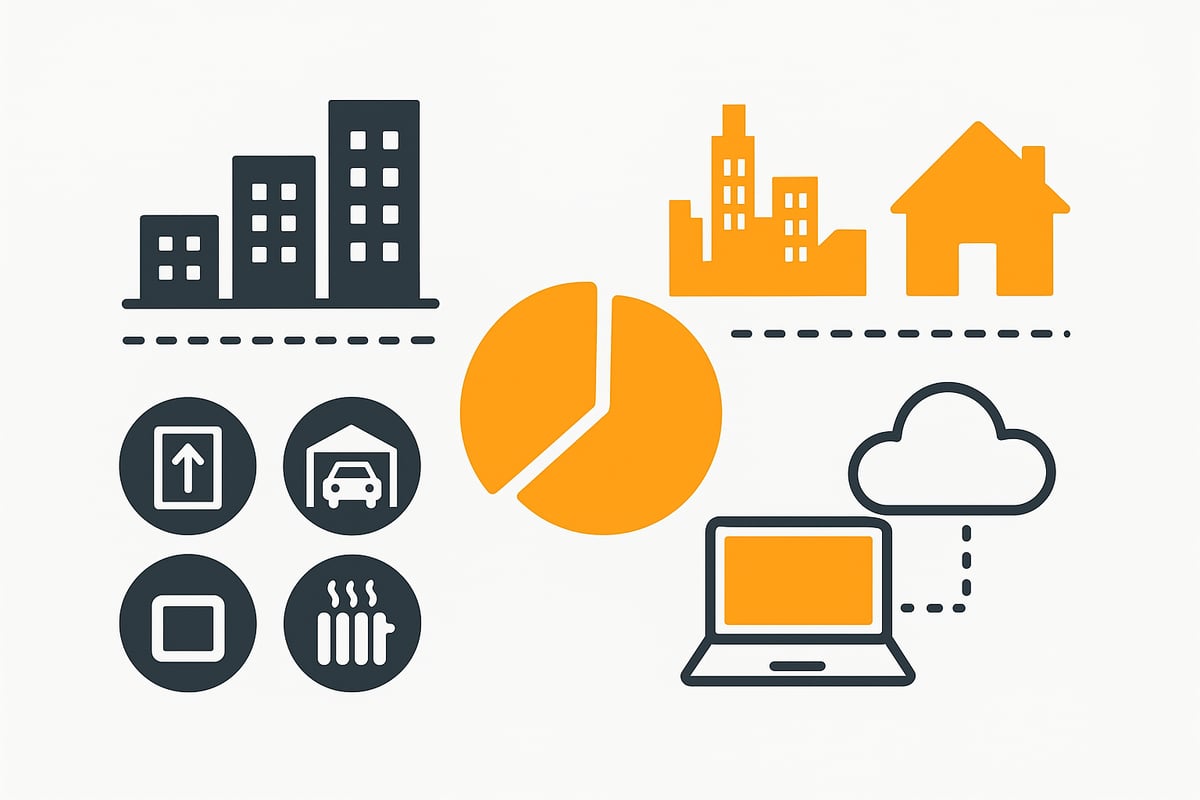
Whether you hire WEG, rental, or special property management makes a significant difference to property management costs. Each type of management comes with its own obligations, processes, and administrative workload. For example, WEG management deals with common property, while rental management is more intensive in tenant management.
The more services agreed in the contract, the higher the property management costs. Additional tasks such as refurbishment projects or legal advice have a direct impact on billing.
Number of units and economies of scale
The size of your property has a significant impact on property management costs. As the number of units increases, the price per unit usually decreases because administrative tasks can be distributed more efficiently.
Here is an example of price development:
| Units | Average cost per unit/month |
|---|---|
| 6 | 45.00 € |
| 50 | 30.50 € |
| 100 | 26.00 € |
Small properties often pay minimum flat fees, while large properties benefit from economies of scale. Nevertheless, special fees for small WEGs can drive property management costs up.
Regional differences: city vs. countryside
Whether your property is in a big city or in a rural area has a clear impact on property management costs. In cities like Munich, Hamburg, or Berlin, prices are often higher. Reasons include higher labor costs, a shortage of skilled staff, and stricter service expectations.
In rural areas, property management costs are usually lower. However, there are fewer providers and longer travel distances, which in turn can cause additional costs.
Technical equipment and condition of the property
Features such as elevators, underground garages, or complex heating systems increase the administrative effort and thus property management costs. Older buildings often require more maintenance, while new builds can usually be managed more efficiently.
The more complex the property, the more time and expertise the management requires. This is directly reflected in pricing.
Owner requirements and digital processes
Demands for fast communication, online portals, or digital documentation increase the workload and can influence property management costs. Modern owners often expect digital solutions that accelerate processes and create transparency.
Digital tools and automated workflows help optimize costs and avoid errors. Suitable property management solutions for finance help make administrative processes leaner and more efficient.
Special services and hidden costs: What should owners look out for?
Special services and hidden costs are the biggest source of uncertainty for many owners when it comes to property management costs. If you don’t look closely here, you’ll quickly pay more than necessary. That’s exactly why you should know what counts as special services, how they’re billed, and where typical pitfalls lie.

What are typical special services?
Not every service is included in property management costs. In addition to classic basic services such as bookkeeping or maintenance planning, there are numerous special services that are billed separately. These include:
- Extraordinary owners’ meetings
- Support for extensive refurbishment measures
- Handling insurance claims
- Apartment inspections on tenant turnover
- New rentals and judicial dunning procedures
- Preparation of financial plans outside the deadline
These services often become relevant only when special situations arise. Therefore, it’s worth taking a close look at the management contract to avoid surprises in property management costs.
Billing and pricing models
The billing of special services differs greatly from usual property management costs. Many management companies work with fixed flat fees per special service, for example 1,000 euros for an additional meeting. Others use hourly rates, which can range between 60 and 100 euros, or charge per unit.
An overview of possible billing models:
| Service | Billing | Typical price |
|---|---|---|
| Extraordinary meeting | Flat rate | 800 - 1,500 € |
| Refurbishment coordination | Hourly rate | 60 - 100 €/h |
| New rental | Per unit | 150 - 350 € |
It is important that the contract clearly regulates which services are already included in the base fee and which may incur additional charges within property management costs.
Risks and pitfalls
Special services may only be billed if they are explicitly listed in the contract. If the contractual basis is missing, unexpected additional costs can quickly arise. Particularly tricky: with unclear contracts, it often remains uncertain which services are actually covered.
Many owners are dazzled by low base fees but overlook that special services can become expensive. The analysis of fees in property management shows that rising fees and more complex requirements influence property management costs and pose additional risks.
Therefore, you should always check the contract to avoid later disputes and unexpected expenses.
Examples and tips
Over the course of a year, special services can quickly add up. Typical additional costs include:
- Several extraordinary meetings during refurbishments
- Court dunning procedures in the event of rental arrears
- Effort for re-letting after move-out
A checklist helps you review the key points in the contract:
- Are all special services clearly defined?
- Are prices and billing models presented transparently?
- Are there minimum flat fees or hidden charges?
A practical case: During a refurbishment, an owners’ association had to pay several thousand euros for additional meetings because these were not defined as basic services in the contract. If you want to keep property management costs under control, always ensure a transparent cost structure.
Savings tips & quality criteria: How do you find the right property management company?
Choosing the right property management company is crucial if you want to keep property management costs permanently low while ensuring high service quality. Good preparation, targeted research, and a clear eye for quality criteria help you avoid cost traps and make sustainable decisions.
Quality features of a good property management company
A professional property management company is characterized by transparent billing, reliable availability, and legally compliant resolution templates. Digital services such as online portals or automated document storage provide efficiency and convenience.
Make sure the management team has solid qualifications and many years of experience. Modern providers rely on efficient business processes that save not only time but also costs. You can find tips for optimization here: solutions for business processes. All these points influence property management costs and directly affect quality.
Avoiding cost traps
Be cautious with conspicuously cheap offers: dumping prices often lead to poor service or incorrect billing. Check minimum flat fees and watch out for hidden additional costs that may be buried in the fine print.
References and independent reviews help you identify reputable providers. Automating processes, especially in accounting, can also help reduce property management costs in the long term. Find details under automation in accounting.
Contract design and negotiation
A clearly structured management contract is essential. Define the service description and cost structure as precisely as possible. Important clauses concern the billing of special services, notice periods, and opportunities to renegotiate if requirements change.
Compare different offers and negotiate if necessary. This is the only way to ensure that property management costs remain within budget.
Practical examples and recommendations
Use checklists to systematically review the most important criteria when selecting a property management company:
| Criterion | Met? |
|---|---|
| Transparent billing | ☐ |
| Digital services | ☐ |
| Experience/qualification | ☐ |
| Clear cost structure | ☐ |
| Positive references | ☐ |
Owners who carefully compare contracts and services report long-term savings. Quality differences in property management costs affect not only the price but also directly the preservation of value and satisfaction.
Outlook: Trends and developments in property management costs for 2026
Property management costs will continue to rise in 2026. The main drivers are inflation, rising salaries, and new requirements for digital processes. Owners must prepare for growing expenses if they expect high-quality management and service.
New laws are an important factor. From 2026, legal adjustments will significantly change remuneration models and obligations. You can find details in the tenancy law changes 2026, which focus primarily on more transparency and consumer protection.
Technological innovations also influence property management costs. Digital tools, automation, and online portals reduce workload in the long term but require investment. The Heating Cost Ordinance 2026 introduces new obligations for remote-readable meters and monthly consumption information, which changes administrative processes.
Sustainability is moving further into focus. Energy efficiency and ESG criteria are becoming mandatory and directly affect the cost structure. Owners should now examine how to make their property fit for the future. Those who inform themselves early and compare offers remain flexible and can control costs better.
You now know what matters when it comes to property management costs—from the different types of management to hidden additional costs and smart savings tips. A key factor for more efficiency and transparency is the digitalization of your document processes. With a smart solution like filehub, you automate time-consuming tasks, improve collaboration, and always keep an overview of all important documents. This way, you not only save real money but also a lot of time and nerves—and can focus on what really matters.
Just try it out for yourself and try filehub.one for free now.


