Mailchimp – Email Marketing Strategy

Did you know that in 2026 more than 390 billion emails are sent worldwide every day? Despite social media, email marketing remains the backbone of successful customer communication. Companies that rely on mailchimp benefit from more efficient campaigns, higher open rates, and smart automation.
In this guide, you’ll learn how to use mailchimp strategically in 2026 to take your email marketing to the next level. Step by step, you’ll discover how to improve your results using the latest features, targeted audience segmentation, automation, GDPR compliance, and best practices.
Whether marketer, SME, agency, or e-commerce – this guide gives you the know-how to use the program to optimize your email campaigns and expand your edge in digital marketing.
Mailchimp 2026: Overview and what’s new
In 2026, Mailchimp is far more than a classic newsletter tool. The platform has evolved into an all-in-one marketing solution that offers companies comprehensive options for email campaigns, CRM, automation, and analytics.
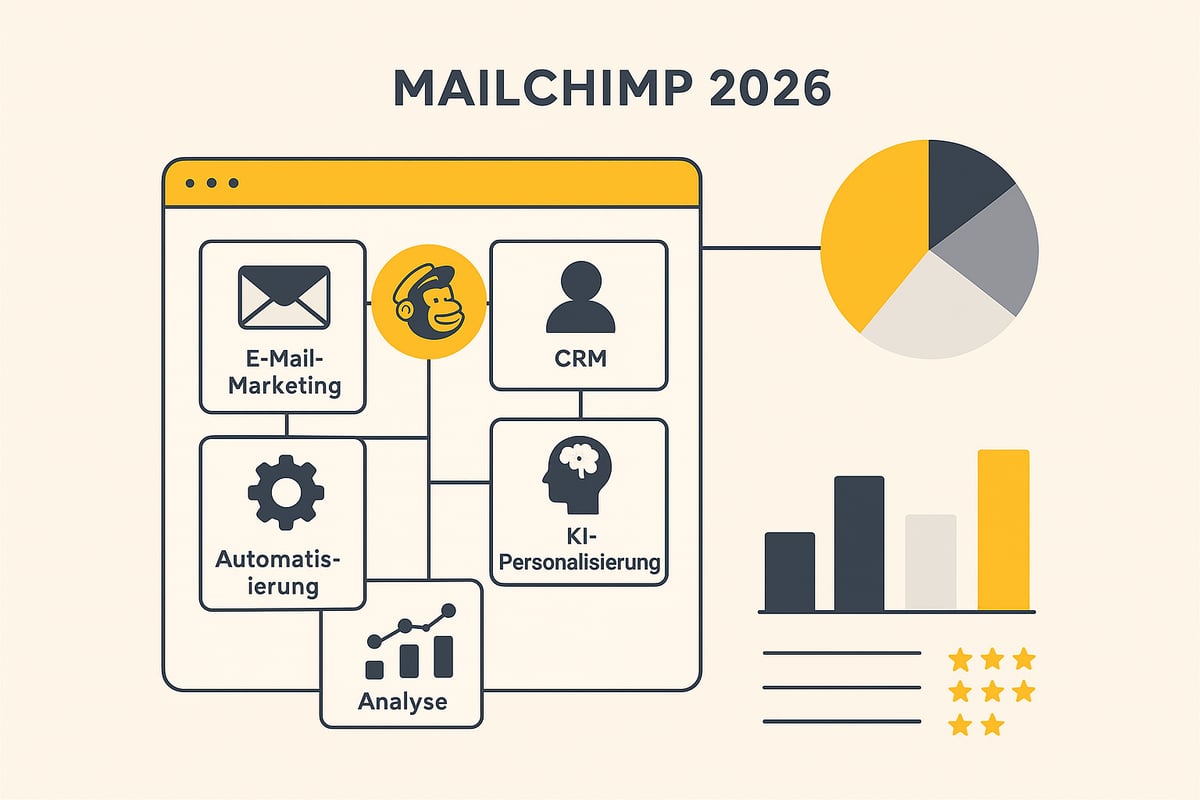
Mailchimp in transition: The most important developments
In 2026, Mailchimp positions itself as a leading platform for digital marketing. Key innovations include AI-powered personalization, improved automation, and deeper CRM integration. In particular, the introduction of the AI Email Content Generator makes it possible to create content even more individually and efficiently. You can find more details in the official announcement from Mailchimp.
Compared to tools like Brevo, CleverReach, or ActiveCampaign, mailchimp stands out with a broad feature set and high user-friendliness. With a market share of around 22 percent and a rating of 3.8/5 points at Tooltester, the program is also established in the German market. The new analytics features offer deeper insights into campaign success.
Plans and pricing structure 2026
In 2026, Mailchimp offers four pricing models: Free, Essentials, Standard, and Premium. The free plan includes up to 1 000 emails per month and 500 contacts. The costs for paid plans depend on the feature set and number of contacts. Key differences from 2025 involve price adjustments and the expansion of automation features.
Especially for beginners and smaller companies, the Free plan remains attractive, even if classic automations are limited. Larger companies benefit from advanced reporting and segmentation options in the higher tiers. Compared to competitors, mailchimp scores with a balanced price-performance ratio, although some features are only available in the more expensive plans.
|
Plan |
Contacts |
Emails/month |
Price from |
Automation |
|---|---|---|---|---|
|
Free |
500 |
1 000 |
€0 |
Limited |
|
Essentials |
Variable |
Variable |
from €13/month |
Basic |
|
Standard |
Variable |
Variable |
from €20/month |
Advanced |
|
Premium |
Variable |
Variable |
from €350/month |
Full |
Advantages and challenges of Mailchimp
The mature editor, numerous templates, and simple integration into existing systems make mailchimp particularly attractive for marketers, SMEs, and e-commerce. The strengths clearly lie in automation, the clear user interface, and the versatility of the platform.
Challenges include limitations in the Free plan, a sometimes higher price level, and localization that is not yet perfect for all German-language requirements. Users particularly praise the intuitive operation but occasionally criticize the complexity of advanced automations. Overall, the program is suitable for companies that value scalability and extensive marketing features.
Audience segmentation and personalization
Targeted addressing of different audiences is a key success factor in email marketing. With mailchimp, companies in 2026 have more options than ever to manage their contacts efficiently and implement personalized communication.
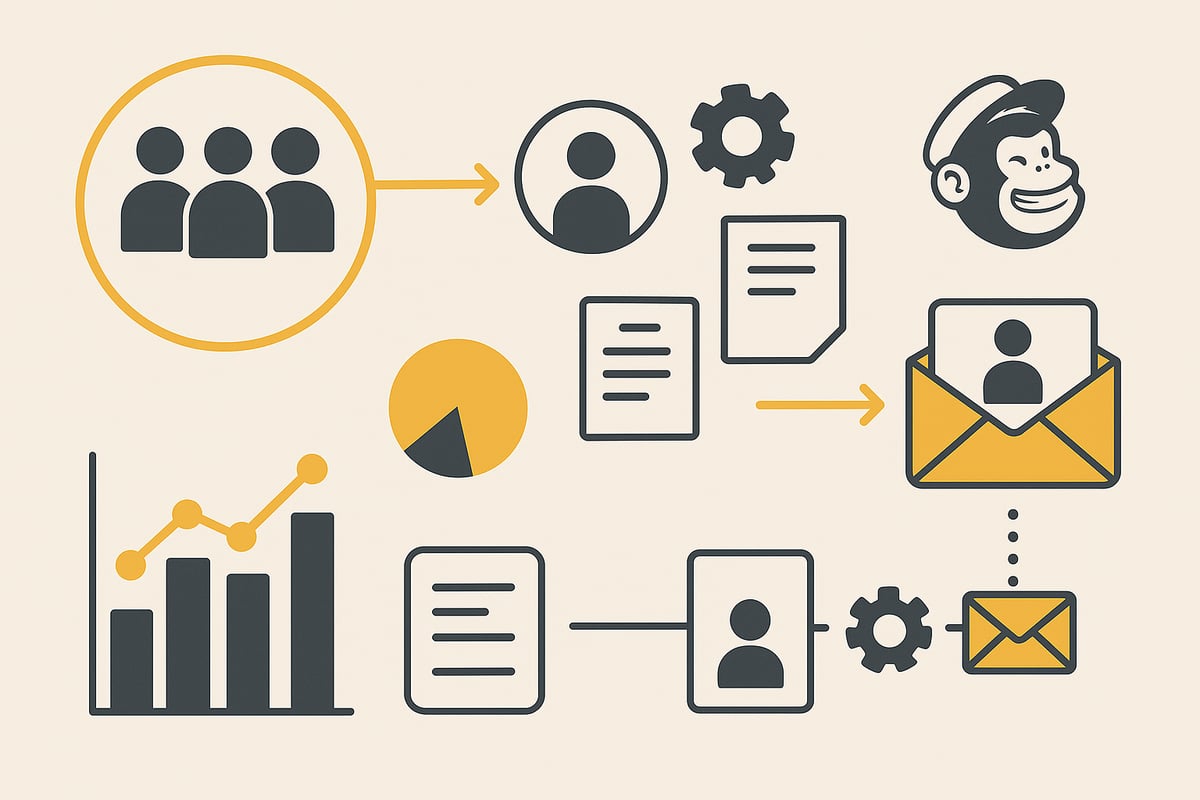
Data management and contact management
With mailchimp, contacts from different sources can be easily imported and centrally managed. The integrated CRM allows detailed segmentation by interests, purchase behavior, or location.
Examples of successful segmentation include:
-
Separating new and existing customers
-
Audiences by purchase history or churn risk
-
Targeted messaging to regional groups
According to industry benchmarks, segmented campaigns achieve up to 14 percent higher open rates. For optimal results, regular data cleansing and consistent compliance with GDPR requirements in contact management are recommended.
Addressing audiences precisely: Personalization options
mailchimp offers numerous features to tailor newsletters to individual recipients. Dynamic content and personalized salutations ensure greater relevance.
With AI features, subject lines and content can be automatically adapted to user behavior. In e-commerce, personalized product recommendations are particularly effective and significantly increase click-through rates and conversions.
Practical examples and further best practices for personalization can be found in the newsletter integration and tips. This way you can achieve up to a 10 percent higher click rate and strengthen the relationship with your recipients.
Automated workflows for different audiences
Automation makes it possible to set up suitable workflows for each segment. Typical automations include welcome series for new subscribers or reminders for cart abandoners.
Triggers and conditions are defined individually, for example for birthday emails or event reminders. The success is measurable: automated campaigns achieve up to 70 percent higher conversion.
To optimize workflows, it is advisable to regularly analyze performance and make adjustments. This keeps communication relevant and efficient.
Data protection and GDPR compliance in segmentation
Compliance with data protection regulations is essential for segmentation with mailchimp. The double opt-in procedure ensures that only recipients with explicit consent are addressed.
Consent management and current legal requirements must always be observed. This not only protects your audiences but also ensures the long-term legal certainty of your email marketing activities.
Creating and optimizing email campaigns
A compelling newsletter is more than just attractive design. With the right tools and strategies, you can significantly increase open rates, clicks, and conversions. The following explains how to perfect your email campaigns step by step—from design to technical implementation.
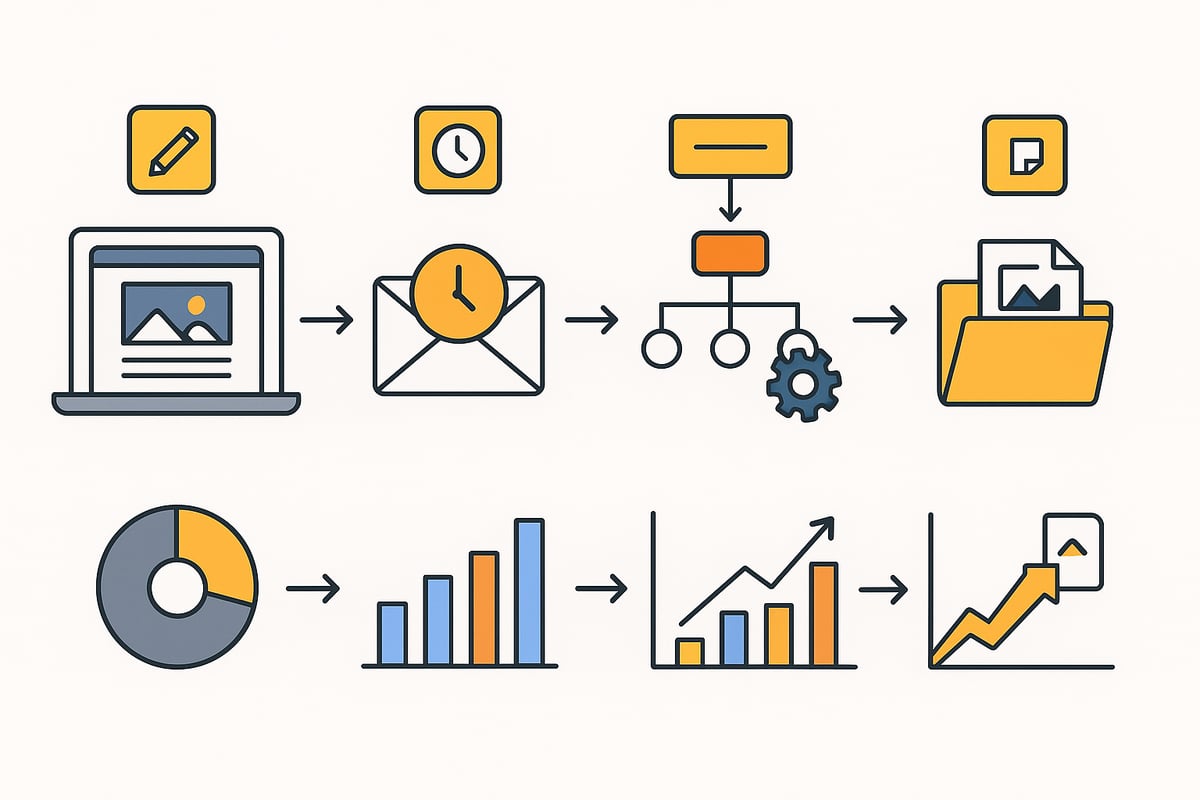
The perfect newsletter: Design and content
mailchimp provides a wide selection of professional templates. You can customize these templates individually to ensure that your newsletter is displayed optimally on all devices. Responsive design is indispensable, as over 60 percent of emails are opened on mobile.
Pay attention to clear, curiosity-inducing wording in the subject line and preheader. Visual elements such as images, GIFs, or short videos increase attention. Interactive elements—such as buttons or surveys—drive more engagement.
Successful examples from Germany show: those who focus on storytelling, clear calls to action, and personalized content benefit from higher click-through rates. With the program, these success factors are easy to implement.
Send time, frequency, and testing
The right send time is crucial to your campaign’s success. Analyses show that Tuesdays at 10 a.m. often achieve the highest open rates. With mailchimp, you can test different times and find out when your audience is most active.
Use A/B tests to compare subject lines, content, and send times. Even small changes can increase the open rate by 5 to 10 percent. mailchimp’s integrated analytics features help you keep track of performance.
By regularly evaluating open and click rates, you continuously optimize your strategy. This helps you develop a feel for which content and frequencies work best.
Automation for maximum efficiency
With mailchimp, you can automate key workflows and save valuable time. Autoresponders, drip campaigns, and trigger emails can be set up in just a few clicks. Typical examples include onboarding sequences, product recommendations, or reactivation campaigns.
Automated campaigns offer many benefits:
-
Higher relevance through targeted messaging
-
Time savings for the marketing team
-
Scalability even with growing contact lists
Industry statistics show: automated emails generate on average 320 percent more revenue per email than classic campaigns. With templates and workflow editors, setup is particularly quick and straightforward.
Deliverability and spam avoidance
To ensure your emails actually land in the inbox, certain technical requirements must be met. In mailchimp, you can configure SPF, DKIM, and DMARC to confirm the authenticity of your sender address.
Be sure to avoid spam trigger words and regularly clean your recipient list. A clean list increases deliverability and protects your reputation. Compared to other tools, mailchimp ranks among the top with a deliverability rate of over 95 percent.
Test sends and previews help you spot errors early. This ensures that your newsletter is displayed correctly in all common email programs.
Integration & automation: Mailchimp in combination with other tools
Integrating mailchimp with other tools is crucial in 2026 to optimize marketing processes. Companies benefit from automated workflows, consistent data, and centralized control of their marketing activities. Those who strategically connect the program save time and increase efficiency in daily practice.
Interfaces and integrations at a glance
mailchimp offers a broad range of integrations that go far beyond classic newsletter sending. The most important interfaces include e-commerce solutions like Shopify and WooCommerce, CRM systems, social media platforms, and analytics tools. The open API makes it possible to implement custom automations and centrally consolidate data from various sources.
By integrating order and customer data from shop systems into mailchimp, targeted campaigns and personalized recommendations can be created. Companies that rely on centralized data storage achieve up to 30 percent time savings in their marketing processes, according to industry statistics. This turns the software into a hub for efficient digital marketing.
File workflow automation with filehub: Efficiency boost for marketing teams
Especially in document-heavy marketing processes, connecting mailchimp and file management is becoming increasingly important. With filehub, file and document workflows can be automated and seamlessly integrated into campaigns. For example, invoices, whitepapers, or quotes can be sent automatically as personalized attachments.
A major advantage is the simple integration without any programming effort, as well as GDPR-compliant data storage in Germany. A practical example: A marketing team uses marketing solutions for companies to automatically send personalized PDF documents via mailchimp. This automation streamlines processes and delivers measurable efficiency gains.
Automated lead generation and CRM integration
mailchimp is not just a newsletter tool, but also a powerful instrument for lead generation. New contacts are captured directly via integrated forms and landing pages and automatically transferred to the CRM. Connecting to systems such as HubSpot, Salesforce, or Zoho CRM is possible with just a few clicks.
Through automated lead nurturing sequences, prospects are addressed in a targeted manner and developed further along the customer journey. Companies report that conversion rates increase by up to 20 percent through automated lead nurturing. This ensures optimal alignment between sales and marketing.
Monitoring, analysis, and reporting
Transparency is crucial to the success of any mailchimp campaign. In the clear dashboard, marketers can analyze open, click, and conversion rates in real time. Integration with Google Analytics or Facebook Pixel provides additional insights for optimizing campaigns.
All relevant key metrics are available at a glance, enabling quick decisions. The program supports data-driven marketing strategies and ensures sustainable success.
Best practices & trends in email marketing 2026
The email marketing landscape is evolving rapidly in 2026. Those who work with mailchimp should know the most important trends and best practices to be successful in the long term. From AI-powered campaigns to new legal requirements—here’s what matters now.
Current trends: AI, automation, and hyper-personalization
In 2026, the use of artificial intelligence in email marketing is standard. With mailchimp, companies can leverage AI features to automatically optimize send times and content. Hyper-personalization becomes reality through machine learning and precise segmentation. Automatic subject line optimization leads to higher open rates.
Practical examples show that AI-based product recommendations significantly increase conversion. According to email marketing statistics for 2026, 70% of companies already use AI elements in email marketing. Those who use the program benefit from these innovations and remain competitive.
Legal framework and compliance
Data protection will remain a central issue in 2026 as well. For mailchimp users, compliance with GDPR and TTDSG is mandatory. Note, however, that this is an American software provider and data is not hosted on German or European servers.
Especially important: double opt-in procedures, clear consents, and transparent data processing.
Those who address international recipients must observe additional regulations. Legally compliant integration of tracking tools is essential to avoid warnings and fines. Regular adaptation to legal changes should be a fixed part of every strategy.
Avoiding mistakes: Common pitfalls and solutions
Many companies make typical mistakes in email marketing that are easy to avoid. The most common pitfalls include:
|
Error |
Solution |
|---|---|
|
Poor segmentation |
Set up audiences properly |
|
Lack of personalization |
Use dynamic content |
|
Spam suspicion due to subject |
A/B tests and spam check |
|
Unclear consents |
GDPR-compliant double opt-in |
With clean data maintenance and targeted automation, these problems can be resolved quickly. A structured workflow ensures sustainable success.
Outlook: Email marketing 2026+
The future of email marketing and mailchimp is clear: even more automation, stronger integration into omnichannel strategies, and growing importance in the marketing mix. Email will remain a central channel for customer retention and revenue growth in 2026 as well.
You’ve now seen how efficiently modern email marketing with Mailchimp and smart automations can run—especially when document workflows and data management fit together seamlessly. Particularly for marketers, agencies, and e-commerce teams that often juggle many files, it’s crucial to streamline processes and remain GDPR compliant. If you want to take it a step further and automate your file workflows, just give filehub a try—risk-free, but with maximum efficiency gains.
Try filehub.one for free now


