Top 7 property management software for efficient management
Digitalization is fundamentally changing the real estate industry. More and more property managers are looking for innovative ways to make processes more efficient.
In 2026, owners and property managers will face new challenges, such as increasing regulatory requirements and growing complexity. This is exactly where modern property management software comes in, helping to avoid errors and save valuable time.
With automated workflows, there is more room for tenant and property support. Transparency and control improve noticeably.
In this article, you’ll find a comparison of the top 7 property management software solutions for 2026. Discover which features and benefits are crucial for your company.
Why modern property management software is indispensable
The real estate industry is undergoing a digital transformation. Today, modern property management software is the key to meeting the rising demands for efficiency, transparency, and cost control. Digital solutions replace manual processes, reduce sources of error, and speed up overall administration.
Efficiency through digitalization and automation
With property management software, all relevant data, documents, and processes can be centrally controlled. Automated workflows lead to significant time savings. Tasks such as accounting, operating/utility cost billing, or payment management largely run in the background.
The benefits at a glance:
- Overview of all rental, condominium association (WEG), and commercial properties on a single platform
- Automated communication with tenants, owners, and service providers
- Digital portals for quick exchange and transparent information
- Time savings through automated accounting and billing
Those who rely on digital processes benefit from lower administrative costs and a more efficient workday. For a comprehensive look at how digital processes are transforming property management, see Digital processes in property management.
Regulatory requirements and compliance
Laws such as the GDPR, GoBD, or the Heating Costs Ordinance place high demands on property management. Property management software helps ensure compliance with all regulations. Automatic updates, audit-proof archiving, and transparent permissions management are standard today.
By integrating banking, tax, and document management systems, all relevant interfaces are covered. This keeps management legally compliant at all times, even with complex regulatory requirements.
Scalability for every business size
Whether you’re a private landlord or a large property management company, modern property management software offers suitable solutions for every need. The systems can be flexibly expanded, grow with your portfolio, and adapt to individual requirements. Thanks to cloud and mobile solutions, working from anywhere is easy.
Practical example and market data
A practical example shows clearly: Using property management software can reduce administrative effort by up to 50%. Automated processes noticeably relieve the team and create more time for tenant and property support.
The market is evolving rapidly: According to current figures, there are over 61 different software products in the DACH region alone that are specifically tailored to the requirements of property management. Those who adopt modern solutions early gain a clear competitive edge.
Top 7 property management software for efficient management 2026
Choosing the right property management software now determines efficiency, transparency, and growth. Modern solutions score with user-friendliness, feature breadth, innovation, support, and flexible pricing. Especially important is the automation of accounting, which not only saves time but also minimizes errors. For a deeper look at the benefits of automated processes, check out Accounting automation for property managers. Below, we present the top 7 property management software solutions for 2026, each with their strengths and unique features.
immocloud
immocloud is a cloud-based property management software aimed particularly at private landlords and small to mid-sized management companies. With prices starting at around 10 euros per month, it offers an attractive entry-level model.
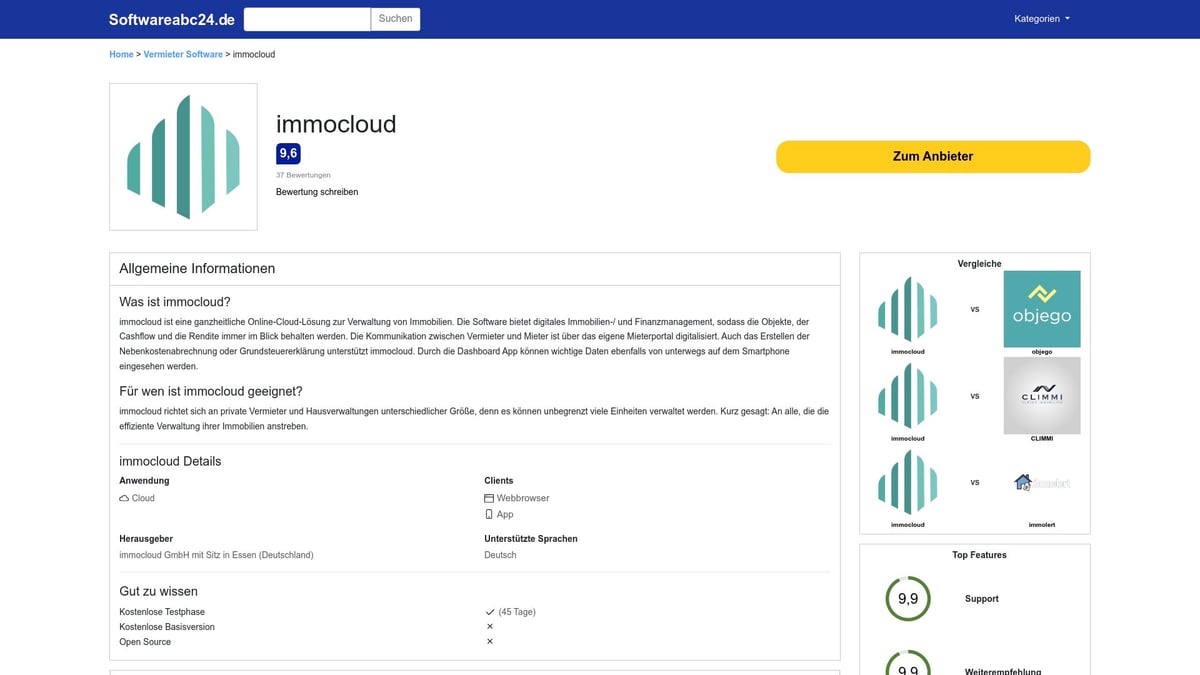
Core features include digital property and financial management, an intuitive tenant portal, operating cost and property tax billing, and a dashboard app for mobile use. The software stands out with automated workflows that save a lot of time and consistently receives high user ratings.
Advantages include ease of use, mobility, and a comprehensive feature set. For very large management companies, the feature scope may reach its limits. The USP lies in its strong cloud orientation and focus on mobile communication.
Win-CASA
Win-CASA is an established property management software that has been on the market since 1998. It relies on local installation, starts at 398 euros, and offers a free trial.
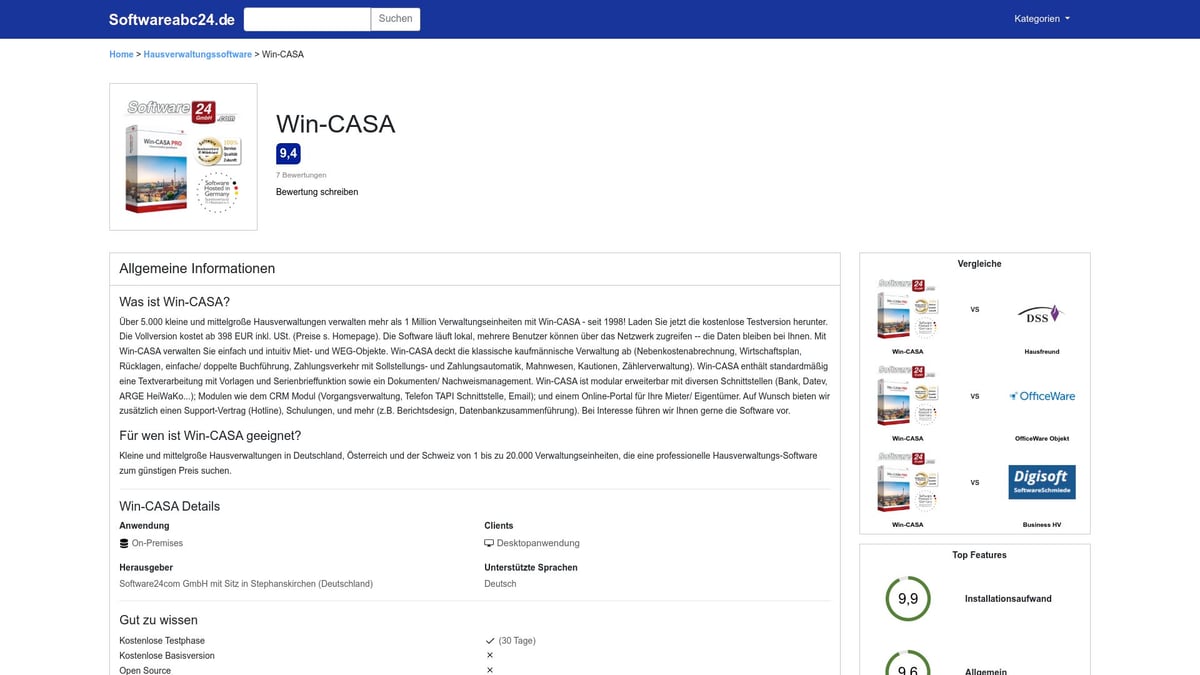
The software supports rental and condominium association (WEG) management, double-entry accounting, payment transactions, and dunning. Particular emphasis is placed on data security, as all data is stored locally. Network capability also allows access for multiple users.
Advantages include mature technology, stability, and classic accounting functions. Disadvantages are the lack of a pure cloud option and higher maintenance effort. Win-CASA is ideal for small to mid-sized management companies with local IT infrastructure.
VS3
VS3 is a professional property management software for larger managers and companies. Pricing is offered individually, and the solution adapts flexibly to your needs.
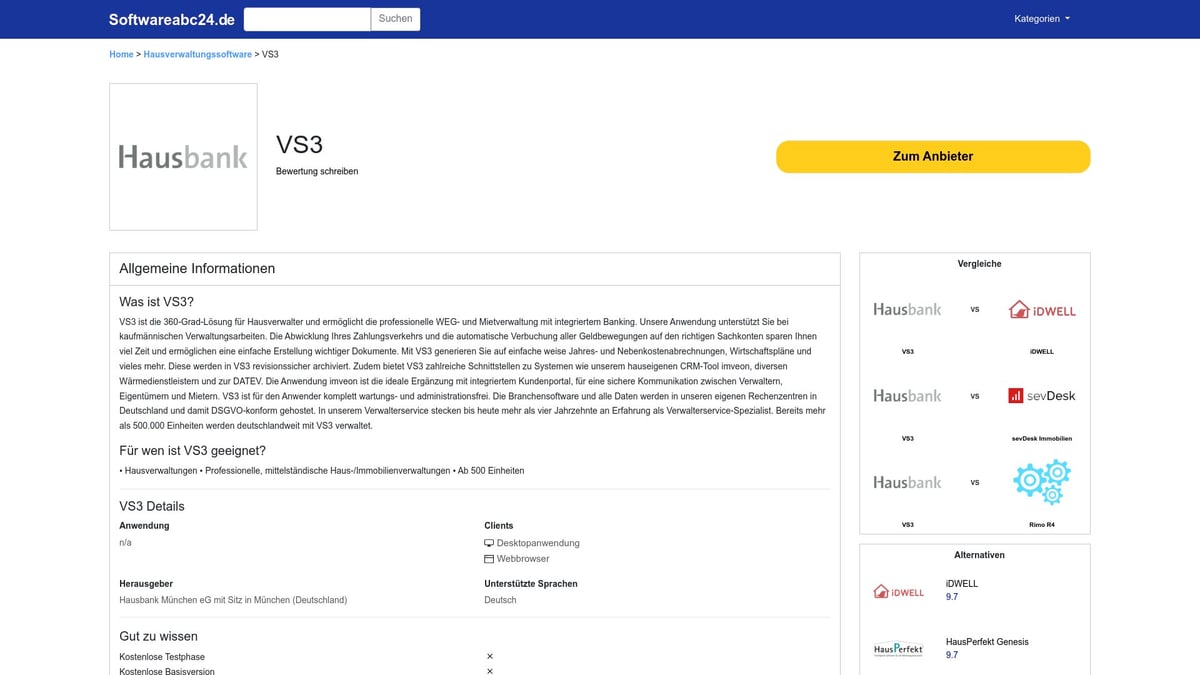
With 360-degree management, integrated banking, automatic posting, and audit-proof archiving, VS3 covers all processes. Business plans, document management, and bank interfaces facilitate daily work.
Advantages include strong automation and comprehensive financial management. For beginners, the learning curve can be demanding. The USP is an end-to-end platform with deep banking integration and automation.
hellohousing Web App
The hellohousing Web App targets private and commercial landlords as well as smaller property managers as a property management software. Pricing is individual, and a free trial makes it easy to get started.
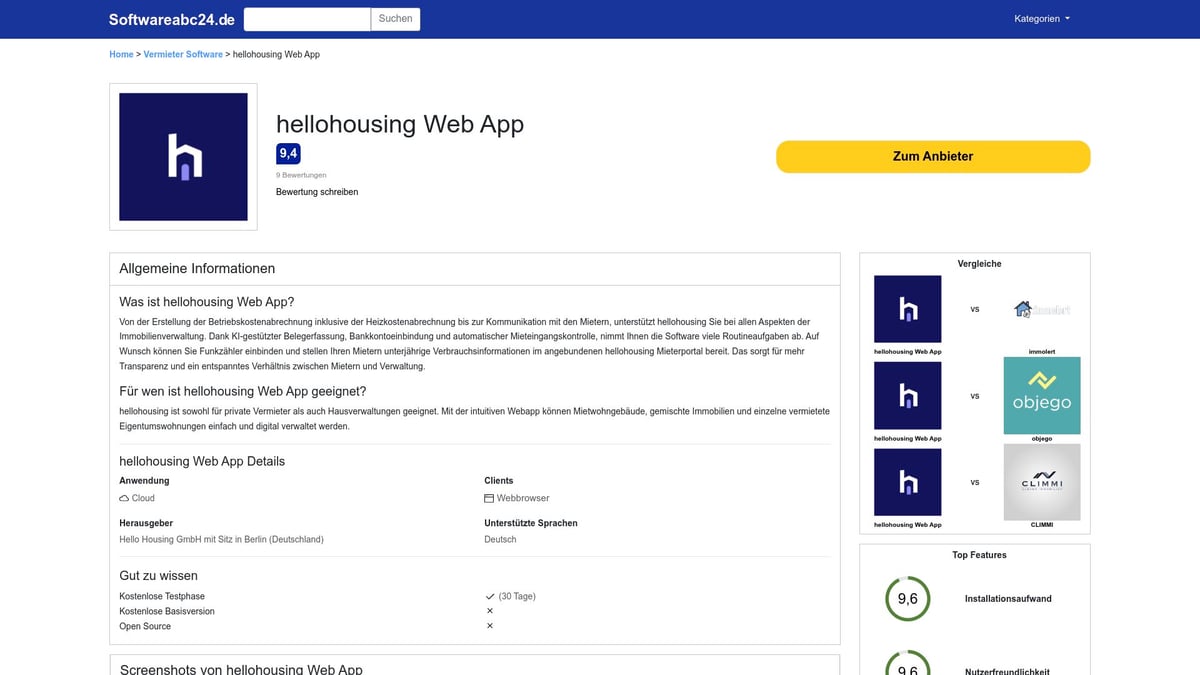
Key features include operating and heating cost billing, AI-powered receipt recognition, bank account integration, and automated rent payment monitoring. The integration of wireless meters and a tenant portal ensure transparency.
Advantages are innovative AI automation, ease of use, and very strong user ratings. The solution is particularly suitable for small to mid-sized portfolios. Those managing many large portfolios should review the feature set.
nahaus.de
As a property management software, nahaus.de combines modern AI technology with an intuitive interface. Prices vary by package and scope and are aimed at managers and landlords with multiple properties.
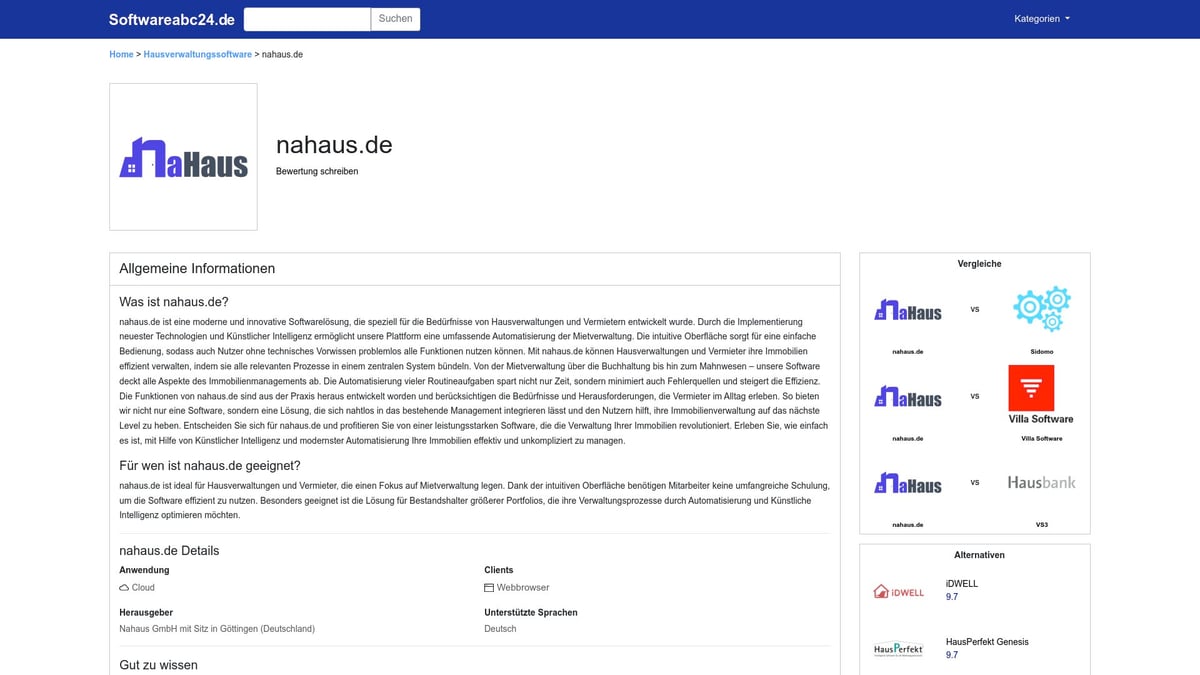
The software offers central process control, document management, and smart communication tools. Automations simplify rental management and save time. Beginners especially benefit from the simple user guidance.
Advantages are the modern approach and rapid digitalization. Since nahaus.de is still new to the market, the feature scope should be compared carefully. The USP lies in combining AI with user-friendliness.
SMARTBRIX
SMARTBRIX presents itself as modular property management software for real estate companies, managers, brokers, and developers. Pricing depends on modules and number of users.
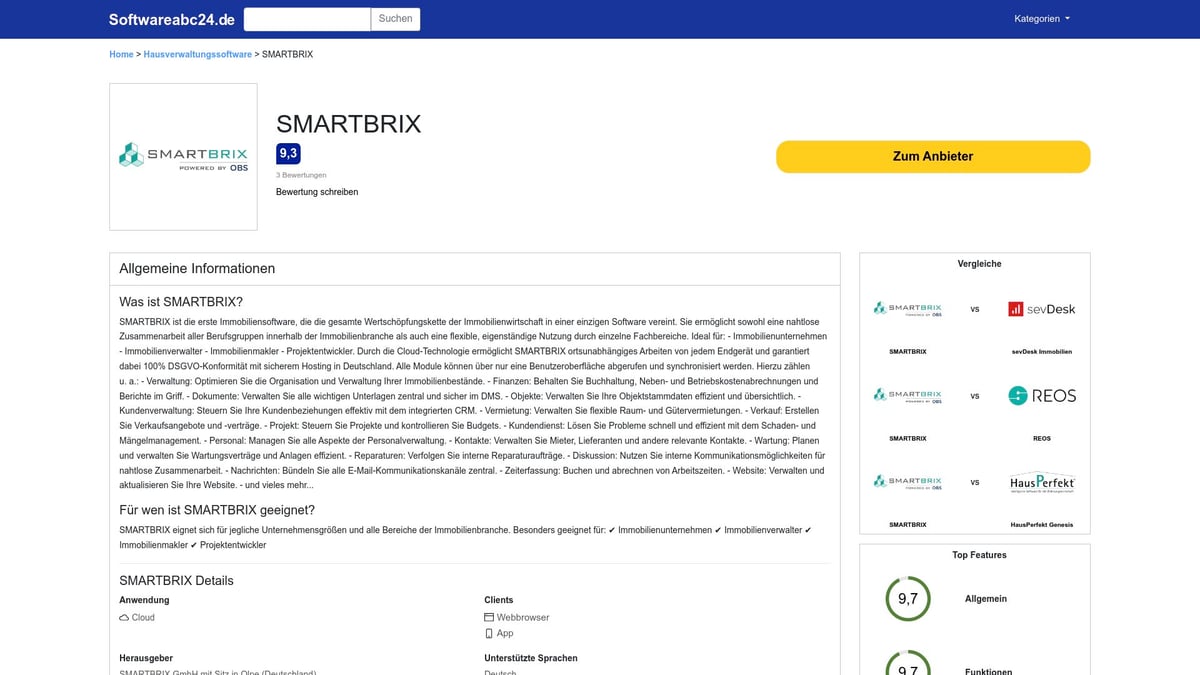
As a cloud solution, SMARTBRIX is GDPR-compliant, flexible, and enables work from anywhere. The software covers the entire value chain, from management to project development. Collaboration across professional roles is seamless.
Advantages include the modular structure, high security, and integration of various disciplines. For very small managers, the solution may be too extensive. USP: The first real estate software with full value chain coverage.
Impower
Impower is a modern property management software focused on digital accounting and automation. Pricing is individual, and entry packages make selection easier.
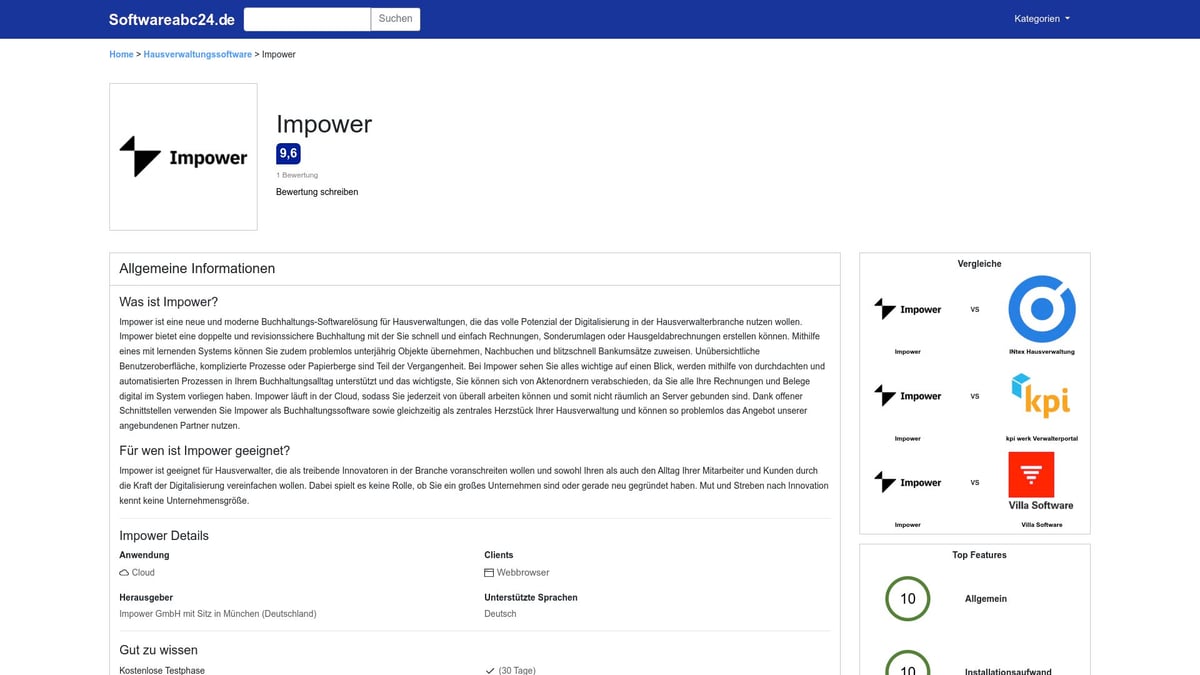
Core features include double-entry and audit-proof accounting, a learning system for property onboarding, bank transaction assignment, as well as invoice and condominium fee (Hausgeld) accounting. The intuitive interface and fast bank integration especially appeal to digitally savvy managers.
Advantages are cutting-edge technology and efficiency gains. Since Impower still has a small user base, special requirements should be verified. USP: A digital solution focused on automation in accounting.
Selection criteria for the best property management software
Choosing the right property management software determines the efficiency, security, and future viability of your property management. Those who focus only on price often overlook crucial factors such as scalability, support, or integration. That’s why a structured look at the most important selection criteria is worthwhile.
The most important criteria at a glance:
| Criterion | Description |
|---|---|
| Feature set | Coverage of accounting, billing, communication & analytics |
| Scalability | Suitable for small, medium, and large portfolios |
| User-friendliness | Intuitive operation, mobile use possible |
| Support & service | Availability, training, updates |
| Value for money | Transparent costs, flexible packages |
Cloud or on-premises?
Cloud solutions offer maximum flexibility, access from anywhere, and less maintenance. Local installations, on the other hand, score with full data control and are suitable for companies with special security requirements. Check which variant fits your property management software.
Integration into existing systems
A modern property management software should work seamlessly with banking, accounting, or CRM. Integrating a document management system is a must today. Solutions such as the integration of DocuWare into property management enable digital and legally compliant document storage, which significantly accelerates processes.
Data protection and compliance
Pay attention to hosting location, encryption, and access rights. Only then will you reliably meet GDPR and other legal requirements. Ask specifically about certifications and security standards.
Practical example:
A manager with several properties opts for a scalable cloud solution. Through automated billing and digital communication, they save up to 10 working hours per month. This shows how crucial the right property management software can be for everyday operations.
Checklist for your software switch:
- Does the solution support all required functions?
- Is integration with external systems possible?
- How does data migration work?
- Are training and support available?
- Does the software meet all data protection requirements?
With clear criteria and targeted questions, you’ll quickly find the property management software that perfectly fits your needs.
Future of property management: Trends and innovations 2026
The future of property management software will be significantly shaped by technological innovations. Many managers already rely on solutions that automate repetitive tasks and facilitate teamwork. But 2026 will see a real leap forward: artificial intelligence, smart interfaces, and cloud technologies are revolutionizing the industry. Those who invest early will gain clear competitive advantages.
Artificial intelligence will take over more and more routine tasks in property management software by 2026. AI-powered document recognition and automatic posting assignments not only save time but also minimize sources of error. Many providers rely on learning systems that adapt to the individual portfolio. At the same time, cloud technology enables flexible work from anywhere—whether in the office, at home, or on-site at the property. If you want to dive deeper into the technology, the article PropTech trends 2026: AI, IoT & Blockchain in real estate offers exciting insights into current and upcoming developments.
The way we communicate is also changing through property management software. Digital tenant and owner portals, automated notifications, and central document exchange are becoming the new standard. Sustainability and ESG are moving more into focus: modern solutions support energy reports, consumption analyses, and help meet legal requirements efficiently. The integration of IoT and smart home technology, such as wireless meters or smart sensors, makes consumption data transparent and enables predictive maintenance.
New pricing models are gaining importance. Flexible cloud subscriptions are increasingly replacing classic purchase models. This allows companies to scale property management software individually without high upfront investments. The pace of digitalization varies, as the article on digitalization in the German construction and real estate industry shows.
By 2026, certain features will become standard in property management software: fully automated operating cost billing, self-service portals for tenants, AI-driven processes, and comprehensive mobile usage. Innovative providers also rely on smart analytics and reporting tools that support data-driven decision-making. A real-world example: digital solutions reduce administrative effort, create transparency, and free up more time for core business. Those who now choose a future-proof property management software will be well prepared for upcoming challenges.
FAQ: Frequently asked questions about property management software
Do you have questions about selecting and using property management software? Here you’ll find concise answers to the key topics around modern solutions.
Which software is suitable for small vs. large property management companies?
Small landlords often benefit from simple, cloud-based property management software solutions with intuitive operation. Large managers typically rely on scalable systems with extensive automation and integrations.
How secure are cloud solutions compared to local installations?
Cloud solutions today offer high security standards, such as encryption and regular backups. Many providers host data in Germany. If you want maximum control, you can still opt for local variants. Learn more about secure cloud finance processes at cloud solutions for financial processes.
How does data migration work during a software change?
Most providers support you during migration. Data from your existing property management software is transferred via import tools or service. Careful preparation and a test run are advisable to avoid errors.
Which functions are particularly important for WEG management?
For condominium associations (WEGs), separate owner statements, resolution management, and reserve management are crucial. Modern property management software often offers special modules for these requirements.
How does software support compliance with legal requirements (GDPR, GoBD)?
Certified property management software helps you comply with current regulations. DIN SPEC 77008 defines standards for digital processes and data protection in property management.
Which providers offer free trials or demos?
Many leading property management software providers offer trials or demos. This lets you test features and usability without obligation before purchasing.
How can I tailor the software to my specific needs?
Look for flexible modules, interfaces, and configuration options. Many systems offer customizations for processes, roles, and permissions so the property management software fits your workflow.
What if multiple users need to access the software at the same time?
Cloud-based property management software enables parallel access and teamwork. Tasks can be securely distributed via access rights and user roles.
You’ve seen how crucial the right property management software is for more efficiency, transparency, and time savings in everyday operations—especially with steadily growing requirements and complex processes. If you want to finally automate routines, manage documents seamlessly, and maximize security under GDPR standards, it’s worth taking a look at filehub. With the platform, you can design your workflows individually without any programming knowledge, giving you more freedom for what really matters. Just try it yourself—test filehub.one for free now and experience how smart automation transforms your management.


