Property Management – Have it managed efficiently and reap the benefits

The real estate industry is facing profound changes in 2026. Anyone dealing with property management quickly realizes: efficient processes are crucial to ensure the sustainable success of residential and commercial properties.
Owners and investors are specifically looking for ways to optimize administrative workflows and improve their returns. Innovative tools and digital solutions are playing an increasingly important role.
Those who know current trends, modern technologies, and legal requirements can not only save costs but also reduce risks and preserve property value in the long term.
In this guide, you'll learn how to make property management future-proof and profitable. You can expect definitions, areas of responsibility, insights into modern technologies, legal updates, practical tips, and strategies for maximizing profit.
What is property management? Definition & overview
Property management comprises the holistic management of residential and commercial real estate. It involves not only technical maintenance but also commercial and legal aspects. In everyday practice, a distinction is often made between house management, property management, WEG management, and special property management. While house management usually looks after individual residential properties, management can also encompass entire portfolios. WEG management is specifically responsible for homeowners' associations, while special property management looks after individual units within a community.
With the regulation of the profession by §34c GewO since 2018, access to the industry has become more professionalized. The goal of property management is clear: value preservation, value enhancement, and the smooth operation of properties. A key distinction exists between Property Management (commercial) and Facility Management (technical):
|
Area |
Property Management |
Facility Management |
|---|---|---|
|
Focus |
Finance, contracts |
Technology, maintenance |
|
Tasks |
Rents, billing |
Repairs, cleaning |
According to DDIV, the share of professionally managed properties in Germany is steadily increasing. One example: the management of a multi-family house requires different structures than that of an office complex. If you want to learn more about current developments, the article on Digital Transformation in Property Management offers practical insights.
Target groups and benefits of professional management
Property management is aimed at various target groups: private individuals, investors, homeowners' associations, and companies benefit from competent management. For WEGs, professional management is even required by law. Those who manage properties themselves often face challenges such as a lack of expertise or time.
The advantages of external property management are diverse:
-
Time savings through outsourced processes
-
Legal certainty thanks to up-to-date knowledge of the law
-
Value preservation and higher tenant satisfaction
If professional management is lacking, risks such as legal issues, financial losses, or dissatisfied tenants loom. Specialist expertise pays off, especially for complex properties, to reliably meet all legal and economic requirements.
Core areas of responsibility in property management
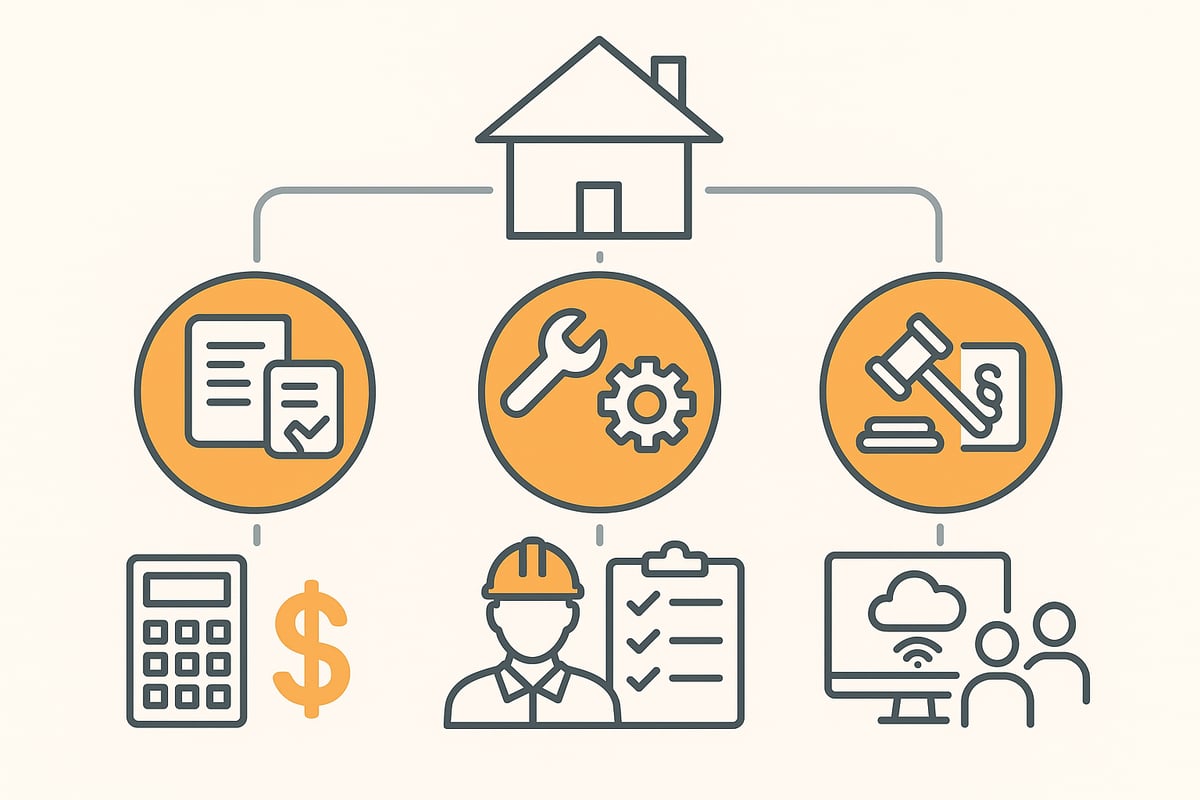
The areas of responsibility are diverse and range from commercial to technical, legal, and administrative activities. Only those who cover all fields professionally ensure sustainable value creation. Below you'll get a practical overview of the key responsibilities.
Commercial tasks
At the heart of commercial management are rent management and the administration of all financial processes. This includes the creation and maintenance of rental agreements, communication with tenants, and efficient dunning. The correct processing of rental income, operating cost statements, and annual financial statements ensures financial transparency.
Another important area is the preparation of financial plans and careful budgeting. Managing reserves and insurance protects your property from financial risks. Errors in service charge billing are, according to Roomhero, a common problem that can lead to dissatisfaction. The use of modern tools is therefore recommended. Innovative solutions such as automation in accounting can help optimize processes and minimize sources of error.
Typical tasks:
-
Rental contract management and communication
-
Monitoring cash flows
-
Preparation of financial plans
-
Management of reserves and insurance
Sound financial management is the backbone of any property management.
Technical tasks
Technical management includes all measures for the maintenance, servicing, and modernization of the property. This includes regular inspection of technical systems, coordination of tradespeople and service providers, and the implementation of modernization measures to increase value.
Monitoring legal requirements, such as the GEG or fire protection, is essential for safety and long-term value preservation. The digitalization of technical processes, for example through the use of facility management software, enables more efficient planning and documentation. Digital maintenance and repair processes save time, reduce errors, and increase transparency.
Typical tasks:
-
Planning and implementation of maintenance measures
-
Organization of servicing and modernization
-
Management of external service providers
-
Compliance with technical and legal requirements
With modern technology, property management remains future-proof and efficient.
Legal and administrative tasks
A central element is compliance with all legal and administrative requirements. This includes organizing and conducting owners' meetings, keeping minutes in a legally compliant manner, and implementing resolutions. The WEG reform of 2020 and the GDPR place high demands on managers.
Contracts with service providers and authorities must be reviewed and adjusted regularly. Professional implementation of these tasks minimizes liability risks and ensures smooth cooperation among all parties involved. A practical example: Properly inviting owners to a meeting and implementing the resolutions passed there is mandatory to avoid disputes.
Typical tasks:
-
Organization and conduct of owners' meetings
-
Implementation of resolutions
-
Contract management with service providers and authorities
-
Compliance with legal regulations
Only thoroughly professional property management guarantees legal certainty and sustainable success.
Digital transformation in property management 2026
Digital transformation is fundamentally changing the management of real estate. New technologies, automation, and smart software solutions are setting standards in efficiency and transparency. Those who adopt digital tools now will gain a crucial advantage in 2026.
New technologies & software solutions
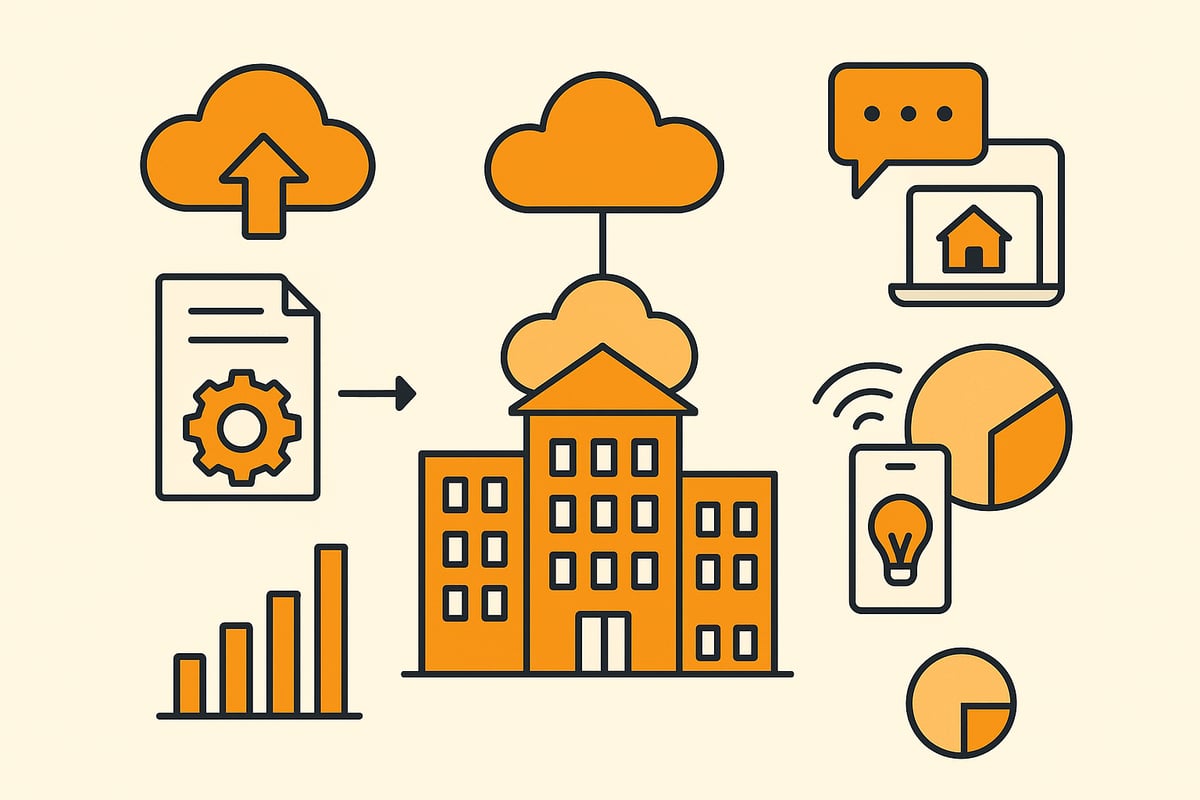
Cloud-based management software is revolutionizing property management. It enables location-independent access to all data and simplifies collaboration within the team. Apps for mobile devices in particular speed up the processing of inquiries and documents.
Automation is another game changer. Digital tools automatically capture and manage documents, contracts, and statements, minimizing sources of error. Modern platforms also offer interfaces to IoT devices, for example to monitor energy consumption or maintenance needs.
A DDIV statistic shows that as early as 2019, the integration of digital interfaces was considered the greatest challenge. In 2026, the seamless connection of different systems will be a basic prerequisite for future-proof property management. Digital communication via portals or apps increases transparency for owners and tenants and builds trust.
Opportunities and challenges of digitalization
Digitalization delivers enormous efficiency gains. Routine tasks such as rent management, operating cost billing, or dunning run automatically. This saves time and reduces errors.
Data security remains a central issue. Systems must be GDPR-compliant and offer strong protection against cyberattacks. Acceptance problems often arise among older management companies or owners who perceive digital processes as a hurdle.
Best practices show how digital projects can be implemented successfully: a step-by-step introduction, training, and transparent communication are crucial. An example is digital operating cost billing, which is not only faster but also more comprehensible for all parties involved.
Automation of document workflows
Automated document processes are a key to modern property management. They drastically reduce manual activities and speed up the processing of invoices and contracts. Errors are minimized, and access to documents is possible at any time.
Platforms for workflow automation make it possible to map all steps from invoice capture to archiving digitally. This enables managers and owners to work together more efficiently. A practical example: With digital workflows for property managers, all relevant document processes can be centrally controlled and digitized.
Integrating such solutions not only creates greater transparency but also increases tenant satisfaction. Property management becomes future-proof, flexible, and remains clear even as complexity grows.
Legal framework and new developments 2026
Legal requirements are constantly changing. Those who want to operate successfully in the market in 2026 must know current regulations to avoid risks and liability traps. It is particularly important for owners and managers to stay regularly informed about new developments.
Current laws and obligations for managers
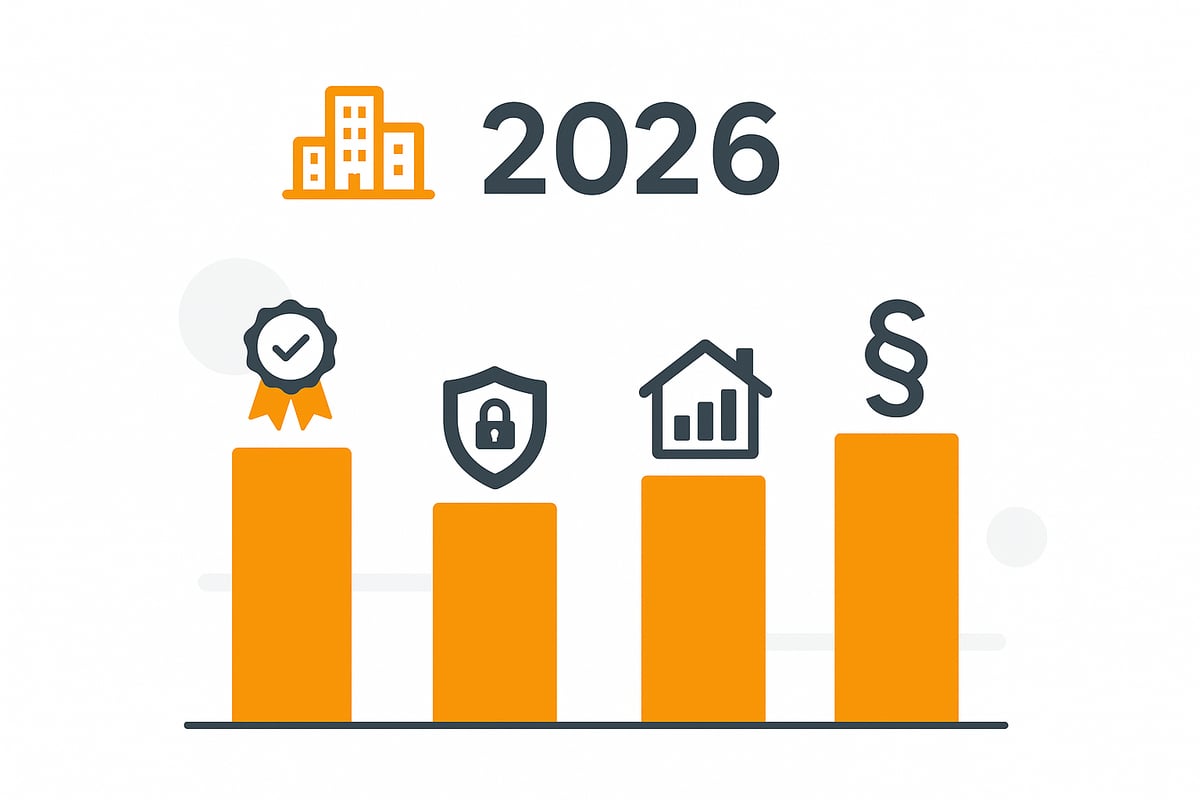
Property management is subject to clear legal requirements. Under the Trade Regulation Act (§34c), managers require an official license, regular continuing education, and professional liability insurance. The WEG reform also mandates certification for WEG managers, further strengthening the quality and professionalism of the industry.
Another central topic is the GDPR. Managers must store and process personal data securely. The Building Energy Act (GEG) and the obligation to have up-to-date energy performance certificates are also mandatory. Every change in the law, such as new requirements for transparency or digital processes, has a direct impact on property management. A solid overview of upcoming developments is provided by the article Trends in Property Management 2026.
Table: Key obligations at a glance
|
Law / regulation |
Obligation for managers |
Specifics for 2026 |
|---|---|---|
|
§34c GewO |
License, continuing education |
Stricter inspections |
|
WEG reform |
Certification |
Mandatory for WEG mgmt. |
|
GDPR |
Data protection, IT security |
Higher fines |
|
GEG |
Energy performance certificate, renovation |
New documentation requirements |
Typical pitfalls and how to avoid them
Common mistakes in property management arise from ignorance or carelessness. Particularly risky are missed deadlines for operating cost statements or missing evidence for owners' meetings. Poor communication with tenants can also cause legal problems.
To avoid these pitfalls, a structured approach helps. Regularly check all statements and ensure legally compliant documentation. Rely on certified managers with proven qualifications and membership in recognized associations. Use checklists to avoid missing any legal updates. This keeps management efficient, secure, and future-proof.
Practical tips: manage efficiently and benefit
Efficient property management is the key to profitable and worry-free real estate. Those who choose wisely, digitize, and optimize in a targeted manner benefit in the long term from increased returns and satisfied tenants. With the following tips, you can significantly improve the management of your properties.
Selecting the right property management company
The choice of the right management company determines success or failure. Pay attention to the following points:
-
Qualification and experience: Check whether the manager has up-to-date expertise and references.
-
Digital competence: Modern property management companies use digital tools for greater efficiency.
-
Transparent contracts: Clear service descriptions, fair termination periods, and transparent costs are a must.
-
Membership in professional associations: A plus for credibility and continuing education.
A good example: A manager discloses all costs, provides proactive information, and uses digital communication channels. Poor practice: unclear statements, delayed responses, and a lack of transparency. Those who choose carefully gain time savings and legal certainty. Property management is thus not just a service provider, but also a strategic partner.
Optimization potential in ongoing operations
There is plenty of potential in day-to-day operations as well. Regularly review service and maintenance contracts to avoid unnecessary costs. Automate routines such as payment transactions or document management to reduce errors and respond faster.
Digital tools such as cloud-based management software or specialized apps enable efficient communication and simplify billing. Particularly helpful is the integration of real estate software to digitize processes and network all stakeholders.
Regularly compare energy and service provider offers. A DDIV statistic shows: Digital processes can save up to 30 percent time and errors. This makes property management not only more efficient but also more economical.
Strategies to increase value and optimize returns
To increase the value of your property, focus specifically on modernization and energy-efficient renovations. Investments in new heating systems, insulation, or smart building technology pay off in the long run.
Tenant retention is another factor. Those who focus on service, fast communication, and transparent billing ensure satisfied tenants and less vacancy. Proactive vacancy management, for example through targeted marketing or flexible usage concepts, further increases returns.
A practical example: After modernization and the introduction of digital tools, an owner was able to increase rental income and halve vacancies. This is how property management becomes a true driver of returns.
Outlook: Trends and developments in property management through 2026
Property management faces an exciting future. By 2026, experts expect massive changes that offer both opportunities and challenges. Those who know current trends and act strategically will benefit in the long term from efficient and future-proof management.
Future challenges and opportunities
The market for property management will become increasingly regulated and professionalized by 2026. New legal requirements, such as stricter ESG criteria, pose the task for managers to actively implement sustainability. At the same time, the pressure to establish digital services and automated processes is growing.
Artificial intelligence and PropTech solutions are fundamentally changing the industry. Many managers already rely on cloud-based systems and IoT applications to optimize operations. The expectations of tenants and owners are changing: digital communication, fast services, and transparency are becoming the standard. Those who keep up here secure competitive advantages.
A look at the PropTech trends 2026 shows that automation and AI-based analyses make property management more efficient and profitable. The biggest challenge, however, remains integrating new technologies sensibly into existing processes and bringing all stakeholders along.
Recommendations for action for owners and managers
For successful property management, it is advisable to test new technologies early and set up your organization flexibly. Invest in training to strengthen digital skills within the team. Stay informed about legal developments and cooperate with specialized service providers or PropTech companies.
Create a clear roadmap for digitalization. Use modern software tools, as presented in the article Digitalization in the real estate industry, to automate administrative processes and minimize errors.
Focus on sustainability and ESG to secure the long-term value of the property. Property management is developing into a profession of the future with new opportunities for all those who are ready to continuously develop and actively shape change.
You have now seen how important efficient processes, legal certainty, and digital solutions are for property management in 2026. You may be wondering how you can take the next step and finally automate routine tasks stress-free. That’s exactly what filehub is for—developed in Germany, with a focus on data security and easy integration into your daily work. With just a few clicks, you can automate document workflows, save time, and reduce sources of error. Just try it out yourself and experience how much more relaxed and productive your management can be: Try filehub.one for free now


