Amagno – Manage documents efficiently & digitally

The digital deluge of documents is growing rapidly and poses new challenges for companies. Piles of files, unclear filing structures, and time lost searching for important information are everyday realities for many teams.
This not only leads to losses in efficiency, but also risks for compliance and data protection. Those who fail to act decisively quickly lose track and jeopardize their competitiveness.
With amagno, a modern platform is available that finally makes document management simple, secure, and efficient. Whether in the office or remote, all documents are digitally structured and available at any time.
In this guide, you’ll learn how to optimally implement this document management system in your company, which features make the difference, and how to use digital workflows for sustainable success.
Look forward to hands-on tips, a clear step-by-step guide, best practices, and an outlook on the most important trends in document management.
What is Amagno? Overview and Unique Selling Points
Digital transformation presents companies with new challenges in document management. amagno addresses this precisely and, as a DMS and ECM, combines innovative technologies with intuitive operation. Unlike classic paper files or simple network drives, the system enables automated, structured work with documents. The magnet concept ensures that content is intelligently assigned via keywords. You can choose between a flexible cloud solution and an on-premise variant. Particularly attractive: there is a free basic model as well as scalable editions for every company size. This allows medium-sized companies to benefit from a modern solution that can be rolled out quickly.
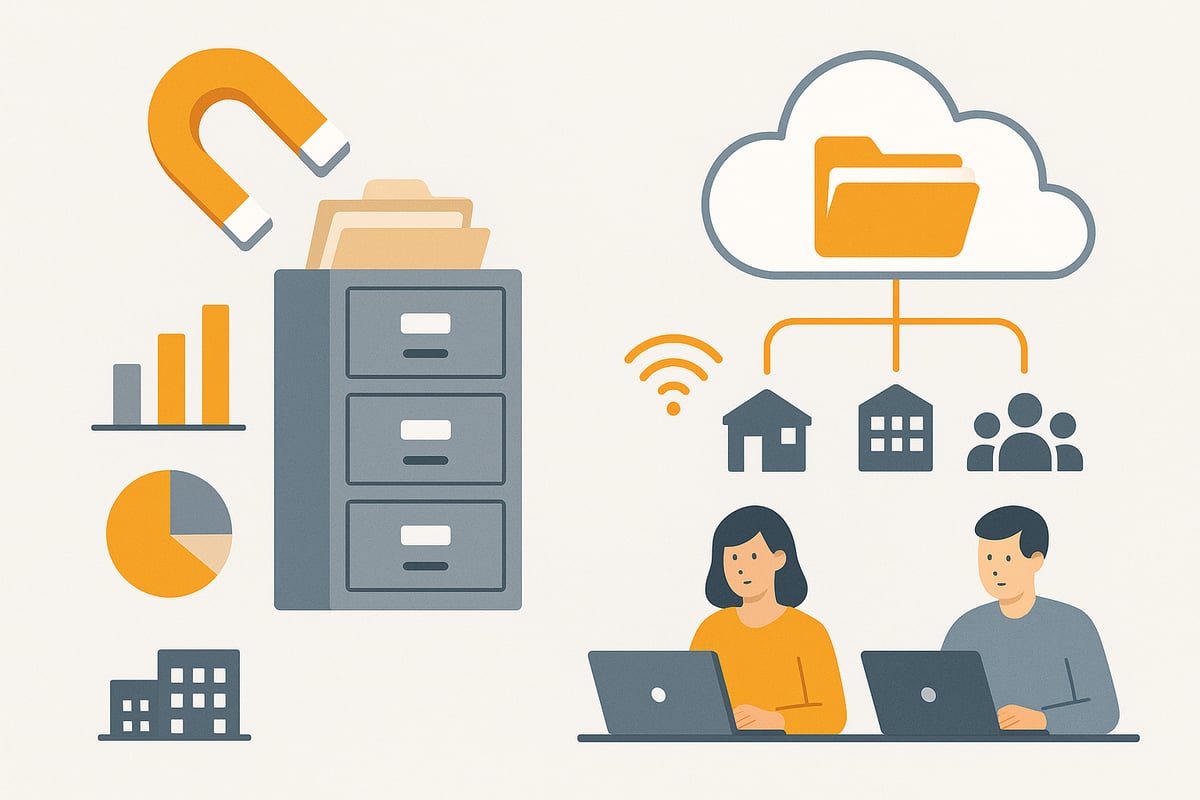
Amagno compared to classic DMS solutions
amagno clearly stands out from conventional systems thanks to its central document repository and advanced versioning. Paper-based files and simple file servers quickly reach their limits when transparency and traceability are required. With the intelligent ECM, content is automatically tagged via text recognition, so you can find documents in no time. The system supports both cloud and on-premise operation, offering maximum flexibility. There is a free basic model for small companies and teams, while larger organizations benefit from extended features. A real-world example: a medium-sized company was able to significantly accelerate document search and filing by introducing amagno.
Key features and innovations of Amagno 2025
In 2025 you can expect a variety of new and proven features. The central document repository provides order, while versioning makes every change traceable. Automated workflows, for example for invoice approvals or contract management, reduce manual work to a minimum. Digital stamps and signatures simplify approvals, OCR scanning and document separation accelerate the digitization of paper documents. Particularly practical: the virtual printer driver enables import from any application. In the Solution Store you’ll find preconfigured processes and templates that you can customize. Performance and scalability have been further improved in version 6+.
Benefits for companies and teams
amagno delivers clear advantages for your day-to-day work. Automated processes save time and increase productivity. Transparency and traceability in the document flow build trust and make collaboration easier—whether in the office or remote. Eliminating paper files and reducing IT maintenance effort significantly lowers costs. Compliance with legal requirements such as GoBD and GDPR is guaranteed. Many companies report measurable productivity gains through digital workflows. If you want to learn more about efficient document management, you’ll find practical tips in the Best Practices for Document Management.
Statistics & market data on DMS usage
The use of DMS solutions like amagno is steadily increasing in German companies. According to Bitkom, 67% of SMEs already rely on digital document management. On average, each employee saves 30 to 40 hours of working time per year through a DMS system. Companies can reduce their paper consumption and storage costs by up to 50%. User reviews reflect satisfaction: this ECM achieves, for example, 4.1 out of 5 stars on heise.de (as of 2024) and is regularly among the top downloads in the file manager and system software categories. This shows how relevant and established this solution already is in the market.
📈 What annoys you at 10 documents breaks at 100.
Amagno in, receipts out: filehub runs the data flow in the background — no matter how much comes in.
Introducing Amagno: step-by-step guide
Implementing amagno as a document management system is a crucial step to purposefully drive digital transformation in your company. With the right strategy and a clear roadmap, the transition succeeds smoothly and sustainably. If you want to dive deeper, this DMS implementation: 5 steps to success incl. checklist & tips offers hands-on guidance for a successful project.
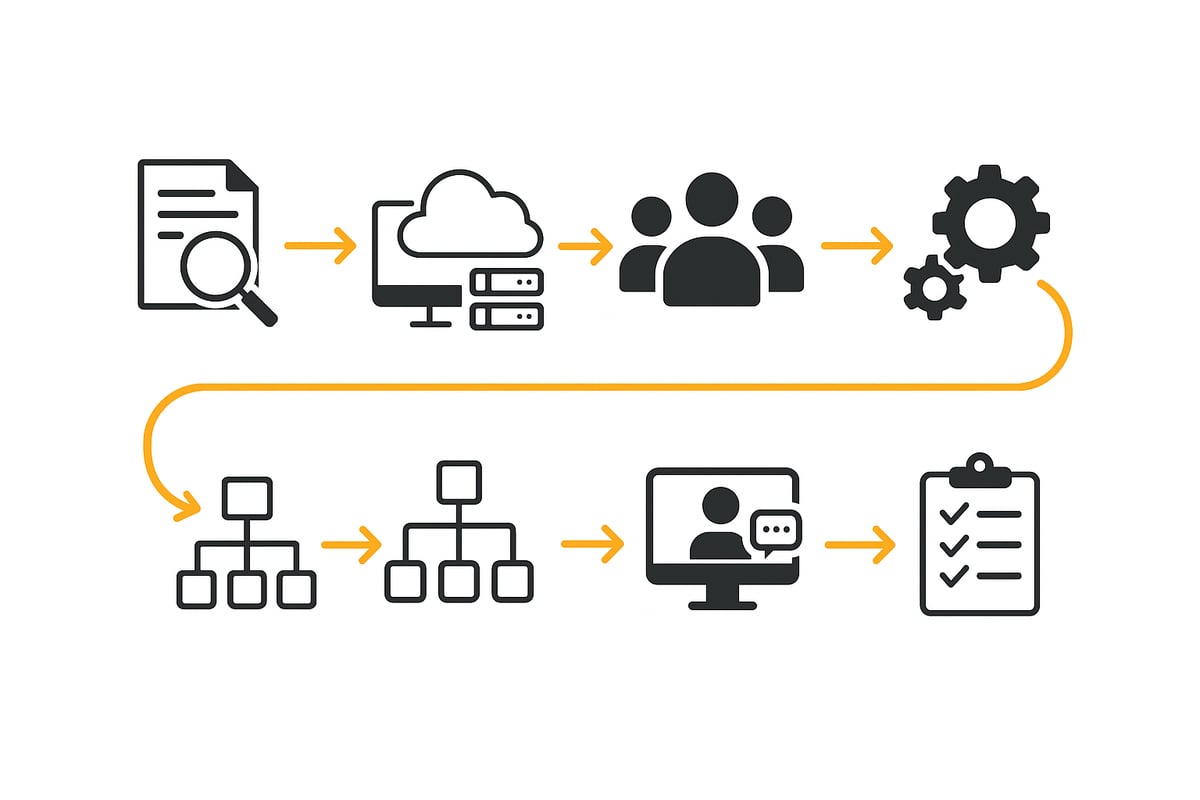
1. Needs analysis and goal definition
Before amagno is introduced, a thorough analysis of the current situation comes first. What types of documents circulate in the company? Where are bottlenecks or risks? Together with the business units and IT, the most important processes are identified and weaknesses in the previous filing system uncovered.
Typical goals during implementation include transitioning to a paperless office, increasing efficiency, or meeting compliance requirements. Example: In accounting, the document management system ensures that receipts are no longer lost and approvals happen faster.
2. System selection: cloud or on-premise?
The next decision concerns the technical foundation: Should the ECM be run as a cloud solution or on-premise? Both variants offer advantages. The cloud version scores with zero maintenance, scalability, and location-independent access, while on-premise solutions provide maximum data sovereignty and individual customization.
amagno’s cloud licenses are available starting from one user with monthly billing, while on-premise solutions require higher upfront investments. For small teams, the Business Cloud is often recommended, for example when migrating a sales team that wants to work flexibly and on the go.
3. Setup and user management
After choosing the system, concrete implementation begins: the DMS is installed and the initial configuration performed. Through an intuitive interface, users, roles, and access rights can be created quickly. The structure of the repository is planned together, for example with folders, keywords, and categories.
Importing existing documents is straightforward, for example via the Dropscan interface. A rollout in sales can be designed so that each employee can access only relevant documents, which increases clarity and security.
4. Set up workflows and automations
With amagno, recurring processes can be easily automated. Via the Solution Store, standard workflows for invoice approval or contract management can be selected and customized. Your own workflows are also possible, for example for the digital review of vacation requests.
Digital stamps and signatures ensure legally compliant approvals. Automatic notifications and escalations prevent delays. Example: the automated invoice workflow in amagno speeds up approvals across multiple hierarchy levels.
5. Integration with existing systems
amagno impresses with flexible integration options. Interfaces to ERP, accounting, email, or other web portals ensure that documents and data are synchronized seamlessly. Particularly practical is the automated import of e-invoices directly from email attachments, eliminating media breaks.
The connection with applications like Outlook, DATEV, or Dropscan supports end-to-end processes and increases efficiency. This way, all relevant documents land directly in the right amagno workflow and are available at any time.
6. Training, change management, and support
A successful implementation lives from user acceptance. Training, such as Amagno how-to tutorials, makes onboarding easier. Best practices from other projects show how to make the transition as smooth as possible.
Important factors include transparent communication, continuous support, and incorporating feedback. Real-world reports show how employees quickly become confident using amagno and appreciate the benefits.
7. Success measurement and optimization
After the rollout, measuring results is the focus. How much time do teams actually save? Have processes become more transparent? Analyzing throughput times and error rates helps identify optimization potential.
Workflows can be adjusted as needed and new functions from the Solution Store integrated. After a few months, it often becomes clear that digital contract management or the paperless archive with amagno not only saves costs, but also significantly increases user satisfaction.
Amagno in everyday work: features and best practices
The digital administration of documents is a must today. amagno helps you make work processes more efficient and avoid errors. Day-to-day work shows how versatile and powerful the document management system really is.
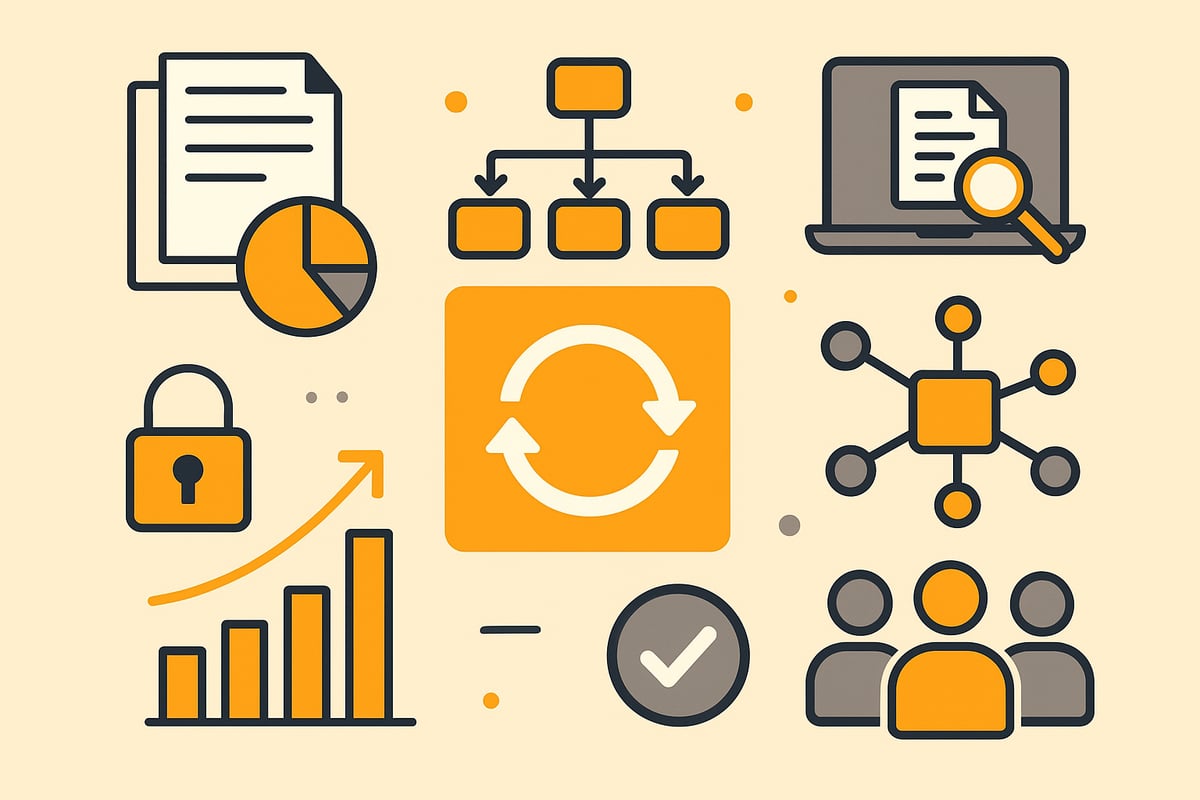
Central document repository and versioning
With amagno you get a central, structured repository for all company documents. Whether contracts, quotes, or internal reports—everything is clearly organized and can be found at any time.
Every change to a document is automatically versioned. You can restore earlier states or track who changed what. This increases transparency and ensures security.
Team collaboration is simplified through approval functions and comments. Access rights can be controlled flexibly so that only authorized people gain access. This keeps document management traceable and efficient.
Automated workflows and digital approvals
amagno puts an end to manual approval processes. Workflows for invoice verification, contract management, or vacation requests can be easily set up and automated. Digital stamps and signatures speed up approvals and establish clear responsibilities.
You can adapt workflows to your processes or use proven templates. In case of delays, automatic notifications remind those involved so that no task remains unfinished.
Dive even deeper into the topic of automated workflows in the article Automated Workflows in Document Management. With a DMS, you save time, reduce errors, and standardize recurring processes.
OCR, document separation, and document search
With a document management system, paper receipts are a thing of the past. The integrated OCR technology automatically reads scanned documents and reliably recognizes content. During import, documents are separated and directly tagged with suitable keywords.
The intelligent full-text search makes finding information a breeze, even with large volumes of data. Filters and categories provide additional clarity.
Whether contracts, invoices, or minutes—with amagno you can find any document in a flash, no matter how many files are in the system.
Integration with third-party applications and portals
amagno can be seamlessly integrated into existing software landscapes. Through interfaces, you can connect email programs, accounting, ERP systems, or cloud storage directly to the DMS.
Scans and receipts can be imported automatically via Dropscan. The virtual printer driver lets you send documents from any application into the system quickly.
These integrations avoid media breaks and ensure end-to-end digital processes. This turns the document management system into the central hub for your daily work.
Security, data protection, and compliance
Data security is a top priority at amagno. All data is stored and processed in compliance with the GDPR. Access rights and logging functions ensure that only authorized users access sensitive documents.
Automatic archiving according to GoBD and ISO standards ensures that all legal requirements are met. Retention and deletion periods can be defined individually and implemented in an audit-proof manner.
You’re also well prepared for audits with this ECM, as every change and every access is fully documented.
Best practices for efficient document management
To get the most out of amagno, it’s recommended to use templates and standard processes from the Solution Store. Regularly check and optimize the filing structure to keep everything clear.
Train your employees in using the software and raise awareness for data protection and compliance. Continuously adapt workflows and processes to new requirements.
A digital mailroom, clearly defined responsibilities, and transparent documentation are the basis for working efficiently with amagno in everyday life.
🤖 Set it up once. Never touch it again.
With filehub, your Amagno documents move on their own — in, out, always in sync — no action needed on your end.
Amagno integrations: extensions and automation potential
The digitization of document processes only unfolds its full potential through smart integrations and automation. amagno offers companies numerous ways to network, accelerate, and minimize errors in workflows. This transforms isolated solutions into well-thought-out, end-to-end processes.
Interfaces and extensions at a glance
amagno convinces with its multitude of integration options. Via interfaces, Outlook, DATEV, Dropscan and numerous ERP systems can be connected directly. A powerful API is also available to implement individual extensions. Synchronization works with both cloud and on-premise systems.
Typical integration scenarios include:
-
Automatic import of emails and attachments
-
Synchronization of accounting data
-
Connection to cloud storage, such as OneDrive or Google Drive
-
Integration of scanning services like Dropscan
The big advantage lies in reducing manual steps and media breaks. If you want to learn more, you’ll find more details on the integration of third-party applications with DMS. This turns the document management system into the central control center for all document flows in the company.
Practical example: automated invoice processing
A prime example of automation with amagno is digital invoice processing. Incoming invoices are imported into the system via scan or directly from emails. The OCR function extracts relevant data and automatically separates documents. They are then assigned to cost centers and approved digitally by defined workflows.
This is how the process works:
-
Receipt of invoice via scan or email
-
Automatic document recognition and tagging
-
Digital approval with stamps and notifications
-
Transfer to accounting or the ERP system
The time savings are enormous: According to user surveys, invoices are processed up to 50 percent faster than with manual procedures.
Advanced automation with no-code platforms
With no-code solutions, companies can design complex workflows in amagno without programming knowledge. The manufacturer’s Solution Store offers numerous preconfigured processes that can be customized. Integration of third-party providers for special use cases is also possible.
Typical examples include:
-
Automated contract review with escalation management
-
Flexible adaptation of approval processes when requirements change
-
Integration of external tools for data enrichment
This allows business processes to be digitized quickly and flexibly. If you want to dive deeper, the article on the automation of business processes provides further inspiration and best practices.
filehub: advanced workflow automation for Amagno users
filehub is a German file automation platform that specifically complements amagno. With filehub, users can design complex, multi-stage workflows and connect amagno with additional applications, web portals, and on-premise systems. Data processing is GDPR-compliant and hosting remains in Germany.
A typical scenario: Invoices from web portals are automatically imported, processed, and handed over to workflows. This reduces errors, increases productivity, and enables simple integration without programming. In addition, there is a free option for beginners to try out the benefits right away.
Amagno 2025: future trends and further developments
New features and updates in Amagno 2025
With Amagno 2025, you can expect a new generation of features and efficiency. The Business Cloud receives a significant performance upgrade, so even large volumes of data can be processed quickly. Especially for teams that work flexibly and independent of location, this ECM now offers even more scalability.
In the Solution Store you’ll find extended standard workflows and new templates that are ready to use out of the box. The user interface has been revised and is now even more intuitive. A real highlight: amagno integrates AI-based automation. The system recognizes document types and automatically processes, for example, e-invoices, which simplifies compliance with legal requirements.
A typical example is an automated workflow for mandatory e-invoicing that can be set up with just a few clicks. This makes the software an ideal partner for digital transformation.
Trends in digital document management
The digitization of document management systems is developing rapidly. Cloud DMSs are increasingly becoming the standard because they offer maximum flexibility and location-independent access. Hybrid solutions that combine local and cloud-based components are also becoming more popular.
Data protection and compliance are moving more into focus. amagno helps companies reliably meet the increasing requirements of the GDPR and GoBD. Modern DMS increasingly integrate AI and machine learning to enable intelligent document recognition, automatic tagging, and process optimization.
Mobility is another trend: With amagno, you can access your company documents from anywhere, whether in the office, home office, or on the go. This makes the system future-proof and powerful.
Challenges and opportunities for companies
Introducing a powerful DMS like amagno brings both challenges and opportunities. Companies face the task of managing ever-growing volumes of data and complex processes efficiently. Structured change management is essential to ensure team acceptance.
Those who implement digitalization early and consistently gain clear competitive advantages. An ECM helps meet legal requirements and ensures transparency and efficiency. The greatest opportunities include measurable time and cost savings as well as sustainable compliance.
More tips and best practices for implementation can be found in this guide: 13 dos & don'ts when introducing a document management system. This is how you get off to the best start in the amagno world.
Outlook: Amagno in the digital ecosystem
amagno is establishing itself as a central platform for the modern digital workplace. The importance of integrations and automation is steadily growing, enabling companies to digitize their business processes even more comprehensively.
The potential for innovation remains high, including through partnerships such as with filehub. The continuous further development of the software ensures that new requirements and technologies can be integrated flexibly.
Tip: Use amagno as a scalable foundation for your digital business processes. This puts you in an excellent position to fully exploit the opportunities of digitalization and make your company future-proof.
You’ve now seen how Amagno 2025 and smart automation solutions like filehub can completely transform your document day-to-day—from quick filing and efficient workflows to ensuring compliance with all data protection requirements. If you’re ready to spend less time searching and sorting and focus more on what matters, just try filehub yourself. You can get started right away, with no risk and no programming knowledge. See for yourself how simple digital efficiency can be: filehub.one try it for free now


