Top 7 Service Software Trends for 2025

Digitalization is transforming the services industry faster than ever. Companies face the task of using modern services software to make their processes not only more efficient, but also more customer-friendly. Those who understand current trends gain clear competitive advantages, reduce costs, and can even unlock new business models. In this article, you’ll learn the top 7 trends for 2025 with practical examples that show how to future-proof your company.
Why software trends for service providers are crucial in 2025
Digitalization has long since become the heart of modern service companies. Anyone who wants to remain competitive today must know and actively leverage current developments. The right services software isn’t a luxury, but the foundation for sustainable efficiency and growth. Digital tools automate routine tasks, create space for consulting, and noticeably improve the customer experience.
Customers today expect flexibility, transparency, and top-level personalization. They want to access services around the clock, be informed about the status of their requests at any time, and receive individualized offers. The use of modern services software helps meet these expectations. At the same time, increasing competitive pressure forces companies to automate processes and minimize sources of error. Those who don’t invest here quickly lose ground.
Another success factor: cloud solutions and SaaS models. They enable rapid rollouts, location-independent work, and easy scalability. Particularly important is the integration of different systems to avoid data silos and create an end-to-end workflow. Those who rely on solutions for service companies can flexibly combine industry-specific software and thus meet individual requirements. Data security and GDPR compliance must always be ensured.
Practical examples show that by introducing innovative services software, companies not only reduce costs but also measurably increase customer satisfaction. According to current industry reports, over 80% of service providers already use digital tools for project management, accounting, or customer communication. The trend is clear: those who recognize the opportunities of digitalization and adopt trends early secure long-term competitive advantages.
Top 7 services software trends for 2025
Digitalization is accelerating rapidly and decisively shaping the development of services software. To be successful in 2025, you need to know the key trends and apply them strategically in your business. Here you’ll find the seven most relevant developments for the future of the services industry – practical, easy to understand, and with concrete examples.
1. No-code/low-code automation & workflow optimization
No-code and low-code platforms are revolutionizing how you use services software. They enable you to automate business processes without programming knowledge. This speeds up implementation and relieves IT resources.
Benefits:
- Rapid rollout of new workflows
- High flexibility for process adjustments
- Relief for the IT department
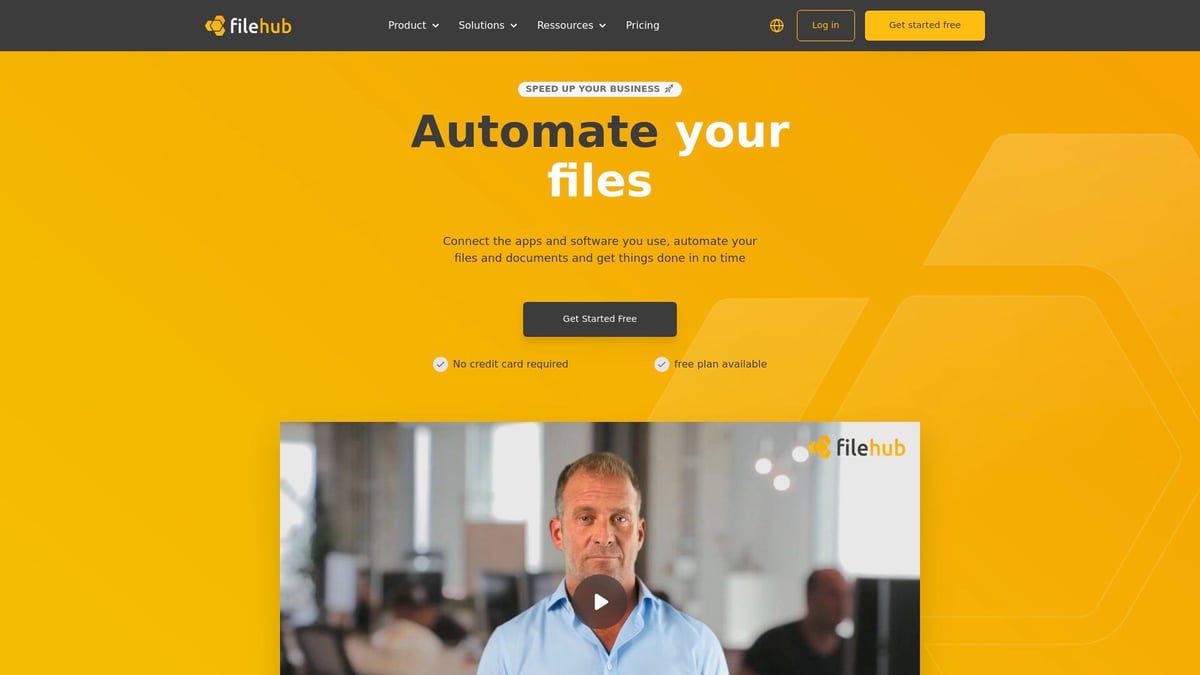
A good example is filehub, developed specifically for German companies. With filehub, you can automate document workflows, integrate various applications, and benefit from GDPR and C5 certification.
Target groups:
SMEs, companies with high compliance requirements, and non-IT teams benefit most.
Core features:
- Multi-app integration
- Prebuilt workflow templates
- Secure data transfer & VPN option
Value:
You reduce manual errors, increase productivity, and meet legal requirements. Getting started is free, with tiered plans and a trial phase.
Pros:
Easy to use, high data security.
Cons:
For very complex processes, customization can be limited.
If you want to dive deeper, automating business processes offers practical insights into how modern services software drives process automation.
2. Artificial intelligence for intelligent process automation
Artificial intelligence takes services software to a new level. AI supports you with automated appointment booking, intelligent document analysis, or chatbots in customer service. This makes workflows faster and more customer-centric.
Benefits:
- Faster handling of requests
- 24/7 service without staffing
- Reduction of errors
Practical examples range from AI-powered translation services to HR tools with automatic speech recognition and smart resource planning. Companies with high customer contact or service departments particularly benefit from AI solutions.
Core features:
- Machine learning
- Natural language processing
- Predictive analytics
Value:
More time for consulting, higher scalability, and a better customer experience. Investment in AI pays off given the efficiency gains, but data protection must always be kept in mind.
Pros:
Significant efficiency boost, optimized customer experience.
Cons:
Initial investments and data protection issues must be considered.
How AI improves the quality and efficiency of services is explained in detail in the article Optimizing services through AI.
3. Cloud-first and SaaS solutions for maximum scalability
Cloud-based services software is now standard. The shift to the cloud brings flexibility, location-independent work, and regular updates. SaaS models offer low entry costs, monthly billing, and high availability.
Benefits:
- Quick implementation without in-house IT infrastructure
- Mobile use for teams at different locations
- Automatic updates and backups
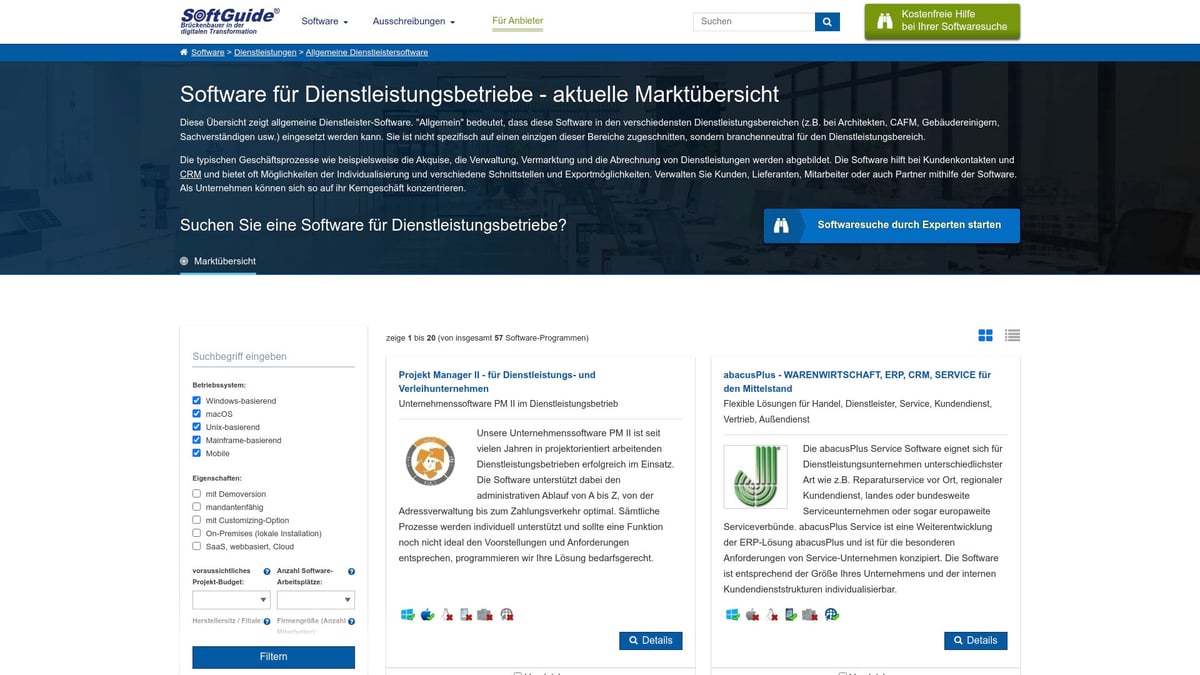
Project management or ERP systems as SaaS help service providers model processes efficiently and scale quickly. Startups and growing companies particularly benefit from the ease of expansion.
Core features:
- Real-time synchronization
- Multi-user access
- Mobile usage
Value:
Cloud-based services software enables a fast ROI and lowers IT costs. Dependence on the provider and a stable internet connection must be considered.
Pros:
Cost efficiency and rapid scaling.
Cons:
Dependence on external providers.
Cloud solutions remain a must for anyone aiming for growth and flexibility.
4. Industry-focused all-in-one platforms
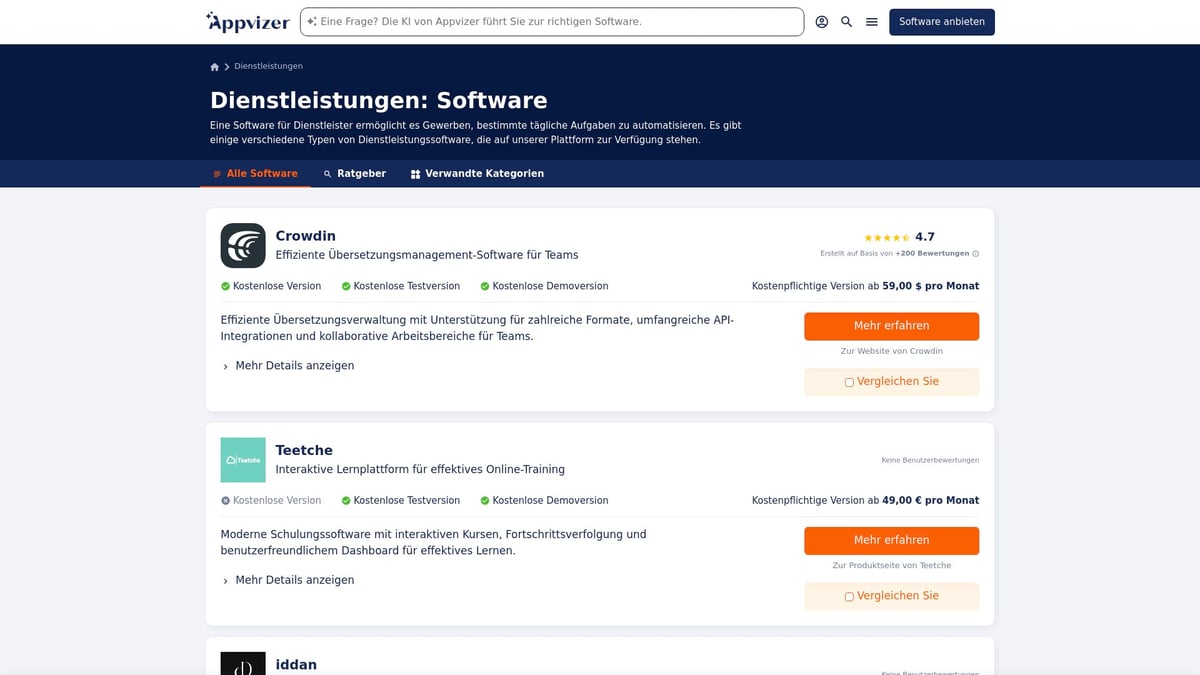
Specialized all-in-one platforms cover all processes of a specific industry. With this type of services software, you get appointment management, billing, CRM, and marketing in one solution. This saves interfaces and ensures a consistent data foundation.
Benefits:
- Everything from a single source
- Fewer integration issues
- Better overview across all business areas
Examples include complete solutions for hair salons, building cleaning, or temp staffing firms that offer all core modules.
Target groups:
Service providers with specific requirements looking for a comprehensive solution.
Core features:
- Modular expandability
- Industry-specific templates
- Automated billing
Value:
You save time, minimize errors, and always maintain an overview. The fit is high, though flexibility for very individual processes can be limited.
Pros:
High industry specialization.
Cons:
Limited customizability for special processes.
All-in-one platforms make it easy to manage every aspect of services software centrally.
5. Data-driven decision-making & business intelligence
Data is the new gold – also in services software. Business intelligence tools give you current insights into customer behavior, capacity utilization, or revenue forecasts. This helps you make better decisions and find optimization potential.
Benefits:
- Sound, data-based decisions
- Real-time reporting and KPI tracking
- Clear dashboards for management
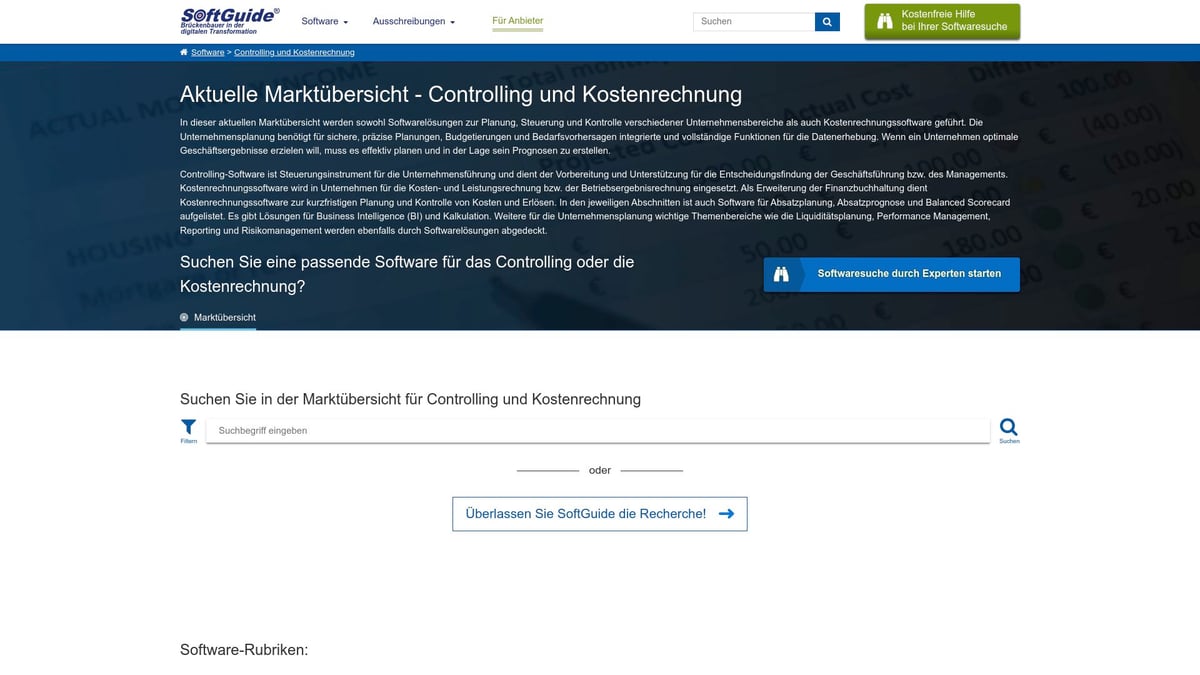
Integrating analytics and reporting modules into ERP or CRM systems is a decisive step. This turns services software into a management tool for controlling, sales, and leadership.
Core features:
- Visualization of key metrics
- Drill-down analyses
- Export functions for presentations
Value:
Transparency and rapid response to changes in the business environment. Data quality and integrating various sources remain a challenge.
Pros:
Effective steering, more transparency.
Cons:
High effort for data quality and integration.
If you want to lead with data, modern BI within your services software is indispensable.
6. Collaborative platforms & digital customer portals
Collaboration is a key success factor for services software. Collaborative platforms connect internal teams, external partners, and customers on a central interface. Digital customer portals offer self-service, status inquiries, and secure document exchange.
Benefits:
- Faster communication
- Higher customer satisfaction
- Reduced email traffic
Community management platforms or project management tools with customer access are examples of this development. They are ideal for service providers with project-based work or consulting-intensive processes.
Core features:
- Chat and task management
- Document sharing
- Event organization
Value:
More transparency and efficiency in projects. However, implementation requires buy-in and training for all stakeholders.
Pros:
Transparency, efficiency gains.
Cons:
Implementation effort, potential acceptance issues.
With collaborative services software, you strengthen long-term relationships with customers and partners.
7. Integration & interoperability: open interfaces and API ecosystems
The future of services software lies in integration. Open interfaces (APIs) make it possible to connect a wide range of applications. This creates end-to-end processes without data silos.
Benefits:
- Automated data flows between tools
- Less manual transfer
- Better data quality
An example is integrating accounting, time tracking, and marketing tools into a central platform. Companies with a heterogeneous software landscape benefit the most.
Core features:
- Standardized interfaces
- Plug-and-play integrations
- Webhooks for real-time communication
Value:
Future-proof, adaptable IT structures that grow with the company. Setup can be complex and require ongoing maintenance.
Pros:
High adaptability, future readiness.
Cons:
Complexity during setup.
Open interfaces are the backbone of modern services software and ensure maximum flexibility.
Success factors when selecting and implementing new services software
The selection and implementation of services software often determines whether digitalization projects succeed or fail. Those who know and apply the right success factors can minimize risks while securing sustainable advantages.
Goal definition & requirements analysis
Before choosing services software, you should set clear goals. Which processes should become more efficient? Do you want to optimize customer communication or automate internal workflows? A precise requirements analysis is the foundation for successful software selection.
Create a checklist of all relevant processes. Prioritize where action is most urgent. This quickly reveals which functions your future solution must cover.
Change management & employee involvement
Even the best services software won’t help if the team doesn’t embrace it. Involve your employees early. Training and open communication help reduce reservations and build acceptance.
Run workshops where employees can express expectations and concerns. This creates a shared understanding of the benefits of the new software and its impact on daily work.
Data protection & compliance as a must
Data security is a must in services software, especially with regard to GDPR and industry standards such as C5. Ensure that providers deliver regular updates, use encryption, and clearly document how data is processed.
Before committing, check the software’s certifications and data protection measures. Tools like workflow automation for service providers often provide detailed information on security features and compliance.
Test phase, selection criteria & piloting
Start with a test phase or pilot. This lets you identify weaknesses and make adjustments before rolling out services software across the organization. Create a small pilot project with selected users.
Pay attention to key criteria when selecting:
- Scalability and extensibility
- Integration with existing systems
- Support and response times
- Transparent cost structure
- Flexibility for individual requirements
Compare solutions systematically. Use case studies and benchmarks from your industry.
Practical examples & conclusion
Many SMEs increase their efficiency through digital automation. After introducing modern services software, companies report up to 30% fewer errors and significantly lower process costs. Successful projects are characterized above all by clear objectives and active user participation.
Statistics show: success rates rise significantly when test phases are used and feedback loops are built in. Those who recognize trends early and continuously optimize set the course for sustainable business success.
If you feel that 2025 is the perfect opportunity to make your processes smarter and more efficient, you’re not alone. Trends like no-code automation, secure cloud solutions, and integrated workflows are finally making real productivity gains tangible – especially for service companies. filehub offers you a powerful solution that seamlessly combines data security and automation. Try it out with no obligation and experience how effortless your document processes can become: test filehub.one for free now


