Software Service Trends 2025

Digitalization is transforming the services industry at enormous speed. By 2025, a fundamental shift is coming that will leave no company untouched.
To succeed in this dynamic market, the use of modern software services is indispensable. Innovative tools and disruptive technologies are the key to automating processes, improving customer experiences, and increasing efficiency.
In this article, you’ll learn which 7 trends will shape the industry in 2025. Discover how AI, cloud solutions, and smart platforms can future-proof your company — and keep you one step ahead of the competition.
The importance of software for the services sector in 2025
Digitalization is fundamentally changing the services sector. Companies are experiencing how software services accelerate processes, reduce costs, and create new opportunities. More efficient workflows and innovative solutions are at the heart of a future-ready industry.
The role of software in digital transformation
Software services are the engine of digital transformation. They automate recurring tasks, minimize sources of error, and lower costs. Especially in areas like accounting, project management, and customer service, modern software delivers tangible efficiency gains.
New business models emerge when companies digitize processes and integrate software intelligently. According to SoftGuide 2024, over 70% of service providers are investing specifically in new solutions to actively shape the transition. Those who embrace automation benefit from faster workflows and more satisfied customers.
Challenges and opportunities for service providers
Software services bring opportunities and challenges hand in hand. Selecting the right tools and integrating them into existing systems is often complex. Companies face the task of training employees to use new applications and managing change purposefully.
Cloud-based and modular software solutions, however, offer great flexibility and scalability. This is particularly evident among SMEs: introducing modern ERP systems can significantly simplify processes. Learn more in the article on process automation in the services sector.
Trends as a response to rising customer demands
Today, customers expect speed, transparency, and personalization from every software service. Software enables omnichannel communication and self-service portals, allowing service providers to respond flexibly to customer needs.
Data-driven services and AI-powered chatbots noticeably improve the customer experience. Modern all-in-one CRM solutions create a central view of all customer interactions. Those who leverage these trends take their service to a new level.
Future-proof investments and competitiveness
Investments in innovative software services are crucial for sustainable success. Companies must ensure GDPR compliance and IT security to build trust and minimize risks.
Modular and integratable solutions are the focus when selecting tools. Forecasts show that by 2025 over 60% of service providers will rely on industry-specific cloud solutions. Those who invest today will secure a clear competitive advantage tomorrow.
7 top software service trends for 2025
Software services will experience an innovation boost in 2025. New tools and platforms are changing how service providers work and support customers. Those who know and strategically apply these trends gain clear competitive advantages.
1. filehub – no-code file and workflow automation for service providers
Automation is the heart of modern software services. filehub takes this to a new level. With its no-code platform, service providers can automate complex file and document workflows without programming knowledge.
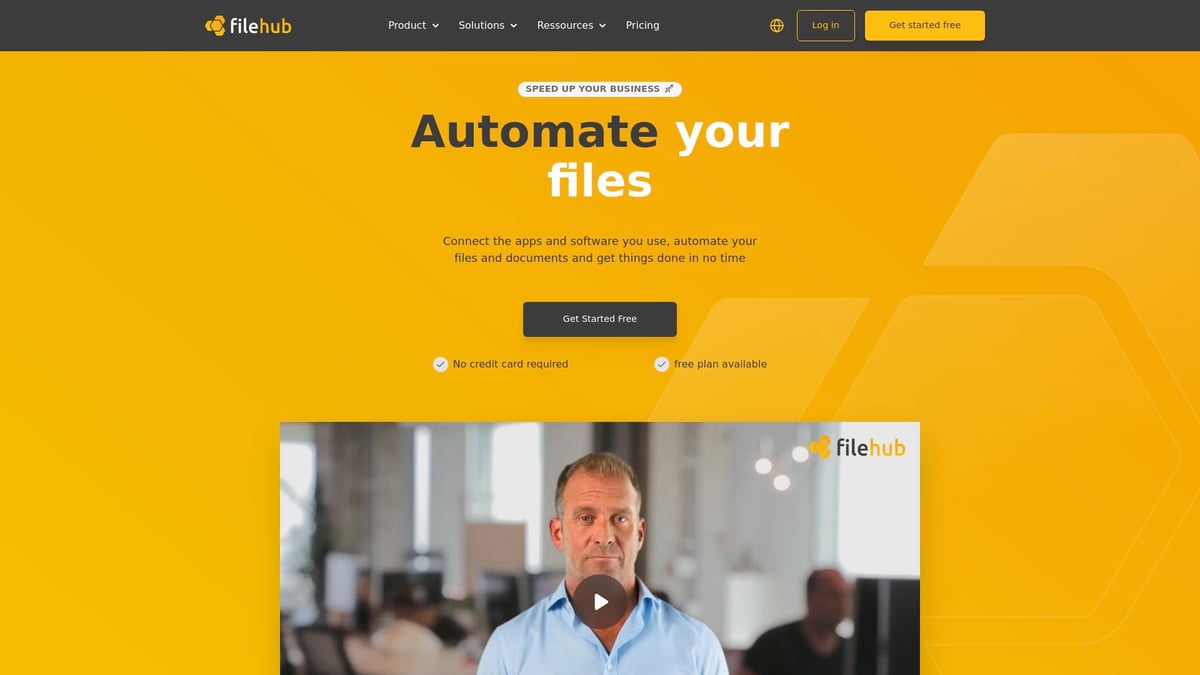
filehub offers:
- Automated invoice processing and digital approvals
- Multi-app integration (Outlook, Dropbox, DocuWare)
- GDPR-compliant hosting in German data centers
- Ready-to-use workflow templates
- Secure web portals for customers and partners
SMEs and teams with strict data protection requirements in particular benefit from rapid implementation. Getting started is simple: there is a free version and tiered pricing models.
One example: automated processing of incoming invoices — files are ingested, checked, routed, and archived, all without manual work. This saves time, reduces errors, and increases transparency.
Pros & cons overview
| Advantages | Disadvantages |
|---|---|
| No programming required | Specialized in file workflows |
| High data security | Less suited for niche, industry-specific apps |
| Quick to deploy |
Another plus: filehub enables workflow automation for service providers that can be flexibly adapted to your own processes. This keeps your software services agile and efficient.
2. CAS IT Services – complete CRM solution for IT service providers
Efficient customer relationships are the backbone of every software service. CAS IT Services offers a comprehensive CRM solution tailored specifically to IT service providers.
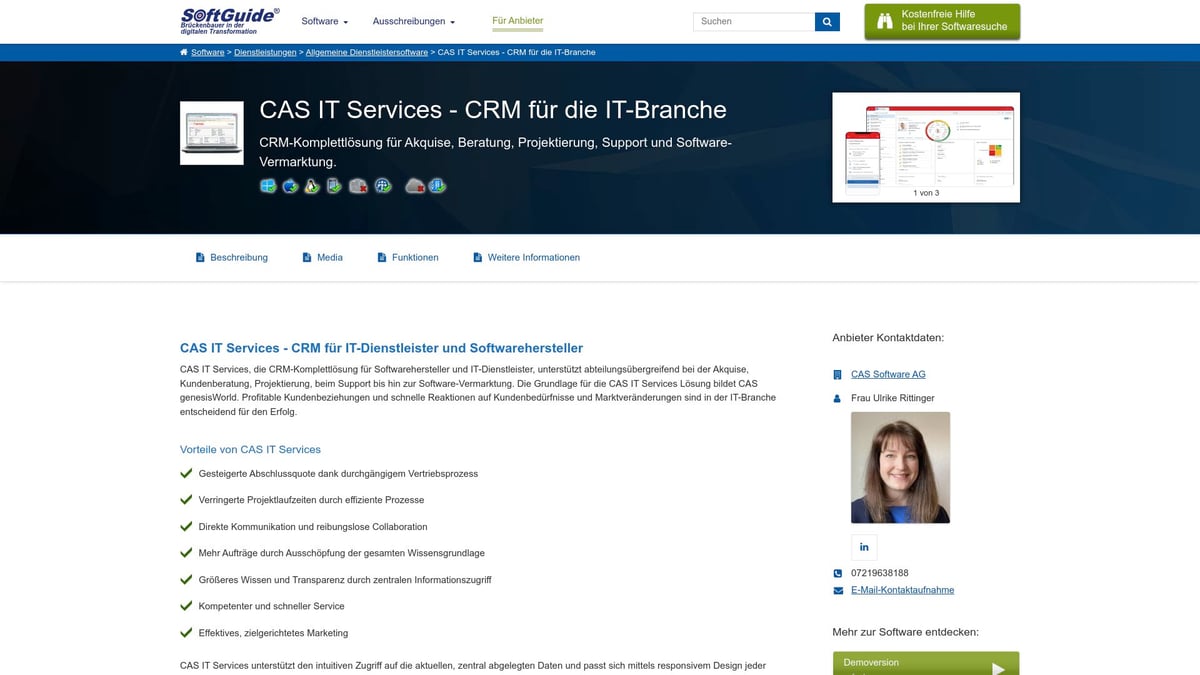
Key functions:
- Acquisition and consulting management
- Project control and support ticketing
- Graphical resource planning
- Integration of helpdesk and sales
Cross-department collaboration is simplified. The central project overview is a real advantage, especially for consulting firms and system houses.
CAS IT Services works with individual licensing models based on needs.
Use cases
- Managing complex IT projects
- Support and sales management
- Resource planning for teams
Pros & cons
| Advantages | Disadvantages |
|---|---|
| High degree of customization | Onboarding effort |
| Integration of support and sales | Primarily for the IT sector |
This software service enables efficient and transparent management of customer projects. The customization options ensure the solution fits your processes exactly.
3. Esperoo – intelligent scheduling & team collaboration
Flexibility and teamwork are at the forefront of software services in 2025. Esperoo is a platform for automated scheduling and collaborative project management.
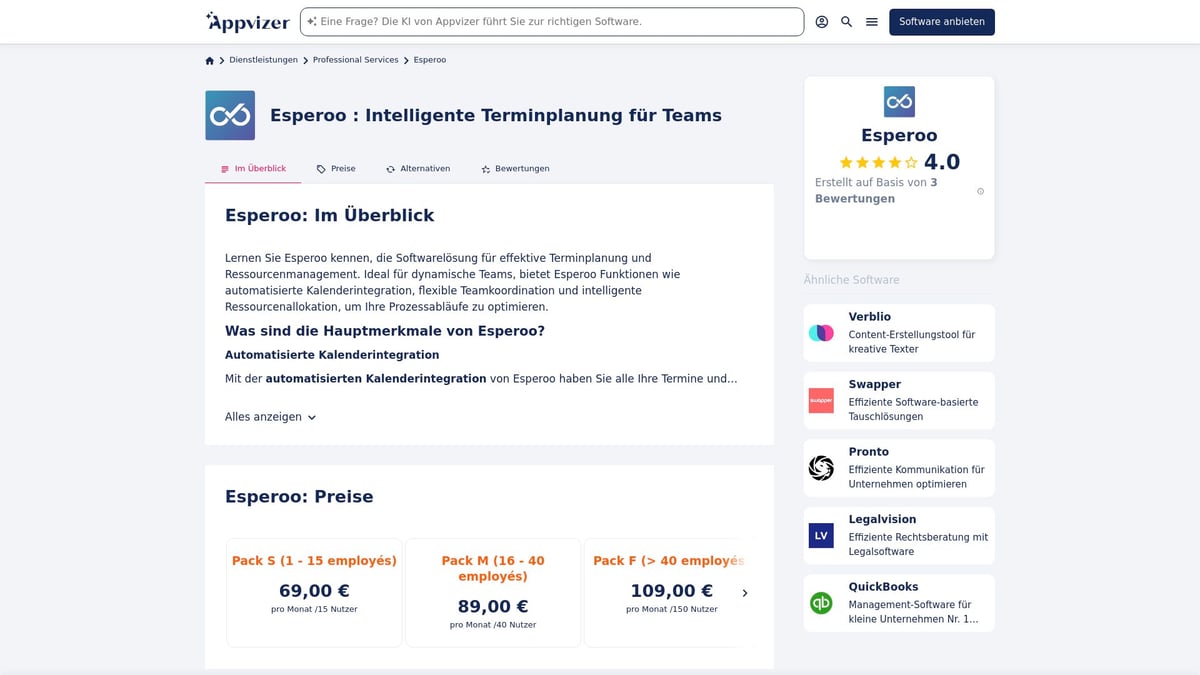
Core functions include:
- Automated scheduling and resource planning
- Project management tools with custom workflows
- Data import from third-party apps
- User-friendly interface
Teams benefit from measurable productivity gains and less coordination effort. Service providers with many parallel projects gain clarity in particular.
Pricing starts at €69/month with a free trial.
Typical scenarios
- Resource and project coordination
- Integration of calendars and external tools
- Automated reminders and task distribution
Pros & cons
| Advantages | Disadvantages |
|---|---|
| Easy integration | Less suited for accounting |
| Highly adaptable | Focus on scheduling & project mgmt. |
With Esperoo, you optimize your software services and ensure smooth day-to-day team operations.
4. Biquanda – process optimization & time tracking for service providers
Time tracking and process optimization are essential for any software service. Biquanda combines both in a modular solution.
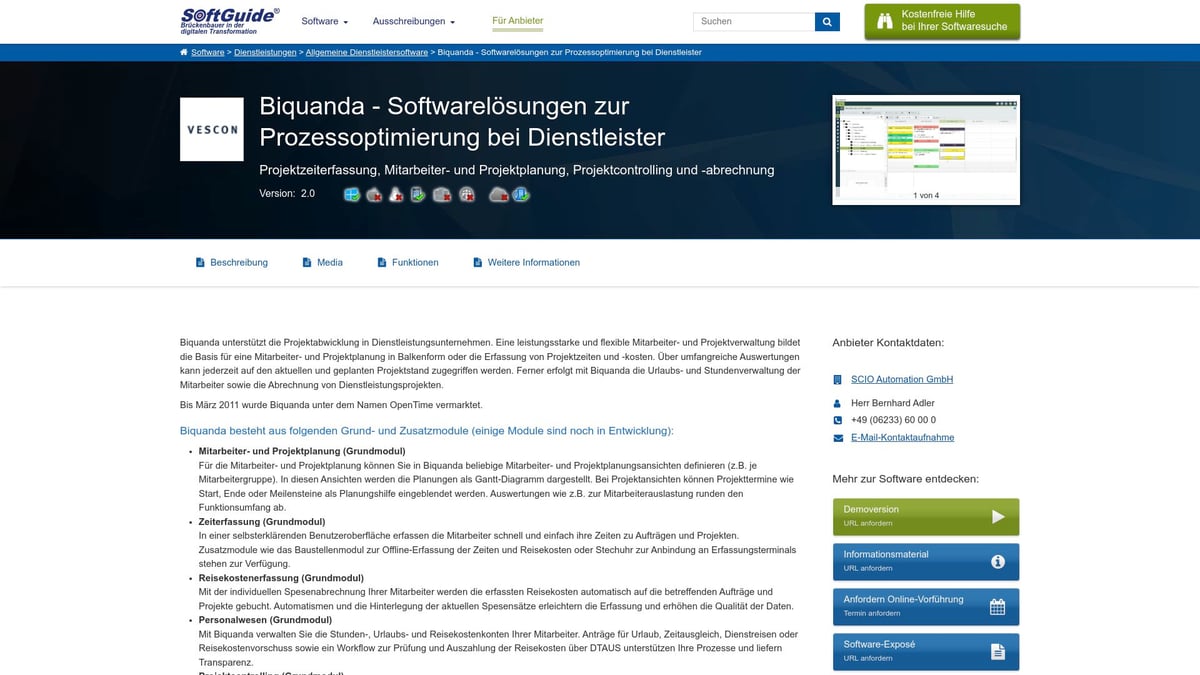
Functions:
- Project time tracking with intuitive operation
- Employee and project planning
- Automated controlling and billing
- Integrated dashboards for clarity
Project-oriented service providers and agencies in particular benefit from the depth of integration. Licensing models are flexible and adapt to individual requirements.
Practical examples
- Project controlling with live data
- Real-time resource management
- Automated billing processes
Pros & cons
| Advantages | Disadvantages |
|---|---|
| Clear dashboards | Focus on project-based services |
| Time and cost savings | Less suited for standard processes |
With Biquanda, software services become measurably more efficient — from planning to billing.
5. Crowdin – collaborative translation management software
International communication is a must for any scaling software service. Crowdin offers a platform for collaborative translation management and supports over 700 app integrations.
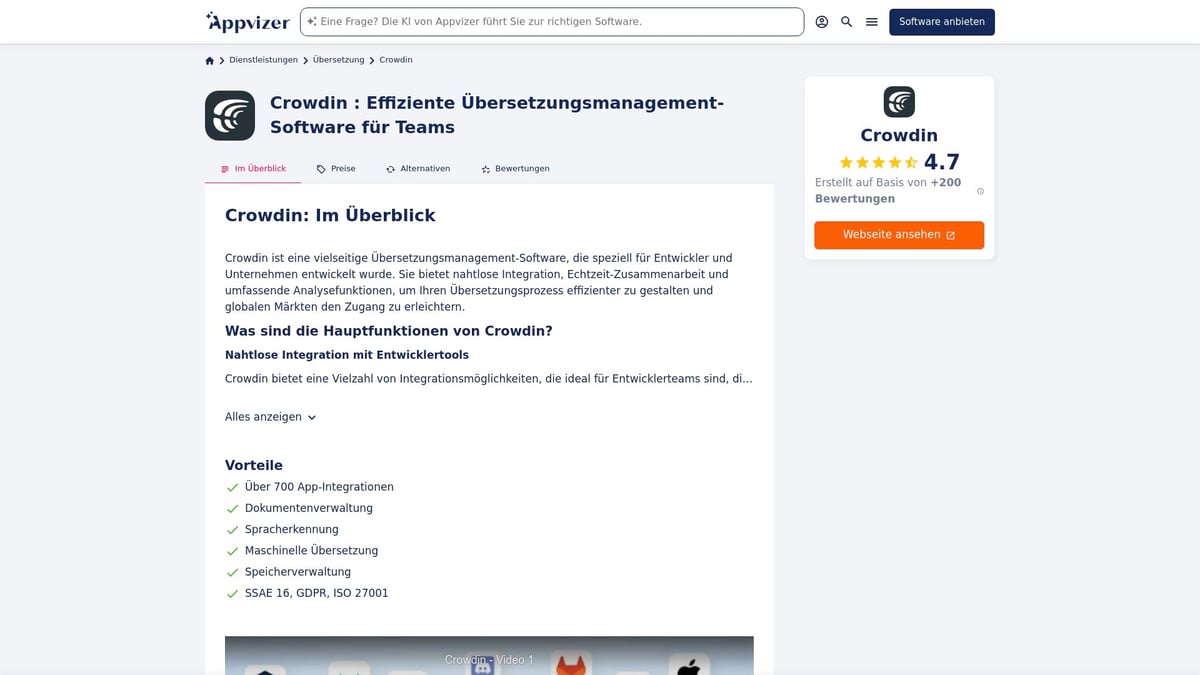
Core functions:
- Translation management with API connectivity
- Team workspaces and document management
- Automatic language detection
- Efficient workflows for multilingual projects
Pricing starts at $59/month with a free trial.
Typical use cases
- Multilingual customer communication
- Translation projects for software and documents
- Workflow optimization in an international context
Pros & cons
| Advantages | Disadvantages |
|---|---|
| Extensive integrations | Focus on translation management |
| Collaborative features | Less relevant for other service areas |
Crowdin gives your software services global reach and ensures consistent communication across all target markets.
6. Unit4 ERP – industry-specific ERP solution for service providers
Industry-specific solutions are the backbone of modern software services. Unit4 ERP offers a modular system for service companies of all sizes.
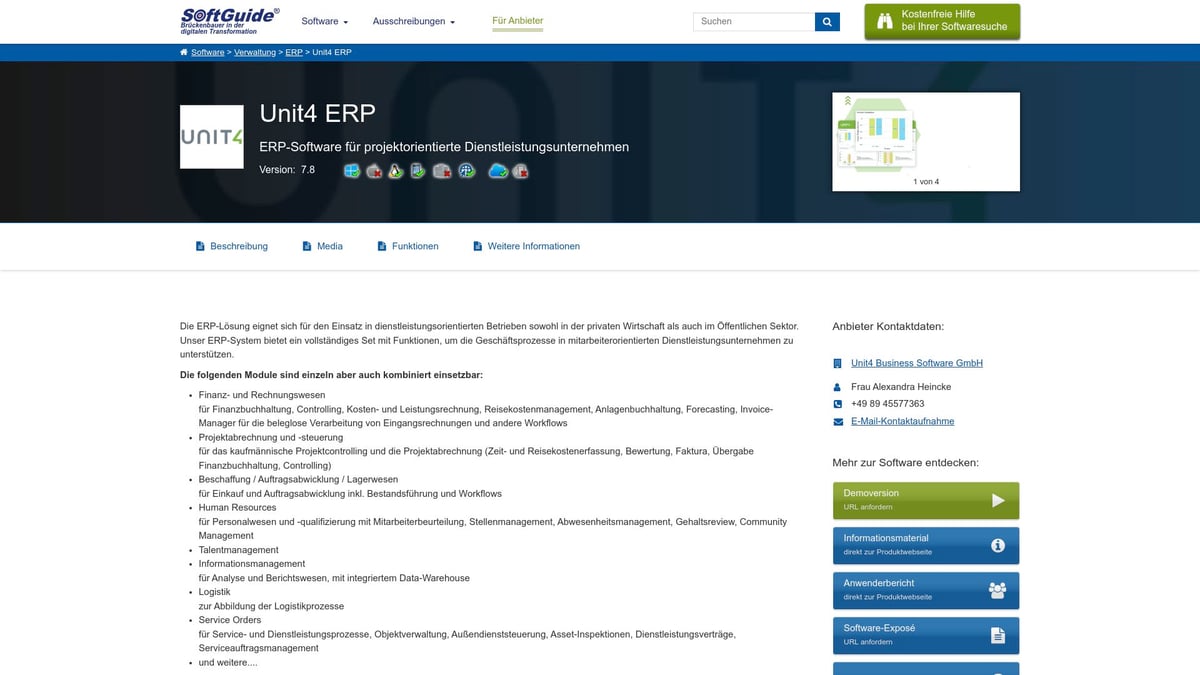
Key features:
- HR, accounting, project management
- Procurement management and analytics
- Digital assistant to support processes
- Flexible adaptation to company size and industry
Pricing is modular and based on needs.
Areas of application
- Corporate steering and financial management
- Resource planning and project organization
- Scalable solution for growing companies
Pros & cons
| Advantages | Disadvantages |
|---|---|
| Comprehensive functionality | Implementation effort |
| High scalability | Training required |
With Unit4 ERP, your software services are future-proof. The platform grows with you and provides all the tools to master even complex requirements.
7. Teetche – interactive learning platform for online training
Knowledge is the key to innovation in software services. Teetche is a modern platform for online training and employee education.
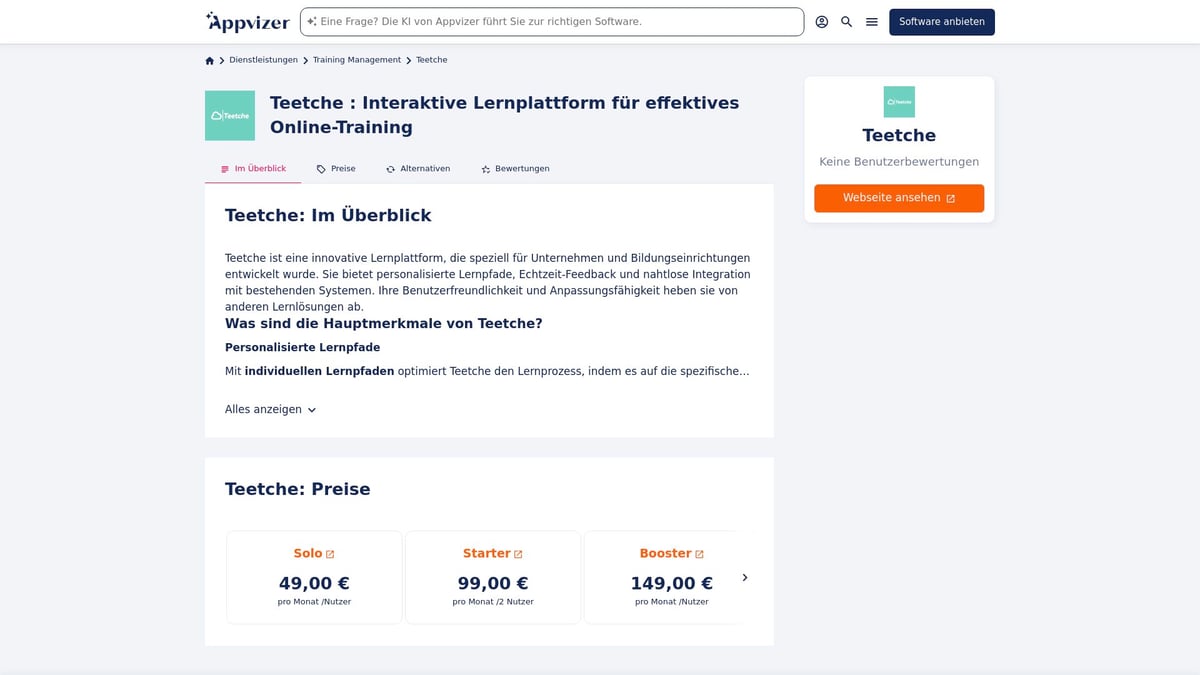
Highlights:
- Interactive courses in various formats
- Progress tracking for participants and trainers
- User-friendly dashboard
- Flexible course design and personalized upskilling
Prices start at €49/month, including a free trial.
Typical areas of use
- Employee training in the services sector
- Online training for new tools and processes
- Knowledge management and onboarding
Pros & cons
| Advantages | Disadvantages |
|---|---|
| Simple navigation | Focus on training management |
| Clear progress control | Less suited for operational processes |
With Teetche, you strengthen your teams’ know-how and take your software services to the next level.
Smart integration & automation: how modern software revolutionizes workflows
Digitalization is changing the rules of the game in software services. Modern companies face the task of linking different applications efficiently and automating workflows. Smart integration and automation are the keys to streamlining processes and minimizing sources of error.
Integration as the key to increased efficiency
Integration is the backbone of modern software services. The ability to seamlessly connect different tools such as accounting, CRM, or project management determines efficiency and competitiveness.
APIs enable automatic data exchange, preventing duplicate work and data loss. A good example: filehub links different applications and automates file workflows so teams always have access to up-to-date information.
According to Appvizer, 60% of companies now rely on multi-app integration. This enables centralized control and ensures that software services remain flexible and scalable.
Automating repetitive tasks
Automation has become indispensable in software services. Routine activities such as invoice processing, scheduling, or document filing can now be handled reliably in digital form.
This not only reduces sources of error but also significantly shortens processing time. A practical example is automated time tracking with Biquanda. Automation goes even further in accounting — automated accounting processes show how recurring tasks can be fully digitized and controlled.
This increases ROI, and employees can focus on value-adding tasks. In this way, software services become a productivity booster.
Workflow optimization through AI and machine learning
Artificial intelligence is revolutionizing software services. AI-driven analyses help with resource planning, detect bottlenecks early, and support customer service with chatbots and digital assistants.
One example: in CAS IT Services, AI enables intelligent ticket assignment, allowing support requests to be processed faster. Forecasts indicate that by 2025 around 40% of service providers will actively integrate AI into their workflows.
If you want to learn more about current developments, the software engineering trends 2025 provide a comprehensive overview of AI, automation, and new technologies in software services.
Challenges and best practices in integration
Despite all the benefits, integrating software services also brings challenges. Data migration, compatibility, and open interfaces are critical factors that must be carefully planned.
Standardization simplifies collaboration between tools and lowers maintenance costs in the long term. Data protection and IT security are always in focus — especially when dealing with sensitive customer data.
Best practice: integration should be carried out step by step and accompanied by continuous monitoring. This allows errors to be identified quickly and ensures software services remain adaptable at all times.
Industry-specific cloud solutions and platform ecosystems
Cloud technologies are shaping the future of software services. They offer service providers flexibility, scalability, and the ability to realize innovative business models. Platform ecosystems, industry-specific customizations, and the highest security standards will become decisive competitive advantages in 2025.
The cloud as an enabler of scaling and flexibility
The cloud is long since more than just storage. For software services, it opens new ways to offer services regardless of location and respond to changing market demands. Cloud-based solutions such as Unit4 ERP or abacusPlus allow user numbers and data volumes to scale flexibly.
With the cloud, teams worldwide can access the same applications and collaborate on projects. According to SoftGuide, over 60% of service providers plan to move to the cloud by 2025. Those who choose cloud-native platforms benefit from automatic updates, lower IT costs, and faster time to market.
Platform ecosystems and marketplaces
Platform ecosystems are the heart of modern software services. They bundle different applications, enable third-party integration, and increase efficiency. Marketplaces like Appvizer or SoftGuide provide centralized access to industry-specific software solutions.
The advantages are obvious:
- Time savings in software selection
- Better overview through centralized management
- Faster implementation and integration
Those who rely on platforms can flexibly add new modules and seamlessly extend existing processes. In this context, it’s worth taking a look at software development trends 2025, which underscore the shift toward cloud-native platforms and ecosystems.
Industry-specific customization and personalization
Every industry has its own requirements for software services. Cloud solutions offer modular extensions tailored exactly to industry-specific processes. Examples such as Biquanda for project-based service providers or Groomsoft for pet care illustrate the trend toward customization.
For financial service providers, there are specialized offerings such as solutions for financial services that optimally combine compliance, data protection, and industry-specific workflows. With such tailored solutions, companies can digitize their processes precisely and secure competitive advantages.
Security and compliance in the cloud
Security is a must in software services. In 2025, service providers will focus even more on GDPR compliance, encrypted data transmission, and certified data centers in Germany. C5 certifications and regular audits provide additional security.
Open interfaces, role-based access, and continuous compliance checks are crucial. Modern cloud solutions adhere to the highest standards while still enabling rapid integration of new modules. This preserves customer trust and ensures that digital transformation succeeds sustainably.
You can see: 2025 will be the year when modern software solutions like filehub can address key challenges in the services sector simply and securely. Automated file workflows, secure cloud connectivity, and intuitive no-code processes are no longer a vision of the future — you can use them today to save time and make your company more efficient. If you want to experience how straightforward this is in practice, just get started and test filehub.one for free now. That way, you’ll be perfectly prepared for the trends to come!


