Varial Financial Management: Software Solution in Detail
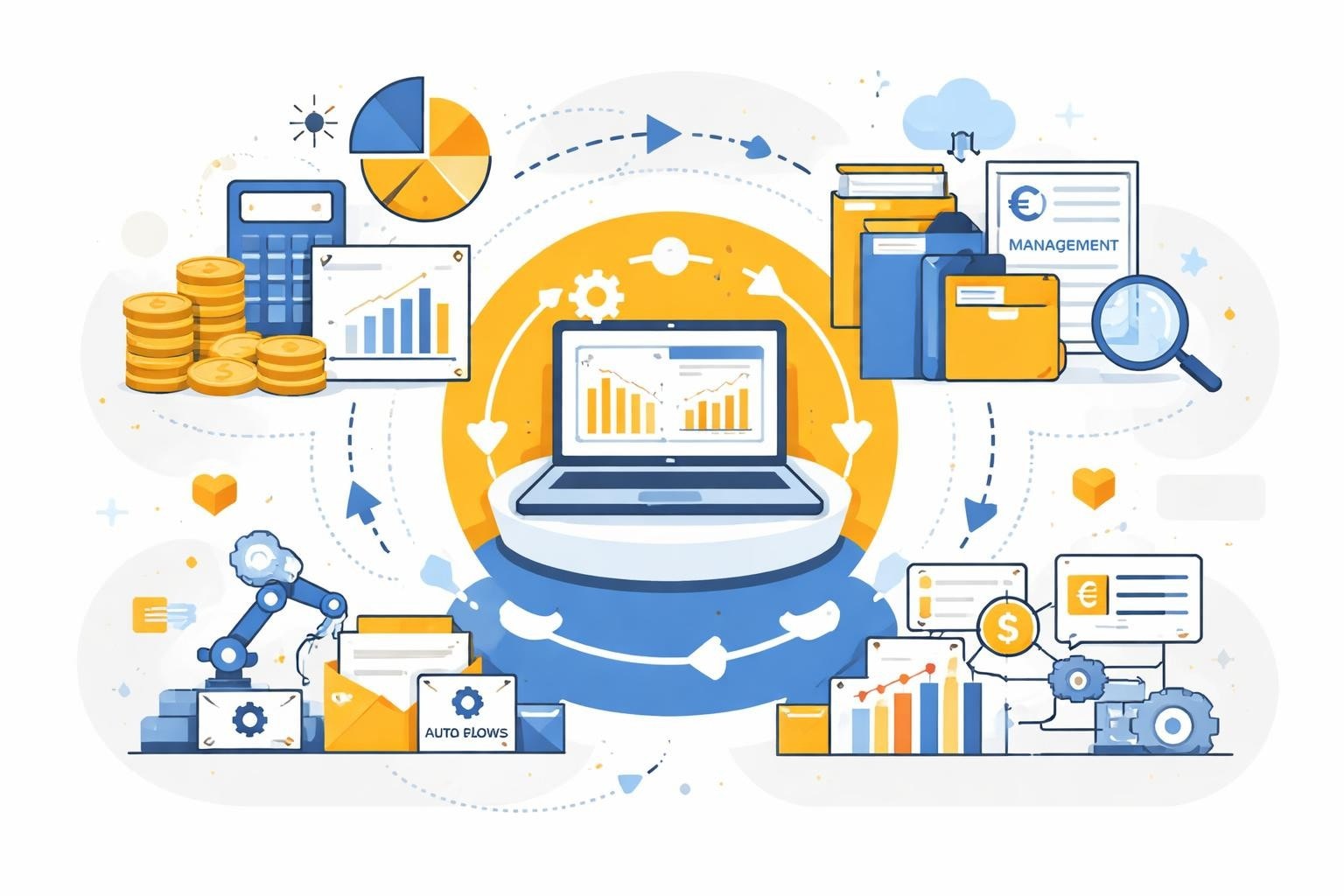
Digital finance confronts companies with growing challenges: accounting processes must become more precise, faster, and more compliant. Varial Finanzwesen positions itself as a specialized software solution that addresses exactly these requirements. The platform offers comprehensive functions for bookkeeping, payments, and controlling while taking into account the specifics of German accounting. For many companies, however, integrating such financial solutions into existing system landscapes is a significant hurdle. The combination of traditional financial software and modern automation creates new opportunities to eliminate manual processes and reduce sources of error.
What is Varial Finanzwesen and who uses it
Varial Finanzwesen is a commercial all-in-one solution developed specifically for medium-sized companies and organizations in the German-speaking region. The software covers all core areas of accounting and combines financial accounting with controlling functions.
The target group primarily includes:
-
Medium-sized companies with 50–500 employees
-
Tax consulting firms for client management
-
Municipal institutions with specific requirements
-
Associations and federations with cost center accounting
Core functions of the financial software
Varial Finanzwesen is structured into several modules that can be used individually or in an integrated way. The main module, Financial Accounting, forms the basis for all other functions.
|
Module |
Main function |
Typical use |
|---|---|---|
|
Financial Accounting |
Document capture, DATEV export |
Daily bookkeeping |
|
Fixed asset accounting |
Depreciation management, inventory |
Year-end closing |
|
Cost accounting |
Cost centers, projects |
Controlling |
|
Payments |
SEPA, dunning |
Liquidity management |
The software takes current requirements of the German fiscal policy into account and is continuously adapted to legal changes.
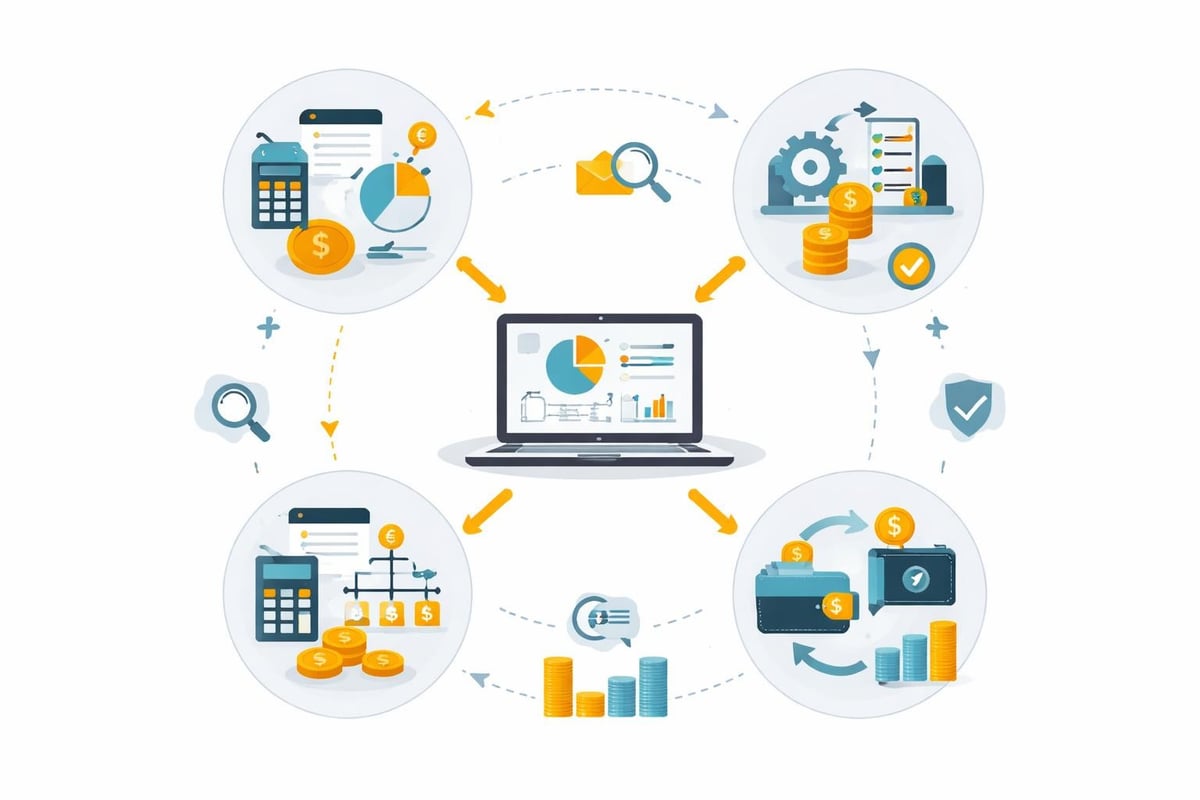
🤖 Copy, paste, forget.
Bookkeeping doesn't start with typing — it starts with filehub, prepped for varial Finanzwesen — reliably and without errors.
Digital document processing and document management
A critical aspect of modern financial systems is the efficient processing of incoming documents. Varial Finanzwesen can process invoices, bank statements, and other financial documents—but manually transferring data from various sources remains a time-consuming challenge.
Integration with DMS and ECM systems
Many companies use document management systems (DMS) or enterprise content management (ECM) solutions alongside their financial software. Connecting these systems with varial finanzwesen significantly optimizes the entire workflow.
Typical integration scenarios:
-
Invoice receipt: Documents are archived in the DMS and data is automatically handed over to accounting
-
Approval processes: Workflows in the ECM control approval before postings are made
-
Auditability: The link between the posting record and the original document is preserved
-
Duplicate detection: Invoices that have already been processed are recognized
The file automation platform filehub provides a bridging function here: It can retrieve documents from various sources, prepare them, and provide them in a format that varial finanzwesen can process directly.
Automation of bookkeeping processes
Manually importing data into varial finanzwesen ties up valuable resources. Intelligent automation can streamline these processes significantly.
Automatic data import from various sources
Modern companies use numerous platforms and portals that deliver booking-relevant data. The challenge is to systematically capture this information.
Common data sources:
-
E-commerce platforms and marketplaces
-
Booking portals and reservation systems
-
Supplier portals with invoice download
-
Banks and payment service providers
-
Cloud storage with document archiving
The Varial integration of filehub enables booking data from these various sources to be generated automatically and converted into the correct import format. This reduces manual entries and minimizes transmission errors.
Workflow automation without programming
A key advantage of modern automation platforms lies in their accessibility. Finance managers can create workflows without relying on IT resources.
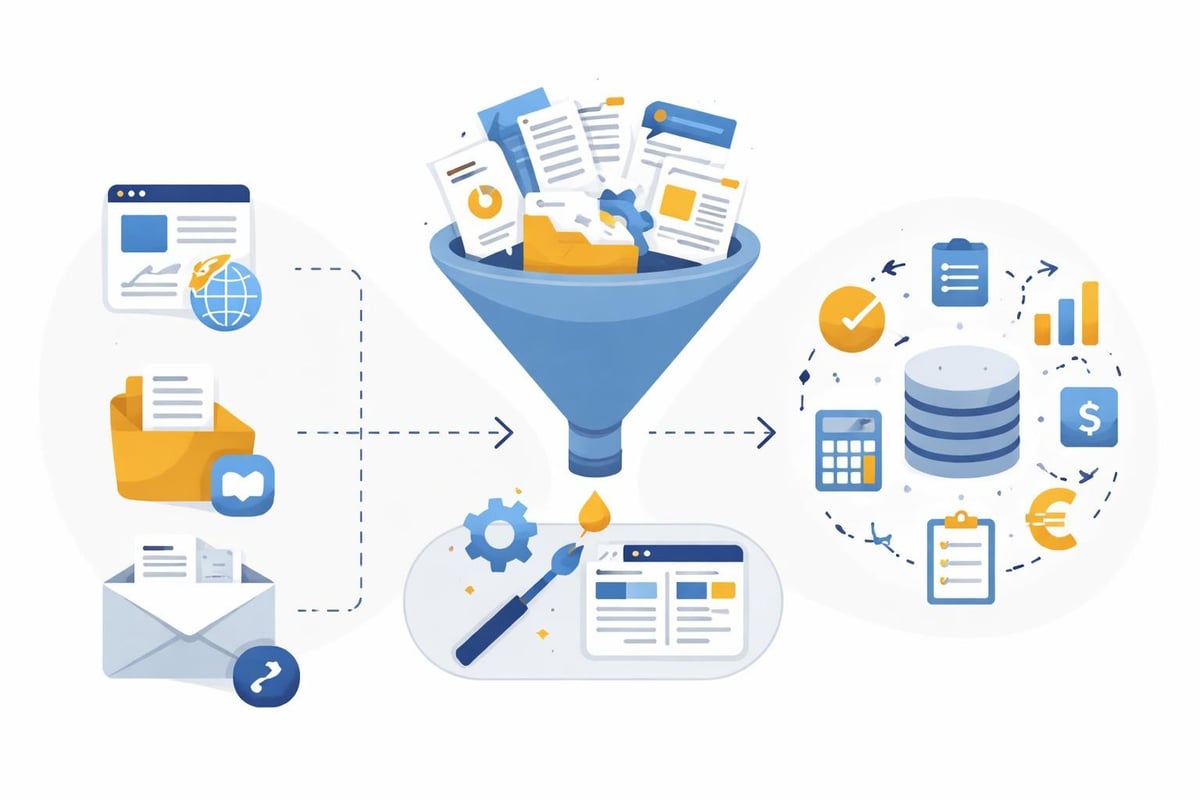
Example workflow for invoice processing:
-
The system retrieves new invoices from configured portals daily
-
PDF files are automatically converted into structured data
-
Plausibility checks are performed (totals, required fields)
-
Data is prepared in the varial finanzwesen import format
-
Files are transferred to defined folders or imported directly
The financial automation solutions address exactly these use cases and offer preconfigured templates that can be quickly adapted.
🎯 Ready to never do this manually again?
filehub serves your varial Finanzwesen booking data on a silver platter — zero manual entry — set it up once, automated forever.
Benefits of automation for financial processes
Connecting varial finanzwesen with automation platforms creates measurable added value. Companies report significant efficiency gains.
Time savings and cost reduction
Quantifiable benefits:
-
Reduction of processing time per document by 70–80%
-
Savings of 15–20 working hours per week with a medium document volume
-
Shorter lead time from invoice approval to payment
-
Avoidance of missed cash discount deadlines
|
Process step |
Manual |
Automated |
Time saved |
|---|---|---|---|
|
Invoice download |
3 min |
0 min |
100% |
|
Data capture |
5 min |
0.5 min |
90% |
|
Import into system |
2 min |
0 min |
100% |
|
Total per document |
10 min |
0.5 min |
95% |
Current developments in the financial sector, regularly analyzed by business media, show the trend toward full process digitization.
Error reduction and compliance
Manual data entry is prone to errors. Automated processes eliminate typos and ensure consistent data quality.
Compliance benefits:
-
Complete documentation of all process steps
-
Audit-proof archiving in accordance with GoBD
-
Timestamps for all processing steps
-
Traceability during tax audits
GDPR compliance is essential, especially for German companies. Automation platforms that, like filehub, are developed and operated in Germany ensure the highest data security standards.
Integration with existing system landscapes
Varial Finanzwesen is rarely the only software used in a company. Seamless integration with other systems becomes a success factor.
Connecting accounting systems and portals
Many companies also use specialized solutions for sub-areas. Orchestrating these systems requires flexible integration options.
Typical system combinations:
-
Varial Finanzwesen + DATEV for communication with tax advisors
-
Varial Finanzwesen + merchandise management system
-
Varial Finanzwesen + cloud accounting software for sub-areas
-
Varial Finanzwesen + time tracking systems for payroll
The accounting software integration requires standardized interfaces and flexible data formats. Modern automation platforms act as middleware that connects different systems.
Data exchange with external partners
The exchange of financial data with external stakeholders is a recurring requirement. Tax advisors regularly need DATEV exports, and banks expect SEPA files in defined formats.
Automatable interfaces:
-
Communication with tax advisors: Automatic export and transfer of posting data
-
Banking: Import of bank statements and export of payment files
-
Suppliers: Automatic retrieval of invoices from supplier portals
-
Customers: Provision of credit notes and payment confirmations
The automation of invoice downloading is a particularly common use case that can be integrated directly into varial finanzwesen workflows.
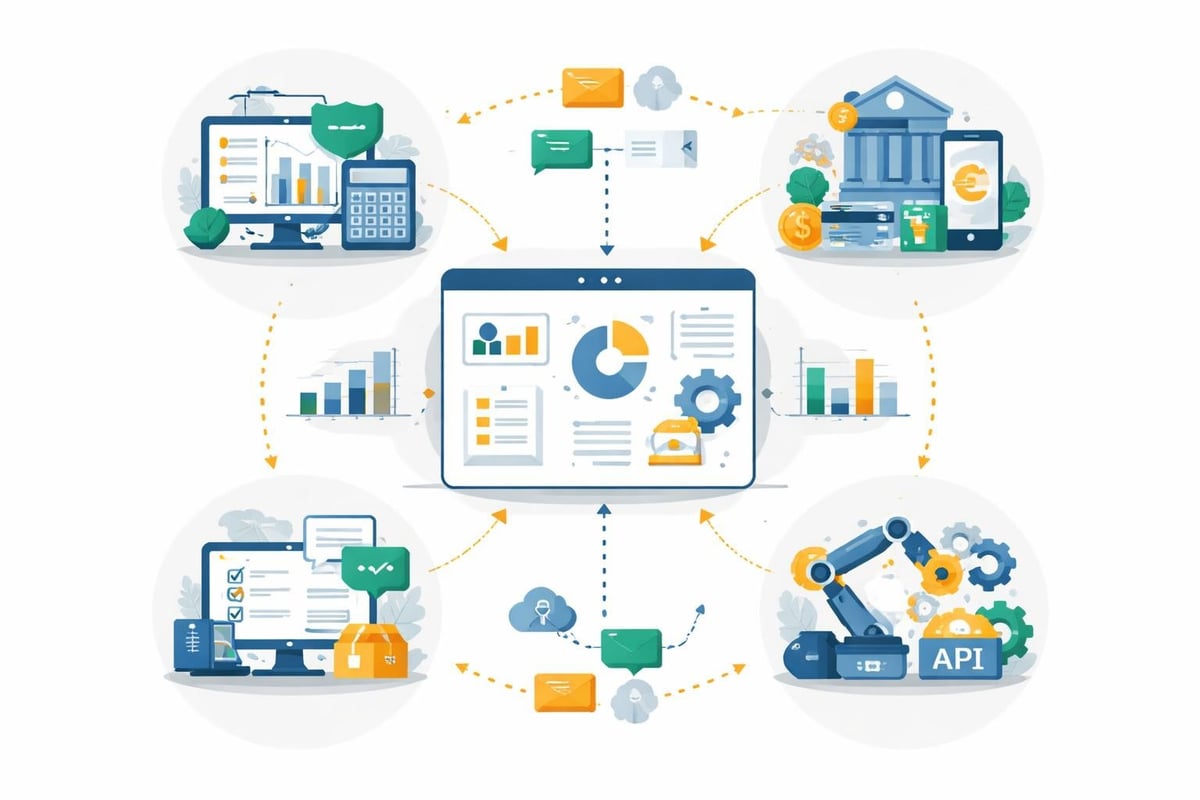
🎯 Ready to never do this manually again?
filehub serves your varial Finanzwesen booking data on a silver platter — zero manual entry — set it up once, automated forever.
Industry-specific requirements and solutions
Different industries place specific requirements on their financial software. varial finanzwesen offers flexibility for diverse business models.
Tourism and hospitality
Hotels, vacation rentals, and tour operators need special functions for processing booking platform data.
-
Automatic retrieval of booking platform invoices
-
Processing of commission statements
-
Guest data management under GDPR aspects
-
Seasonal cost center accounting
The integration of booking portals with varial finanzwesen via automation platforms enables daily automatic reconciliations.
Public administration and non-profit
Municipalities, associations, and foundations have special requirements for controlling the use of funds.
Specific functions:
-
Grant management with proof of use
-
Project cost accounting for funded projects
-
Budget monitoring and public sector accounting
-
Donation receipts and certificates
The research findings show that there is considerable digitalization potential, especially in the public sector.
Technical requirements and implementation
The successful use of varial finanzwesen requires careful planning of the technical infrastructure and implementation strategy.
System requirements and architecture
Modern financial software can be run as a client-server solution or increasingly also cloud-based. The choice of architecture influences scalability and maintenance effort.
Infrastructure options:
|
Option |
Advantages |
Challenges |
|---|---|---|
|
On-premises |
Full data control, no dependency |
Maintenance effort, backup responsibility |
|
Private cloud |
Flexibility, professional hosting |
Ongoing costs, provider selection |
|
Hybrid |
Best of both worlds |
Management complexity |
Connection to automation platforms typically takes place via file storage folders or API interfaces, with file exchange scenarios being particularly robust and low-maintenance.
Best practices for implementation
The implementation of varial finanzwesen should be carried out in a structured way to minimize disruption to ongoing operations.
Recommended phases:
-
Requirements analysis: Mapping existing processes and identifying automation potentials
-
Test environment: Parallel operation with the old system for 1–2 months
-
Data takeover: Migration of historical data with validation
-
Training: Training users at all levels
-
Go-live: Phased takeover by modules
-
Optimization: Continuous improvement based on user feedback
The integration of automation workflows should take place step by step—starting with the most time-intensive manual processes.
Future of automated finance
The development of financial software and automation technologies is continuously advancing. Several trends are emerging for 2026 and beyond.
AI-supported process optimization
Artificial intelligence is increasingly finding its way into financial processes. Machine learning can generate posting suggestions based on historical data and detect anomalies.
Areas of application:
-
Automatic account assignment based on invoice contents
-
Forecasting liquidity bottlenecks
-
Detection of irregularities and fraud prevention
-
Intelligent prioritization of payments
The combination of varial finanzwesen with AI-supported document processing systems enables nearly fully automated bookkeeping.
Regulatory developments
The financial supervision and regulation are continuously evolving. E-invoicing obligations, digital audits, and expanded reporting requirements require adaptable systems.
Current trends 2026:
-
Mandatory e-invoicing in the B2B sector since January 2025
-
Expanded GoBD requirements for immutability
-
Real-time reporting to tax authorities in planning
-
Blockchain-based proof procedures in pilot projects
Automation platforms that can quickly reflect regulatory changes offer a decisive advantage here. The continuous further development of such systems ensures long-term compliance.
Practical examples of successful implementations
Concrete use cases show the potential of combining varial finanzwesen with automation.
Medium-sized trading company
A wholesaler with 120 employees processed 80–100 supplier invoices from various sources every day.
Initial situation:
-
Manual entry of invoices from emails, portals, and postal mail
-
3 full-time employees in accounts payable
-
Average processing time: 12 minutes per invoice
-
Frequent missed cash discount deadlines
Solution with automation:
The company implemented automated workflows that retrieve invoices from email attachments, supplier portals, and DMS, prepare them, and make them available for varial finanzwesen.
Results after 6 months:
-
Processing time reduced to 2 minutes per invoice (only review and approval)
-
1.5 full-time positions could be reassigned to value-adding activities
-
Cash discount utilization increased from 65% to 98%
-
Monthly cost savings: approx. 8,500 euros
Tax consulting firm with client management
A firm with 45 clients uses varial finanzwesen for accounting services.
The challenge was obtaining documents and bank statements from various client banks and portals. Through automation, individualized retrieval workflows are now executed for each client.
Benefits:
-
Clients no longer need to submit documents manually
-
Daily instead of monthly booking updates possible
-
Real-time overview implementable for clients
-
Year-end preparation significantly more efficient
The connection of various systems enabled end-to-end digitization of the entire process chain.
Cost-benefit analysis of automation
Investing in automation for varial finanzwesen should be carefully calculated. The payback period is typically short.
Investment costs and ongoing expenses
Typical cost structure:
-
Licenses for automation platform: 50–200 euros/month depending on scope
-
Setup effort: 5–15 working days initially
-
Maintenance and adjustments: 0.5–1 working day/month
-
Training effort: 2–4 working days for the team
Savings and ROI
Savings arise primarily from time gains, error reduction, and better financial management.
Example calculation (100 documents/day):
-
Time savings: 15 minutes × 100 = 25 hours/day
-
With 20 working days: 500 hours/month
-
Cost savings at 40 euros/hour: 20,000 euros/month
-
ROI achieved in the first month
In addition, there are hard-to-quantify benefits such as better liquidity management due to more up-to-date data and higher employee satisfaction through the elimination of monotonous tasks.
Digitalization of finance is no longer a project for the future but a concrete necessity for competitive companies. varial finanzwesen provides a solid basis for professional accounting—but true efficiency gains only arise through intelligent automation of data ingestion and processing. With filehub, you can automatically retrieve your financial documents from a wide variety of sources, prepare them, and transfer them directly into usable import formats for your accounting system—without any programming effort and in compliance with the highest security standards.


