7 Benefits of Document Archiving for Businesses

Digital transformation continues to present many companies with new challenges—especially in the area of document archiving. Paper-based filing slows processes, is insecure, and no longer fits the modern world of work.
Digital solutions offer efficiency, legal certainty, and a clear competitive advantage. In this article, you’ll learn the 7 most important benefits of document archiving for companies in 2025 and how to make the most of them for your business.
What is document archiving and why is it so relevant in 2025?
In 2025, digital document archiving is essentially indispensable for companies. It replaces traditional paper filing with digital processes and enables structured, secure, and efficient document management. Unlike paper filing, documents are stored digitally, tagged, and can be searched quickly. Core functions include storage, indexing, access control, and long-term archiving. While a document management system (DMS) often covers the entire lifecycle of documents, archiving focuses on legally compliant, permanent storage. A comprehensive overview of definitions, legal requirements, and technological trends is provided by the Digital Archiving: The Complete Guide.
Definition and basic functions of document archiving
Archiving involves storing information digitally and managing it in a structured way. The most important functions include secure retention, fast retrieval through indexing and search functions, and control over who can access which documents. Unlike traditional paper filing, the digital version reduces search times and offers greater security. A DMS extends these functions by also integrating workflows and editing processes.
Legal and regulatory requirements in 2025
Companies face increasing demands on digital archiving. With the introduction of e-invoicing in 2025, this topic requires special attention, as e-invoices and XRechnung may only be archived digitally. Relevant regulations such as GoBD, GDPR, as well as tax and commercial law requirements demand audit-proof storage, transparent logging, and, of course, compliance with statutory retention periods. Digital archives must be demonstrably immutable and log access and changes without gaps. This ensures traceability and evidentiary value in the event of disputes or audits. Procedural documentation serves as evidence here.
Technological trends and innovations
In 2025, document archiving benefits enormously from technological innovations. Cloud-based archiving solutions enable location-independent access and high scalability. Automation and AI-powered document recognition (OCR) accelerate filing and search. Modern systems integrate seamlessly with ERP or CRM solutions, providing a central information platform for companies of all sizes.
Challenges during implementation
Introducing digital archiving comes with challenges. Data migration from legacy systems, overcoming internal resistance, and training employees are critical to success. Security and data protection aspects must also be considered to protect sensitive information and meet compliance requirements.
Practical example: Digitization drive in the SME sector
An increasing number of SMEs are turning to digital document archiving. According to current studies, over 60% of German companies already use digital archives or plan to introduce them. Case studies show that the switch leads to significant time and cost savings and increases legal certainty. Companies report faster processes, fewer sources of error, and a noticeable easing of day-to-day work.
The 7 benefits of document archiving for companies in 2025
In 2025, document archiving delivers decisive competitive advantages. Modern archiving solutions not only simplify daily work but also set new standards in security, efficiency, and sustainability. Below you’ll find the seven most important benefits document archiving offers your company.
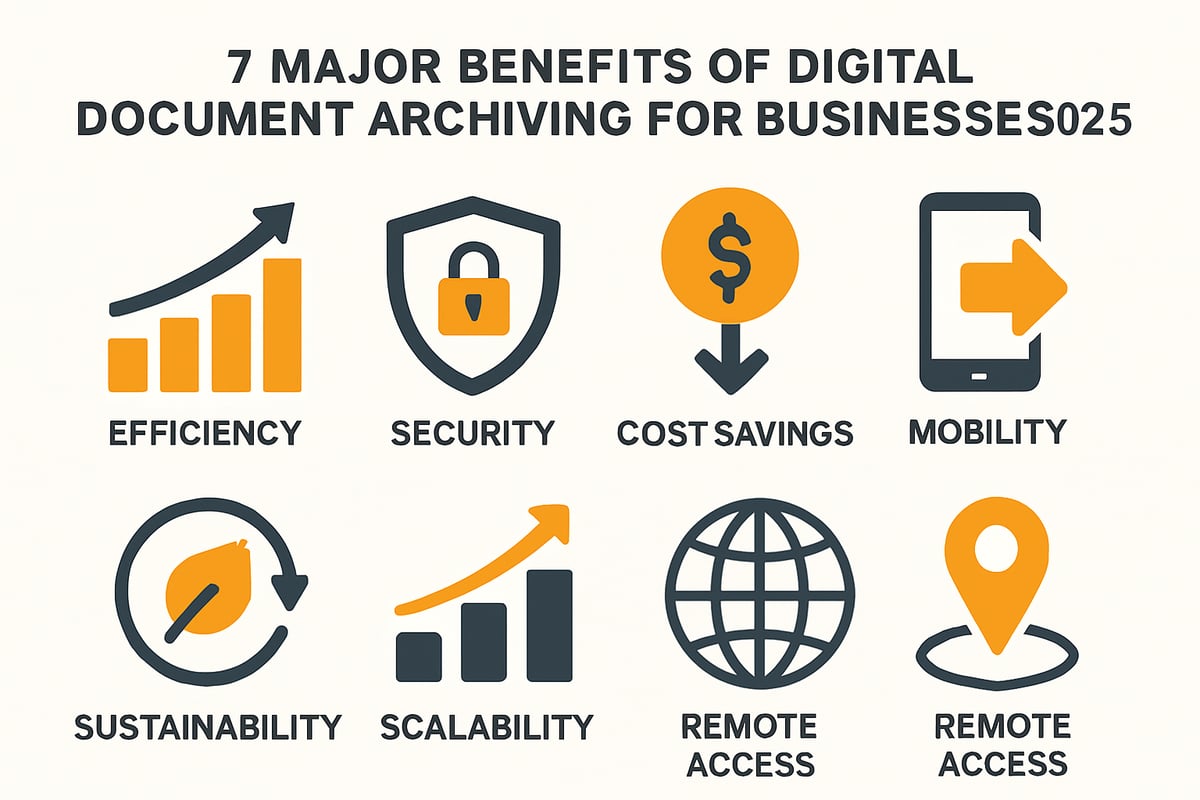
1. Increased efficiency and process optimization
Digital document archiving revolutionizes workflows. Automated filing and fast document search with OCR and full-text search save time and reduce errors.
-
Automated processes replace tedious sorting and searching
-
Invoices, contracts, and emails can be found in seconds
-
Integration into existing systems such as ERP or CRM is possible
For example, processing time for invoice capture can be reduced by up to 60 percent. Standardized workflows reduce sources of error and make processes transparent.
Especially for growing businesses, scalable archiving is a real game changer. The introduction of automated workflows brings enormous efficiency gains, as shown in the article on process automation.
2. Legal certainty and regulatory compliance
With document archiving, you meet all legal requirements. Digital archives store documents in an audit-proof manner and protect against manipulation.
-
GoBD, HGB, and GDPR are complied with automatically
-
Every change is logged; access is traceable
-
Retention periods and deletion concepts can be automated
In the event of disputes or audits, digital storage offers maximum evidentiary value. Deadline monitoring for tax documents runs reliably in the background. This minimizes liability risks and protects your company from fines.
3. Cost reduction and resource savings
Paper, printing, and storage space cost money and time. With digital archiving, you significantly reduce these expenses and benefit from sustainable savings.
|
Area |
Costs before (paper) |
Digital costs |
|---|---|---|
|
Paper & printing |
400 €/year |
40 €/year |
|
Storage space |
600 €/year |
0 €/year |
|
Working time |
1200 €/year |
300 €/year |
-
Less space required through digital filing
-
Lower effort for maintenance and administration
-
Scalable cloud solutions save high upfront investments
Per employee, this can save several hundred euros annually. In addition, document archiving supports sustainability through lower resource consumption.
4. Improved data security and access control
The security of sensitive company data is the focus of any archiving strategy. Encryption and access restrictions ensure that only authorized individuals gain access.
-
Backups and redundancy protect against data loss
-
Audit trails document all access and changes
-
Two-factor authentication and VPN increase security
Centralized management prevents data leaks and ensures compliance with data protection requirements such as the GDPR. Document archiving significantly reduces the risk of security incidents.
5. Location- and time-independent access
With digital document archiving, documents are available anytime, anywhere. Remote work and field staff benefit from flexible access and mobile use.
-
Retrieve documents on smartphone, tablet, or laptop
-
Improved team collaboration through shared documents
-
Approval and authorization processes run in real time
Contracts can be edited on site and approved immediately. This way, document archiving supports hybrid work models and increases productivity across the entire company.
6. Sustainability and contribution to the paperless office
Digital archiving significantly reduces paper consumption and CO2 emissions. Companies can thus make an important contribution to environmental protection.
-
Electronic archiving as a building block of sustainable strategies
-
Promotion of digital workflows and communication
-
Contribution to environmental certifications such as ISO 14001
Tons of paper are saved every year, which has a positive effect on public perception. Green IT initiatives particularly benefit from digital document archiving.
7. Future-proofing and scalability
Document archiving is flexible and adapts to business growth. New technologies such as AI and automation can be integrated easily.
-
Modular systems secure investments in the long term
-
Compatibility with future legal requirements
-
Expansion to international locations without additional effort
This keeps your company competitive in archiving and well prepared for future challenges.
Success factors for introducing digital document archiving
Introducing digital document archiving is a crucial step for any company that wants to work more efficiently and meet legal requirements. Success doesn’t happen by itself. It takes a clear strategy, structured processes, and the right communication to make the transition work.
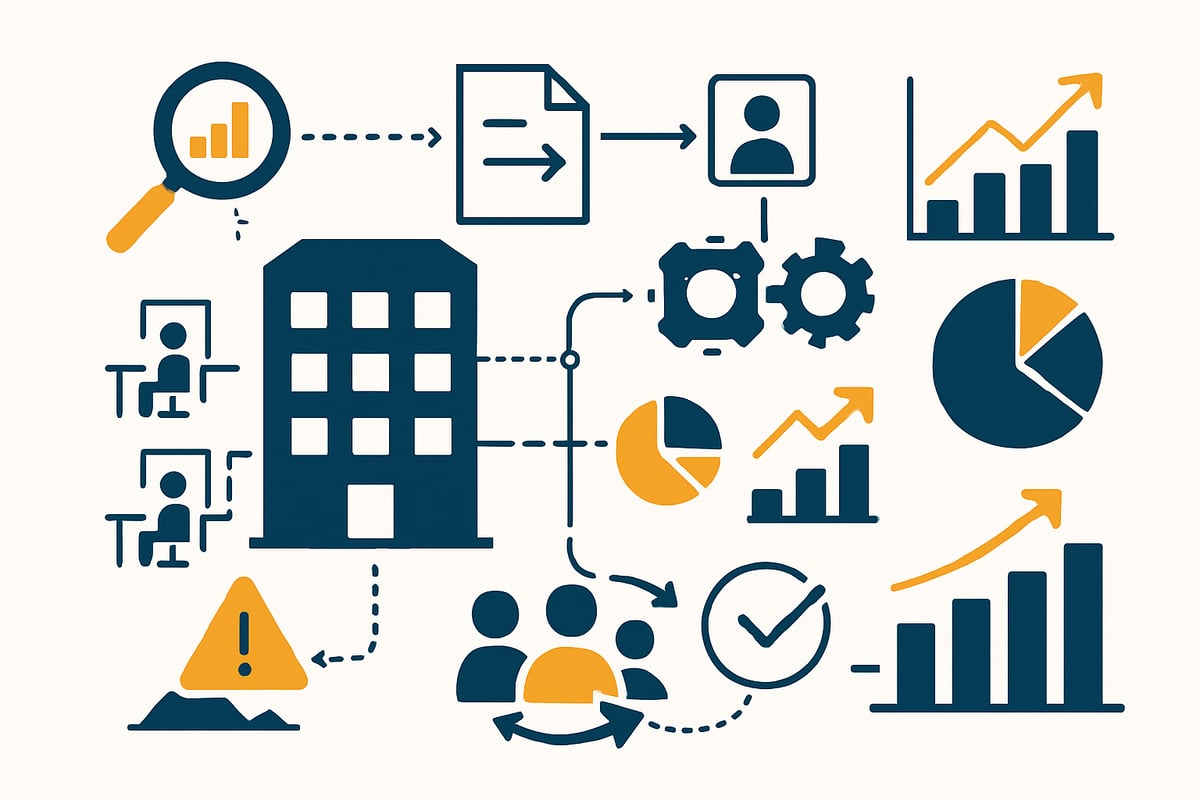
Step-by-step implementation in the company
The path to successful digital document archiving begins with a thorough analysis of existing processes. Determine which document types and processes should be digitized. Next, select a suitable solution—whether cloud or on-premises depends on your requirements.
The next step is data migration, in which legacy records are transferred securely and in a structured manner. Targeted employee training ensures acceptance and understanding. Finally, continuous optimization of workflows is crucial to unlock efficiency gains in the long term. You can find a detailed delineation of the processes in the article Document management in the company.
Change management and promoting adoption
Technical implementation alone is not enough to ensure that digital document archiving is accepted in day-to-day operations. Inform and motivate all stakeholders early. Communicate the benefits clearly, involve IT and business departments, and ensure regular success measurement.
Use transparent reporting to make progress visible. Use modern methods and digital channels to actively involve employees. Current developments and tips for successful implementation are provided in the article Document archiving: 4 important trends for 2025.
Typical pitfalls and how to avoid them
The switch to digital archiving sometimes hides pitfalls. Resources or the necessary know-how are often lacking. Unclear responsibilities lead to delays. Complex systems can quickly overwhelm employees.
However, these pitfalls can be avoided by defining clear responsibilities and involving external help if necessary. Keep systems as simple and understandable as possible. Allow sufficient time for the introduction and optimize regularly.
Practical example: Successful introduction in a mid-sized company
A mid-sized company successfully introduced digital document archiving. The analysis showed that 30% of working time was spent searching for documents. After the switch, this figure fell to 10%. Error rates in archiving were reduced by 50%.
|
Metric |
Before |
After |
|---|---|---|
|
Search effort (%) |
30 |
10 |
|
Error rate (%) |
8 |
4 |
|
Processing time (min) |
15 |
6 |
Employees report significantly more clarity and less stress. Digital document archiving is now seen as a key success factor.
Outlook: The future of document archiving in companies
The digital world is evolving rapidly, and document archiving is at a turning point in 2025. Companies that want to remain future-proof must actively integrate new technologies, flexible models, and regulatory requirements into their digital strategy.
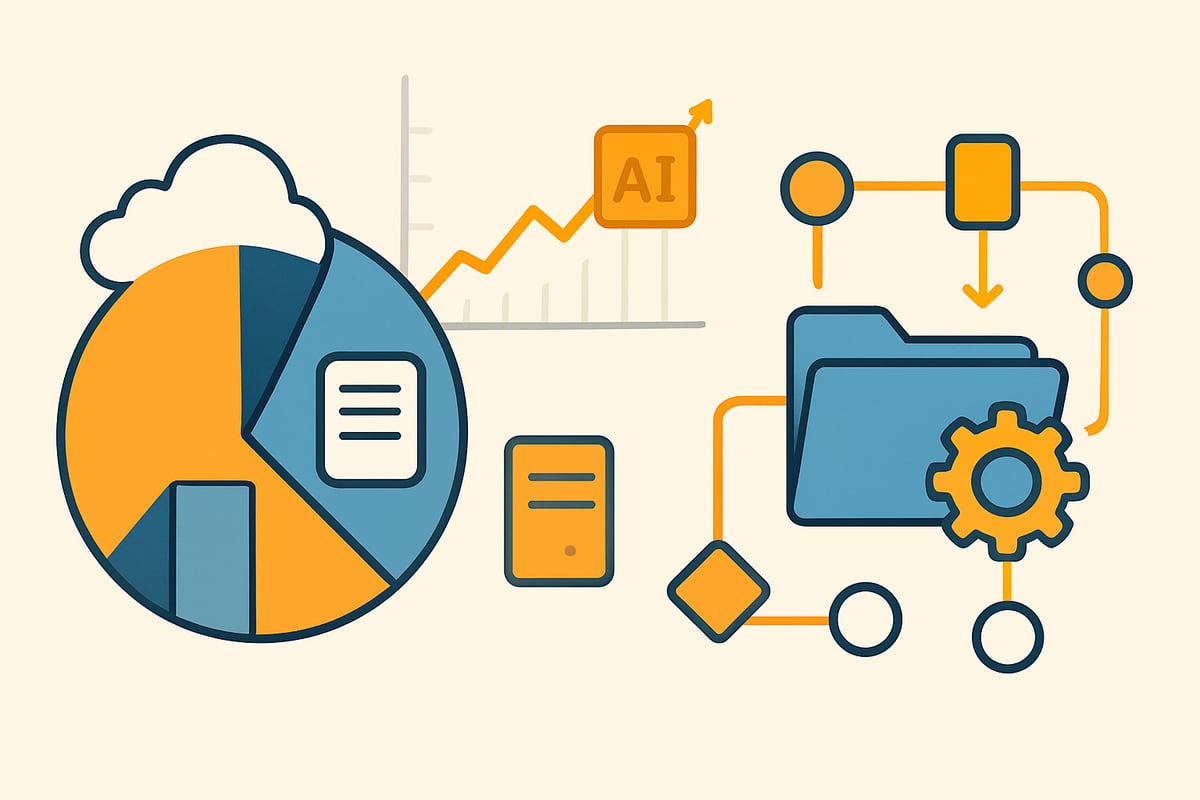
Artificial intelligence and automation
Artificial intelligence will fundamentally change document archiving. AI-based systems automatically capture, analyze, and classify documents. This saves companies valuable time and minimizes sources of error. Automated workflows and intelligent search functions ensure that information is found in a flash.
Early adopters are already using machine learning for the automatic recognition of receipts or contracts. According to current Document Management Trends 2025, AI and automation will become the standard for efficient, secure archiving in the coming years. Companies benefit from clear competitive advantages.
Cloud solutions and hybrid models
Cloud-based document archiving offers maximum flexibility and scalability. Companies can access their data across locations and save on investments in their own servers. Hybrid models combine the advantages of cloud and on-premises by storing sensitive data locally while using cloud-based functions at the same time.
A comparison of digital archiving solutions with traditional paper archives shows that digital solutions are not only more efficient but also more cost-effective and sustainable. Companies gain agility and can respond flexibly to changes.
Integration into the digital corporate strategy
Archiving is increasingly understood as an integral part of the overall digitalization strategy. Modern archiving systems can be seamlessly integrated with ERP, CRM, and other business applications. This enables end-to-end workflows and a unified data foundation for all departments.
Companies that integrate archiving strategically lay the foundation for innovation, efficient collaboration, and a sustainable data culture. This keeps the organization agile and able to respond quickly to new market requirements.
New regulatory requirements and trends
Regulatory requirements such as GDPR or GoBD are evolving and pose new challenges for companies. Digital archiving must reliably meet these requirements not only today but also in the future. Sustainability and Green IT are gaining importance.
EU-wide regulations and industry-specific standards also influence the design of digital archives. Those who adopt flexible and updatable solutions early remain legally compliant and can optimally leverage trends such as AI, cloud, or sustainability.
Recommendations for companies in 2025
For future-proof document archiving, it’s advisable to invest early in modern, scalable systems. Rely on AI, automation, and hybrid models. Consider regulatory developments and anchor archiving as part of your digitalization strategy. This keeps your company flexible, secure, and competitive.
If you want to take advantage of digital document archiving for your company now, this is the perfect time to take the next step. With filehub, you not only automate time-consuming processes, but also ensure more efficiency, security, and flexibility in everyday work—without any programming knowledge. You can connect different systems, archive documents easily, and retain full control over data protection and compliance. See for yourself how simple and effective modern document archiving can be.


